The Health Ministry is analyzing several hundred comments submitted during public consultations on the draft amendment to the Reimbursement Act and assumes that the draft will go to the Parliament soon after the parliamentary vacations. The changes concern, among other things, drug programs.
Amendments to the reimbursement law after the vacations. Ministry promises faster access to drug programs

Published July 11, 2025 13:11

fot. Rafał Gronecki
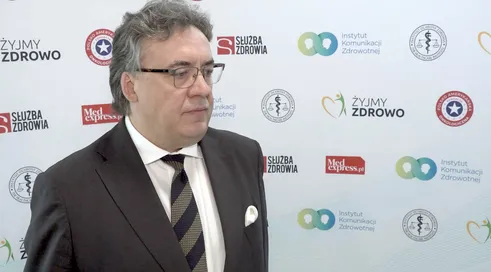
The information was provided to MPs during Wednesday's meeting of the Standing Subcommittee on the Organization of Health Care, dedicated to, among other things, administrative barriers to accessing drug programs, by Mateusz Oczkowski, deputy director of the Drug Policy Department of the Ministry of Health.
Oczkowski recalled that drug programs have been operating in Poland since 2011 and over the course of several years their importance in the health care system has been growing - at the moment the number of drug programs reaches 140 and they cover nearly 300,000 patients. The cost of financing therapies available under the programs is also growing. - In 2023 it was almost PLN 9 billion, in 2024 - PLN 11 billion, and the estimated expenditure for 2025 is more than PLN 12 billion. According to the financial plan for 2026, it will already be PLN 15 billion," he stressed. In 2024, the total budget for reimbursement was just over PLN 25 billion, which means that the treatment of 293,000 patients in drug programs consumed about 40 percent of total reimbursement spending. Reimbursement benefited 24 million people at the same time. Oczkowski explained that drug programs must have limitations, inclusion criteria and therapies offered under them cannot be available to all people with a diagnosed disease entity. He gave, among other things, the example of multiple sclerosis. There were about 25,000 patients in the drug program in 2024, or half of all patients with this diagnosis. Their treatment cost more than PLN 800 million. - If we wanted to cover all of them, we would additionally have to throw in about a billion zlotys just for one ICD-10 code. We have 14 thousand ICD-10 codes. That's why the reimbursement system exists, so that it selects those patients to whom a particular therapy is due in a particular clinical condition," he pointed out.
However, the ministry sees the need to remove barriers to the availability of drug programs - which is why it is proposing amendments to the Reimbursement Act. They are intended to improve (shorten) access times for patients, who currently have to wait up to several months for a new therapy theoretically approved for reimbursement. The MZ assumes that after the regulatory changes, the treatment will become available very quickly, even "the next day," thanks to bridging access to therapy, which on the one hand imposes an obligation on the responsible entity to supply the drug, and on the other obliges the National Health Fund to complete proceedings and sign contracts with centers to run programs within a maximum of three months. In what form this solution will eventually be implemented, it is difficult to prejudge - during the discussion, both MPs and representatives of the social side, experts, raised a number of doubts related, for example, to the identification by national consultants, of centers (there are to be one or two nationwide) that will guarantee bridging access to therapy.
It was also pointed out that one of the key barriers to the availability of drug programs is finance, and more specifically, the delays with which payers pay claims to hospitals, which have to credit costly treatments to patients.