The latest list of reimbursed drugs includes 33 new substances, including seven in oncology indications. - This is the largest expansion of the reimbursement list since 2012, says Health Minister Izabela Leszczyna.
The largest expansion of the reimbursement list since 2012 lies ahead

Published March 15, 2024 09:26

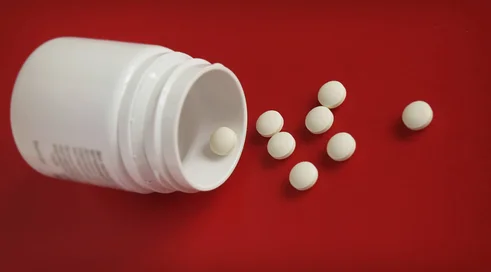
Fot. Getty Images/iStockphoto
The list, presented Thursday at a press conference at the Health Ministry, will take effect on April 1. Seven new substances will appear in oncology indications, twenty-six in non-oncology indications, including eight in the area of rare diseases. The indications for some therapies have also been expanded. One example is gene therapy for SMA. Until now, one of the criteria for admission to one of the world's most expensive drugs was that no other drug had been taken before - this eliminated from eligibility children in whom doctors decided to immediately include other available drugs to time the appearance of the first symptoms. Now such children, meeting all other criteria, will be able to receive reimbursable gene therapy.
Deputy Health Minister Maciej Miłkowski announced that with future lists, further decisions on expanding indications should also be expected - Miłkowski had already spoken about this in January, informing that he had asked national consultants for a kind of audit of current drug programs in terms of the possibility of including other groups of patients in modern therapies. This fulfills the demand of many patient and expert communities, who often point out that the actual availability of reimbursed innovative therapies is narrowed in Poland by the criteria for inclusion in the drug program. - We see that there is still a huge potential in oncology, as well as in hematooncology, where these guidelines are such that we should reimburse these drugs," the deputy minister said.
The April list also calls for expanding access to the RSV vaccine for children with SMA to age 2 and cystic fibrosis to age 1.
Starting in April, a drug used to treat patients with acid sphingomyelinase deficiency will also be reimbursed, and will be funded by the Medical Fund as a highly innovative technology. Olipudase is a patient therapy for patients with ASMD, a rare genetic disease manifested by a deficiency of the enzyme responsible for breaking down fatty substances in the body. ASMD is a so-called storage disease; undegraded substances are deposited in the body's cells, causing disorders of the nervous system, liver, lungs or spleen.
The Health Minister stressed that 33 new substances have appeared in the latest list, making the expansion the largest ever. The minister is right, of course, while it should also be remembered that starting this year the lists are published every three months, not every two months. Even if the current pace of introducing new molecules for reimbursement on an annual basis is maintained, individual lists can be noticeably more extensive than they were a year ago.
- Of course, there will be patients who will not be satisfied with our list. But I want to make it clear that the people who approached us were basically asking us to put on the reimbursement list a drug for which the manufacturer had not indicated a willingness to negotiate with us about the price and put it on the reimbursement list. It's not like we can do everything ourselves. It is the company that has to want to talk to us," Minister Izabela Leszczyna said.
Another novelty is the "Polish list," i.e. a list of drugs produced in whole or in part in Poland, to which patients will pay less from April - by 15 percent for drugs in the first group, and by 10 percent for those in the second group. The reduction in patients' co-payments (more will be paid by the National Health Fund, the cost could be as much as PLN 70 million) is expected to strengthen the Polish pharmaceutical industry and encourage corporations to invest in Poland. It is also part of the country's drug safety strategy.