In the case of breast cancer, the indirect costs resulting from the abandonment of work, disability and the need for home care for the patient are most often several times higher than the NHF's expenditure on treatment. Therefore, the cost of an innovation should not be considered only in terms of its price, but primarily in terms of its impact on reducing indirect costs.
Breast cancer: how to estimate the value of an innovation?

Published Nov. 25, 2025 09:31
Fot. Getty Images/iStockphoto
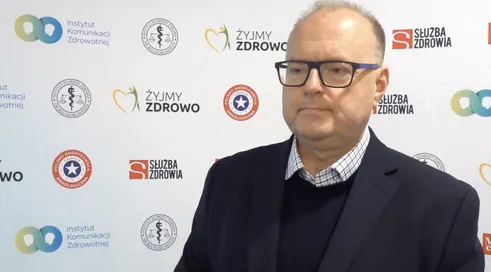
According to an analysis prepared by Dr. Michal Seweryn, a public health and epidemiology specialist and president of EconMed Europe, the direct costs associated with the purchase of health services and drugs are almost three times lower than the indirect costs that are not medical expenses, but represent the economic and social impact of diseases involving the patient's quality of life, loss of productivity and burden on society. The calculations cover three areas: eye diseases (AMD and DME), lung cancer and breast cancer.
How to estimate the value of an innovation?
- Poland today has a very siloed view of the value of innovation only from the perspective of NFZ expenditures, while we do not see how much society gains. There is a lack of a uniform methodology for calculating indirect costs, for determining when and in what situations such costs should be estimated," points out Dr. Michal Seweryn. In his opinion, a public debate on this issue is needed.
For the payer, innovation is not only an expense, but also a savings. The National Health Service can, for example, through subcutaneous forms of drug administration, reduce the cost of the procedure by reducing the involvement of personnel and reducing the number of patient stays in the hospital. The cost of treatment is also reduced by digital innovations that allow, for example, remote monitoring of health conditions.
From the perspective of the patient and his caregiver, innovations speed up diagnosis, improve treatment efficiency and quality of life by reducing the impact of the disease on work and private life. The impact of innovations on society and the economy is increased survival of patients, reduced absenteeism from work and improved productivity, as well as reduced burdens on patients' families and social expenditures.
Cost and profit statement
In 2024, the cost of breast cancer was PLN 18 billion, with direct costs of PLN 3.58 billion and indirect costs of PLN 13, 35 billion accounting for as much as 73% of the total. Thus, in assessing the value of an innovation, one would have to consider how much it can reduce indirect costs.
- We are able to measure indirect costs. We have a scientific methodology that is widely accepted. We can estimate absenteeism due to absenteeism from work, loss of productivity due to disability, premature death, and incomplete attendance at work, or so-called presenteeism. What's more, loss of productivity in unpaid work, i.e. related to domestic responsibilities, is studied and valued," Dr. Michal Seweryn mentioned.
Different faces of innovation
The Agency for Health Technology Assessment and Tarification analyzes what are the effects of a given therapy versus the costs. - We take into account how much for the payer the total cost of introducing such a therapy will be, and of course the social aspects, i.e. the indirect costs sewn in and the patient's quality of life," notes Anna Kowalczuk, MD, deputy president of AOTMiT. - However, we need to get concrete, qualitative evidence in the form of studies and publications, she adds.
- When replacing intravenous administration with subcutaneous administration, it is apparent at first glance that the patient's quality of life will change, as he or she will not be getting infusions, but a convenient subcutaneous injection or tablet. But AOTMiT has yet to have evidence in the form of studies conducted on patients, he reports. And such calculations are already being made. Subcutaneous therapies available for the treatment of breast cancer not only improve the quality of life of patients, but also save money by reducing the involvement of medical personnel, hospital occupancy and consumption of materials necessary for intravenous administration. Besides, this is one solution to meet the increasing number of cancer cases. And given that they are becoming a chronic disease, it is becoming necessary to change the approach to the organization of treatment. A patient who gets the drug intravenously requires hours of infusions, which must be monitored by a medical and nursing team in the hospital. Subcutaneously, the drug is administered in a matter of minutes. Instead of spending a whole day getting to and staying in the hospital, the patient can administer the drug at home while doing work and housework and avoiding exposure to infections acquired during hospital visits.
Change needed in the way we think about health costs
According to Social Security data, we as a society were sick 290 million days last year, while the average employee works about 234 days a year. We spent 31 billion zlotys on sickness absences. With innovations in health, much of this money could be saved.
According to Dr. Michal Seweryn, the socioeconomic dimension is often overlooked in the decision-making processes for funding innovation. Meanwhile, the Social Security data alone shows that the cost of health, including in the treatment of breast cancer, is not only an expense of the National Health Fund, it is also a social and economic cost. A rationally managed health care system must therefore estimate the value of innovations taking into account their ability to reduce direct and indirect costs of diseases.
Topics
innowacje medyczne / dr Michał Seweryn / koszty pośrednie / epidemiologia / NFZ / rak piersi / zdrowie publiczne