The most important event of 2023 for us was the amendment of the Reimbursement Law. Unfortunately, until today, modest provisions supporting the production of medicines and active substances have not been implemented. We are not taking advantage of the potential of the domestic pharmaceutical industry, through which we could build Poland's security and drive its economic development," says Krzysztof Kopeć, president of the National Drug Manufacturers summing up 2023.
National Drug Manufacturers sum up the year

Published Dec. 18, 2023 09:04

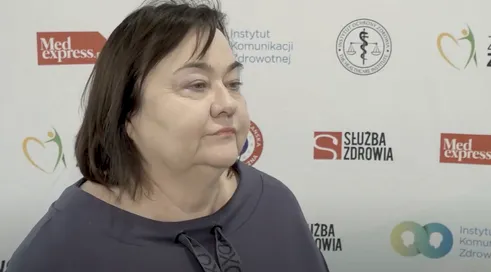
Fot. MedExpress TV
Krzysztof Kopeć:
According to the amended reimbursement law, as of November 1, 2023, patients should pay less at pharmacies for reimbursed drugs made in Poland or from Polish ingredients. Meanwhile, to date, the health ministry has not published a list of reimbursable drugs containing the products covered by the reduction. So who, and in whose interest, is blocking the provisions of the law causing patients to lose the savings in drug spending guaranteed to them by law - several million every month?
Drug shortages
In recent years, the supply of medicines of fundamental importance to health has been repeatedly disrupted throughout the EU. The years-long process of administratively lowering their prices, which in Poland today are among the lowest in the EU, and the lack of a mechanism that can contribute to increasing pharmaceutical production - have made the production of the cheapest drugs hardly profitable. Only 1/3 of reimbursed drugs are produced in Poland.
Therefore, the mechanisms in the Reimbursement Law for increasing domestic production must be implemented and expanded. Reimbursement preferences should be guaranteed to those who choose to produce part of their drugs in our country. There should also be a list of drugs critical to the safety of Poles and incentives for those willing to invest in their production. We have been talking about this for a long time, and even the European Union - where decision-making processes do not happen very quickly - has already published such a list. Many EU countries have also prepared their lists of critical drugs.
We must also remember that the shaping of the legal environment for drug policy should take place in dialogue with drug manufacturers who produce drugs in Poland and have a real impact on the Polish economy, while companies for which our country is only a market - should not influence the shape of Polish law.
Reducing patient surcharges
Of the nearly PLN 16 billion drug reimbursement budget planned for 2023, spending on reimbursement of those available in pharmacies that treat the most patients accounts for less than half - about PLN 7-8 billion. This results in a record low share of public funds in drug subsidies, making patient spending one of the highest in the EU. According to a recent OECD report, the NHF's share of patient spending on drugs is 35%, while in France, for example, the state contributes 83% of drug costs, in Germany 81%, and in the Czech Republic 54%.
Failure to implement the provisions of the law on lower co-payments for domestic drugs does not improve the situation and violates the rights of the patient under not only Article 6(2a) of the amended Reimbursement Law, but also prevents access to the guaranteed benefits indicated in Article 15(2)(14) of the Law on health care services financed from public funds in violation of Article 68. of the Polish Constitution.
The effect of low pharmacy reimbursement is also a constant downward pressure on prices. There are drugs on the reimbursement list that cost a few zlotys for a monthly treatment, resulting in the withdrawal of these products by their manufacturers from reimbursement lists and shortages in pharmacies.
Expanding access to biologic drugs
It is also necessary to expand access to biological therapies, because - despite the expiration of patents on biological drugs and price reductions of up to 80% - their availability in Poland is several times lower than in other EU countries. And due to the excessive burden on hospitals, increasing the number of treated patients is no longer possible. Therefore, these therapies should also be available in outpatient clinics. This will improve the comfort of patients' lives, as they won't have to travel to hospitals that are often hundreds of kilometers away just to administer a drug. In addition, between 2024 and 2029, about 100 biologic drugs will lose their monopoly, causing their prices to fall. To take advantage of this opportunity to treat more patients, it is necessary to change the model of making these therapies available.
Competition in the drug market
In connection with the work in the EU on changes to the law, it must be emphasized that it is necessary to oblige the European Commission not to extend the monopoly of medicinal products and not to block competition in the market, and to introduce dedicated financial and legal mechanisms to encourage the production within the EU of the most needed drugs and their ingredients.
Prolonging the drug monopoly does not proportionately translate into more and more breakthrough therapies, but instead limits patients' access to treatment due to its high cost, and burdens health systems with excessive spending. Given that pharmaceutical production in the EU is more expensive than in Asia, EU incentives for its relocation are needed to protect Europe from drug shortages.
Industry development prospects
It is worth noting that economists point out that despite the good financial performance of the pharmaceutical sector in Poland, the industry's potential is not fully exploited in our country. EU-wide, drug production has been one of the industry's driving forces for years. Since the beginning of the last decade, the volumes of the EU pharmaceutical industry have more than doubled, and the industry's share of processing value added has increased from 5.4% to over 6%. Meanwhile, in Poland, it has fallen from 2.6 to 1.6%. Economic, demographic factors - the aging of the population and the consequent increase in demand for drugs, as well as the growing awareness of the need for greater support for the industry at the national and EU levels, combined with the large number of expiring drug patents - provide a favorable environment over the decade horizon for accelerating the industry's development in Poland and increasing its role our in the economy. We should not waste this opportunity.
Source: press release