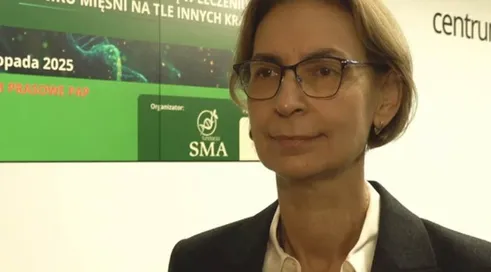
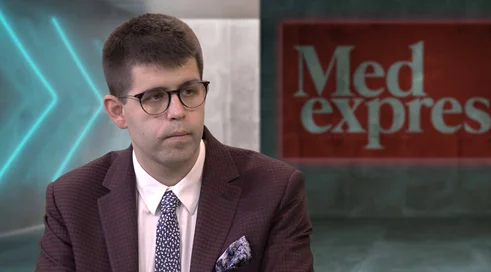
An interview with Dr. Anna Lusakowska of the Department of Neurology at the Medical University of Warsaw, coordinator of the Polish SMA Patient Registry.
Dr. Anna Lusakowska: nusinersen therapy is no longer just stabilization, it is a continuous improvement seen in the lives of patients

Published Sept. 20, 2023 11:44
The 30-month results of a Polish observational study in adults, sicker and older people with SMA, which you co-authored and which was published in the Orphanet Journal of Diseases this August, show not only stabilization of the disease, but also a 94 percent improvement in functional status. Did the state expect such high treatment efficacy with nusinersen therapy when starting the study?
Nusinersen therapy is, of course, a breakthrough in the treatment of spinal muscular atrophy, and of course clinical trials have shown it to be an effective treatment, but primarily in children. The data from the actual clinical practice clinic even exceeded our expectations in some ways, because we expected stabilization in the first place. This is a progressive disease, and for patients already maintaining the functions they currently have is very important. However, it turned out that the improvement is not only in the shorter term. In our observation, not only does this improvement persist through the following months, in fact almost for three years. Also very important is a certain dynamic of this improvement. Not only in relation to the beginning, to that first assessment before the drug was administered, but between subsequent administrations there is also a statistically significant improvement. This means that the drug not only works at the beginning and then we maintain the improvement, but it works all the time.
Nusinersen is administered intrathecally. How does this affect SMA retention and treatment efficacy?
With intrathecal administration, we achieve high levels of the protein that SMA patients lack and that is produced thanks to nusinersen. Motoneurons that are in the core need this protein the most. As a result, the effects are very good. Admittedly, the protein is also needed in the periphery, because its expression is in all cells, but this is probably primarily in young children. In adults, perhaps it is not so important. This form of administration is not so troublesome. Of course, there is a group of patients who cannot have the drug administered into the spinal canal. We cope then sometimes assisted by tomography or ultrasound or X-ray. In most of our patients, however, the drug could be administered.
How do you assess the effects and effectiveness of nusinersen therapy in your patients, from the perspective of already five years of follow-up? Do all patients benefit from the therapy they receive?
Most patients benefit. The benefit is the maintenance of function, but also a great chance for improvement, and even if in functional tests this improvement is not some spectacular one, we see how it works in everyday life, how patients function better, how they are stronger. Above all, they have perspectives, plans, and can make and carry out these plans.
Access to treatment has changed the perspective of SMA patients' lives. Can you describe the changes you see on a daily basis, working with your patients?
The patients with spinal muscular atrophy that I have known for more than 30 years are a unique group, very creative, despite their limitations, often with higher education, working and starting families. We see how much this drug has affected patients' lives. They change jobs, take up studies that they could not do before. They have better relationships with their surroundings in their daily lives, they can pursue their dreams, such as long-distance travel, or return to their hobbies, sometimes even a simple one like crocheting, but once very important to them. This is a huge benefit for patients in their daily lives and also for those around them, i.e. the caregivers who take care of them.
Thank you for the interview.