Since the beginning of July, treatment of drug-resistant depression with esketamine has been available in Poland under a drug program. This is the first such program in Polish psychiatry. So far, there have been no breakthroughs in the treatment of the disease, from which 1.5 million Poles suffer. The new drug is certainly such a breakthrough: it is characterized by high efficacy and a different mode of action than previously known antidepressants.
Escetamine available in drug program for drug-resistant depression

Published July 11, 2023 00:15
Fot. iStock/Getty Images
Esquetamine has been approved for use in the European Union for the treatment of depression since 2019. Until now, the monthly cost of the treatment, for which the patient would have to pay out of pocket, was 25 thousand zlotys. Given that the recommended duration of the treatment is 7-8 months, the total expense would be 175.2 thousand zlotys per person. For most patients, this is a prohibitive amount. Under the Ministry of Health's drug program, it will be possible to reimburse esketamine treatment.
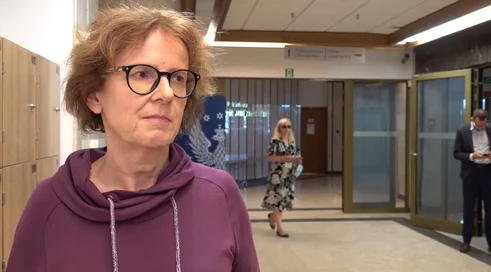
- Poland is at the forefront of countries where a drug program has been established or the drug is reimbursed. We are very happy about this, because it was usually the case that in Poland modern molecules used in psychiatry were available, but they were expensive for quite a long time, and reimbursement only took place when we were already one of the last countries with lump sum availability. We are glad that there is this new molecule, and it is also worth noting that this is the first drug program in Polish psychiatry," comments Professor Piotr Galecki, national consultant in psychiatry.
Due to the specific features of the substance, the availability of treatment will be subject to numerous conditions, and patients will have to meet certain inclusion criteria. These are, first of all, a diagnosis of drug-resistant depression, i.e. the lack of positive results of drug therapy with at least two antidepressants, confirmed by a psychiatrist.
Esketamine will be administered on an outpatient basis, twice a week for the first month and once a week or once every two weeks for the remaining six months, depending on clinical indications and the doctor's decision. Esketamine is to be administered inhaled, intranasally. The drug is to be added to the antidepressants patients have been taking so far. Psychiatrists say this is a breakthrough they, as well as their patients, have been waiting for for a long time.
- Escetamine can take effect after just the second application, and a patient's improvement can occur even hours after a single application. Therefore, the time in which the patient suffers is definitely reduced. The second element worth emphasizing is that this drug works by a completely different mechanism than existing antidepressants. He uses a more effective way to reach the nervous system and relieve depression and is more effective in general as an antidepressant medication. It is used together with an antidepressant, but in a special situation - when the depression is drug-resistant, that is, when the depression does not respond to standard medications. This drug brings a new quality precisely because it breaks drug resistance, and is able to give improvement despite the fact that no other drugs have brought it so far," explains Professor Marcin Wojnar, head of the Department of Psychiatry at the Medical University of Warsaw.
- In the case of drug-resistant depression, the patient has been suffering from a moderately severe or severe depressive episode for several months, so you can imagine how much of a burden this is on the performance of his social roles, if he is still performing them at all. If we follow this treatment regimen and add esketamine to the antidepressants in use, there is a chance that 40 percent of patients can be helped, adds Prof. Piotr Galecki.
Meanwhile, drug-resistant depression occurs in as many as one-third of the cases of people with depression, of whom there are officially 1.5 million in Poland. In 80 percent of cases, people aged 30-59 hear the diagnosis.
- Drug-resistant depression is indeed a problem, because it creates additional difficulties in life, social, family and work (school, work), increases the already high risk of suicide. And the patient, with a sense of hopelessness and lack of improvement, has more frequent suicidal thoughts. Until now, we have had different ways to treat drug-resistant depression, but the reimbursement of esketamine gives us great opportunities. First of all, to help a certain group of patients who are heavily burdened with the disease," points out Prof. Agata Szulc, head of the Psychiatric Clinic of the Faculty of Health Sciences at Warsaw Medical University.
According to Deputy Health Minister Maciej Miłkowski, it was one of the more difficult reimbursement processes. It lasted nearly two years. Its positive ending is largely the result of years of efforts by the community. - It is certainly a big thing, because in the field of psychiatry there was not much news. In depression, this is the latest drug. In Poland, drugs that had already ended their exclusivity were reimbursed, which put us at the end of countries in Europe. The opportunity to undertake this program will be wide," points out Maciej Miłkowski.
- I am very pleased that we have the first drug program in the history of Polish psychiatry. As a foundation, we were involved in the recommendation process at the Ministry of Health and the Agency for Health Technology Assessment and Tarification, recognizing the extreme importance and legitimacy of ensuring that patients suffering from drug-resistant depression have, as befits the 21st century, access to effective treatment, which is standard in the civilized world. "We also decided to dedicate the Faces of Depression campaign 'I don't judge, I accept' to the topic of drug-resistant depression," says Anna Morawska-Borowiec, president of the Faces of Depression Foundation.
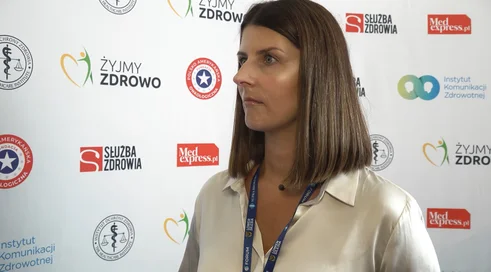
Monica Superior, who suffered from drug-resistant depression 10 years ago, told us how the use of esketamine affected her and her close family's daily functioning.
- The effect was visible right after the first dose. I arrived home and noticed that I started to want to, I was no longer so dull as well as indifferent to everything. When the phone rang it was the first time in several months that I wasn't terrified of it. It stopped being terrifying to me that someone was calling and that they would want something from me, that they would want to talk to me, and that I wouldn't have the strength. I began to have strength. My family noticed that I was completely different, I finally got dressed, I went out to people, I wasn't intimidated by the shopping I had to do. What's more, I began to seek contact with people and before that it was absolutely impossible, I didn't want anyone to speak to me. My husband noticed a sensational improvement, I began to be a mother, a wife. I began to be more smiling, allowed to turn on comedies on TV. The family, which I had somehow rejected as a result of my depression, began to be present again, I visited loved ones. I remember my daughter saying to me". "mommy, you finally look nice, you dressed up, you made up". This spoke for itself.
Esketamine therapy is available in the B.147 drug program (downloadable attachment - HERE).
For treatment esketamine under the program are eligible recipients who meet the following criteria together:
- Age from the completion of 18 years to75 years;
- confirmed diagnosis of depression classified according to the current ICD-10 classification to codes: F33.1 and F33.2;
- A current episode of depression of moderate or severe severity according to the MADRS scale;
- contraindications or resistance or lack of patient consent to electroconvulsive therapy;
- Confirmation of drug-resistant depression, defined as depressive disorder in adults who have failed to respond to at least two different antidepressants (used at the appropriate dose for the appropriate duration, according to the guidelines of the Polish Psychiatric Association and the National Consultant for Adult Psychiatry) in a current episode of depression of moderate to severe severity;
- No more than 5 different antidepressants in the current episode of depression;
- At least a second episode of depression;
- a current episode lasting at least 6 months according to the date of the first medical visit related to the treatment of the episode;
- Exclusion of a diagnosis of borderline personality disorder or bipolar affective disorder;
- No history of addiction (addiction to alcohol, sleeping pills, tranquilizers, painkillers or drugs);
- Exclusion of pregnancy and lactation period;
- the non-existence of clinical conditions that, in the opinion of the attending physician, preclude the inclusion of therapy;
- Adequate organ function as determined by the results of blood laboratory tests in accordance with the provisions of the current SmPC.