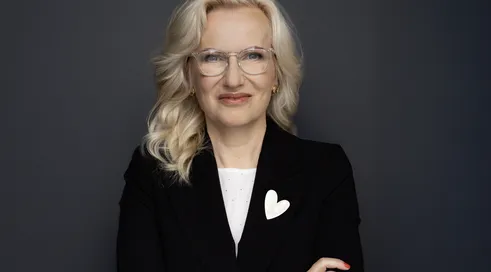
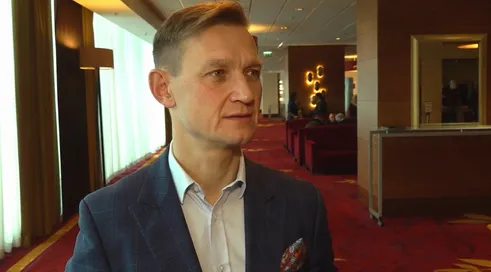
A conversation with Prof. Przemysław Mitkowski, president of the Polish Society of Cardiology.
Hearts of seriously ill patients can't wait that long

Published June 26, 2023 11:16
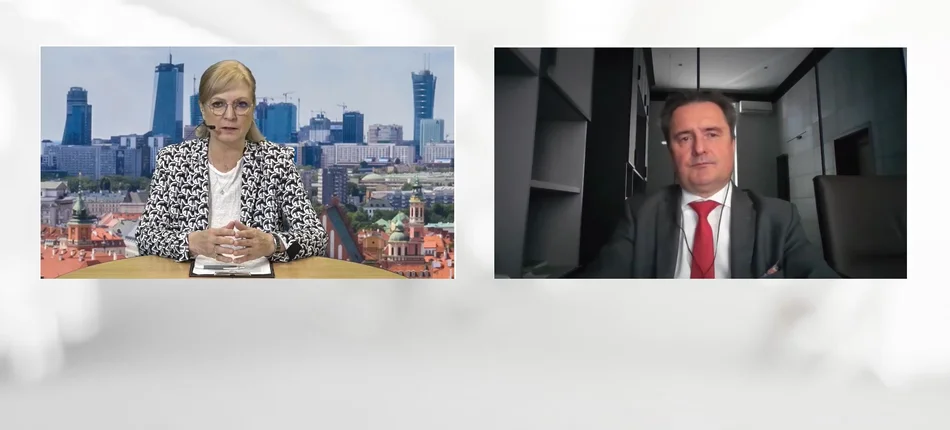
Medexpress: A number of reimbursement processes are currently underway at the Ministry of Health for medical procedures such as mechanical left ventricular support, a system for repairing tricuspid valve defects, loop recorders, and electrodeless cardiac pacing systems. These are all devices that are extremely important for seriously ill cardiac patients. To what extent are these technologies making a difference in the lives of seriously ill patients?
Prof. Przemysław Mitkowski: The technological advances we have seen in recent years are indeed incredible. These technologies, which we emphasize as the Polish Society of Cardiology, not only make it possible to do procedures faster, more efficiently and with fewer complications, but also to offer therapies to patients for whom we had nothing to offer before.
An example of such technology is percutaneous tricuspid valve repair using the edge-to-edge method. We already have considerable success in using this method for the mitral valve. We are talking about patients in whom the risk of standard cardiac surgery is very high (more than 5-10 percent). In such a situation, different methods of valve repair have been sought in order to achieve a health effect that not only improves the comfort of life, but even extends it.
Another technology is the use of left ventricular support, also in patients with advanced heart failure, but who are no longer candidates for heart transplantation. This is a sizable group. We must realize that there will never be enough hearts for transplantation to provide treatment for all patients. We are talking about using this technology as a target. That is, we tell the patient that the chance of getting a heart for transplantation is slim, even impossible due to coexisting clinical conditions, so we offer a pump that will pump blood to support the left ventricle. And the distant results of these patients are very good. We are talking about a group with an annual mortality rate of 50 percent or more. Whereas with this technology, the 5-year survival rate is 50 percent, so we improve the prognosis in this group of patients many times over. They are returning to relatively normal functioning in daily life, and they don't have to be hospitalized for further exacerbations.
Another group of technologies are event recorders. These are devices that monitor a patient's heart rhythm for up to three years. Here we are talking about neurological indications, that is, in patients after a cryptogenic stroke. That's the kind of stroke whose source of thromboembolic material we don't know, and we're looking for atrial fibrillation. And we know from previous studies that rhythm monitoring with these devices, increases the chance of detecting atrial fibrillation by 6 to 10 times over the lifetime of the device. And this is dramatically important for these patients, because cryptogenic stroke alone is not an indication for anticoagulant therapy, whereas if we detect atrial fibrillation, we are already achieving success in this population by implementing anticoagulant therapy. The second candidates for diagnosis with these devices are patients who lose consciousness. And they lose it relatively rarely. Less than once a month. We performed a series of Holter tests and found nothing. We have performed additional tests, even an electrophysiological or invasive test, but we can't find the cause. Syncope from cardiogenic causes is peculiar in that it has certain characteristics. From the onset of symptoms to unconsciousness, seconds, tens of seconds pass. That is, the heraldic symptoms are very few and last a very short time. Second, the patient returns to consciousness spontaneously in most cases (qualified medical assistance is not required). And third, once the patient returns to consciousness, he is oriented as to place, time and space. There are no loss symptoms. But we don't fully know whether and what kind of rhythm disturbance influenced the appearance of the loss-of-consciousness symptom. And this device in these groups of patients makes it possible, in half of the cases during the monitoring period, to determine the cause of this and implement treatment.
Finally, electrodeless stimulation is something that is developing rapidly. Let me remind you that this December we will celebrate the tenth anniversary of the first device implanted in a human being. In Poland, this procedure is still not reimbursed, although we have the opportunity to apply for individual payer approval. We use this technology, of course, not in all patients, only in those who already had complications of a previously implanted pacing system. First of all, infectious complications, i.e. pocket infections or de-electrode endocarditis. Also in those who had multiple electrode fractures. But also those who have a high risk of infectious complications (patients who have non-healing wounds, catheters such as dialysis catheters). And finally, the group of patients in whom we do not have venous access to implant the right device (patients with venous thrombosis, with venous obstructions). In this group, the alternative is only surgery and suturing of electrodes, which are not really available at the moment due to new regulations, many manufacturers have already stopped offering electrodes, not undergoing the recertification process. We have a huge problem here, because soon there will be no alternative for these patients, because there will be no epicardial electrodes supplied. These are things we have been advocating for many months.
Medexpress: These are technologies that save lives, improve prognosis, prolong life and improve quality of life. And when we look at epidemiological data, we see that heart failure is one of the three, along with diabetes type. 2 and kidney failure, the disease that occurs most frequently among patients over the age of 65. So we can certainly assume that reimbursement of these devices is a concrete benefit to the system. When can we expect final decisions?
Prof. Przemysław Mitkowski: I was extremely optimistic four weeks ago. At that time the work was indeed progressing. We, i.e. PTK experts, were very much involved at various stages of the process. Numerous comments and clarifications in order to best match all these procedures to the needs of patients, to ensure access to them for all who need them, and to protect the payer from abusing the use of these procedures when there are equally effective alternatives. Unfortunately, I have not heard for several weeks what stage of consultation the Health Minister's regulation is at. Attempts to contact the treatment department at the Ministry of Health have recently been unsuccessful. This is worrying, because the momentum of this work has slowed down. And we badly need concrete regulations to make these technologies available to our patients, who cannot wait for them. We also need to be aware that the criteria for obtaining individual payer approval have changed. They have been tightened. On the one hand, I understand the National Health Service, because the number of such approvals has increased dramatically in recent years, and well, it certainly can't be an avenue for funding procedures as an important side channel. On the other hand, this puts us on the brink of reimbursement in some types of medical devices. The manufacturer can always raise the price of a medical device, but this is difficult to reconcile and it is not efficient from the point of view of the system or the centers providing services, because to a greater extent such a procedure will affect the implementation of the contract and may actually reduce the number of global procedures. These are undoubtedly difficult issues. I was optimistic and thought that these regulations would appear by the end of June. I am not losing hope.