Continued education of physicians of various specialties and the introduction of systemic changes to improve the diagnosis of systemic lupus erythematosus (TRU) and improve access to effective therapies are the main recommendations of rheumatology specialists. A set of guidelines, aimed at improving the care of patients with this severe condition, is included in the Report "Systemic Lupus Erythematosus. Medical and Social Aspects of the Disease and Treatment Strategy," prepared by the Polish Society of Rheumatology.
Systemic lupus erythematosus - multiple organ complications, increased mortality, and high medical and social costs

Published April 26, 2023 09:49
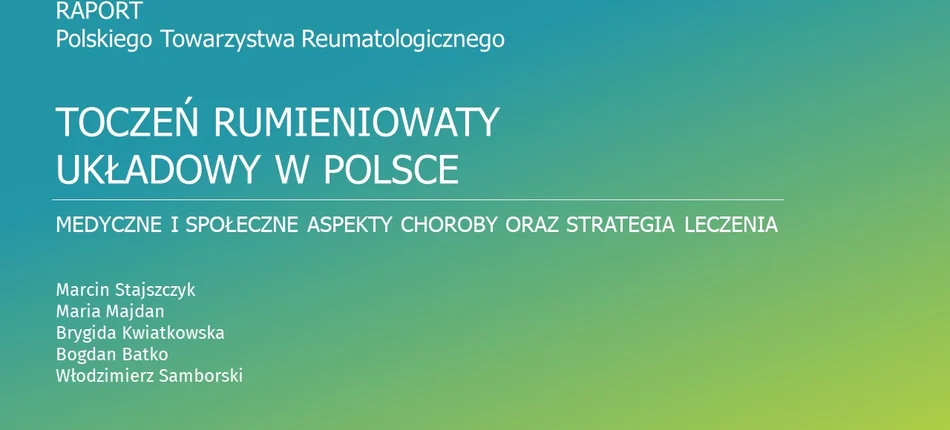
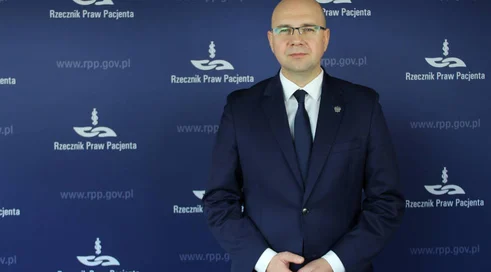
The report was premiered at a press conference held at the PAP Press Center on April 21, 2023. The report received the honorary patronage of the Patient Ombudsman.
Systemic lupus erythematosus(TRU; SLE) is an autoimmune disease in which more organs and systems are affected and their functioning deteriorates. The joints, muscles, skin and kidneys are most often affected, as well as the cardiovascular, central nervous, hematopoietic and coagulation systems. However, the symptoms of TRU are nonspecific and different in different patients, and such a diverse clinical picture of the disease, which is not fully reflected in the classification criteria, poses a real diagnostic challenge.
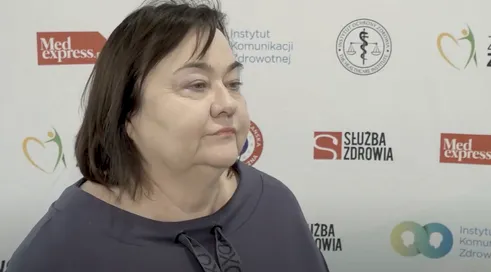
- The heterogeneous clinical, laboratory and immunological picture of the disease creates great difficulties at the initial stage, when individual symptoms, such as those of the skin, joints, kidneys or hematology, may be treated by doctors of different specialties as unrelated. The eligibility criteria for TRU do not cover all possible symptoms of lupus, so if the disease starts with those not included in the criteria for early diagnosis can be difficult. Specialized rheumatology centers should have system tools for rapid diagnosis, because they have the most knowledge and experience," she said. Prof. Maria Majdan, head of the Department of Rheumatology and Systemic Connective Tissue Diseases in Lublin..
Significantly, the mortality rate of patients with TRU is 2-3 times higher compared to the general population. The disease is also one of the leading causes of death in young women, who develop lupus more often than men. Active disease often prevents them from becoming pregnant and giving birth. Patients, as a result of chronic fatigue and other ailments resulting from the disease, are often forced to give up their previous social, professional and family lives. The longer the disease lasts and the longer it remains highly active, the greater the risk of complications, including the development of other diseases such as cardiovascular disease and depression.
- Epidemiological data show that the population of patients with TRU in Poland is about 18,500, of which about 4,000 may have the severe form. The heterogeneous clinical picture of TRU and the data on significant comorbidity, especially in patients with moderate or severe forms of TRU, indicate that in addition to rheumatologists, physicians of other specialties should form an important link in the patient's diagnostic pathway. From the beginning of 2023, new system solutions are being implemented in the form of new services in rheumatology, which can help improve the early diagnosis of rheumatic diseases, including lupus," said Prof. Brigid Kwiatkowska, national consultant in rheumatology.
The mainstay in the treatment of TRU is hydroxychloroquine and immunosuppressive drugs, as well as glucocorticosteroids, which can quickly control the disease, but it is advisable to quickly replace them with other drugs, including biologics, to eliminate the risk of organ damage from long-term use of glucocorticosteroids. Early use of biologic drugs can prevent dangerous complications and organ damage in patients with active disease.
- Systemic lupus erythematosus is a severe disease whose effects can be seen on many levels. Therefore, our main goal, as doctors, is to reduce the activity of the disease and give patients a chance to live a normal life. The goal of treatment is to achieve a state of permanent remission of the disease, protecting the patient from complications. Given the projection-remission course of TRU, this is very difficult in practice. Chronic persistence of inflammation and immune activity or frequent severe exacerbations of the disease lead to irreversible damage to many organs and the development of comorbidities, which significantly affect patients' survival. At the same time, we should also keep in mind that active disease carries enormous costs - both for hospital treatment, which is borne by the National Health Fund, and those related to sickness absenteeism or the awarding of pensions, which in turn are borne by Social Security. It makes unquestionable sense, therefore, to invest in therapies that will help lower these costs. Unfortunately, at the moment, access to treatment in Poland does not look like what patients and doctors would like," said Marcin Stajszczyk, MD, head of the Division of Rheumatology and Autoimmune Diseases at the Silesian Center for Rheumatology, Orthopedics and Rehabilitation in Ustroń, chairman of the Drug Policy Committee of the Polish Society of Rheumatology. - On the one hand, hydroxychloroquine, an essential drug in TRU therapy, has never been reimbursed in Poland; on the other hand, we also have no access to biological drugs, which may be the only salvation for some patients. The reimbursement process is currently underway for anifrolumab, an innovative therapy that inhibits type I interferons, which are key in the development of the disease, and we hope that the drug will soon be available to patients with active lupus despite the provision of standard therapy, the expert noted.
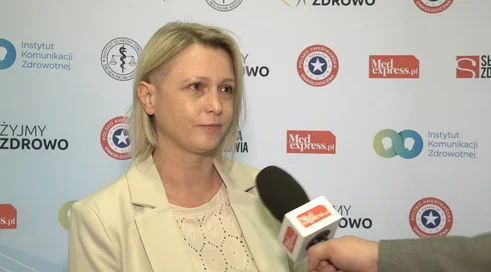
- Health, following the definition adopted by the World Health Organization as a state of physical, mental and social well-being, and not just the absence of disease, disability and invalidity, determines social and economic activity, which significantly affects our quality of life. Health care systems should therefore be oriented towards obtaining the highest possible health value for their population.Those interested in realizing such a vision are undoubtedly patients struggling with systemic lupus erythematosus. Medical progress brings new opportunities in both diagnosis and treatment. The prerequisite for optimal enjoyment of its benefits is the management of the patient based on current medical knowledge and the application of therapies in accordance with the guidelines of scientific societies, which in turn forces physicians of many specialties to constantly improve their knowledge, and regulators to create systemic solutions that firstly monitor the effects of patient treatment, and secondly provide tools to continuously improve the quality of care and patient safety. For example, in TRU patients, one important problem is the abuse of corticosteroids and the associated health and system costs. The data presented here show the need to further improve the quality of care by expanding access to effective and rapid diagnostics and to drug technologies that enable treatment in accordance with the latest medical knowledge," concluded Dr. Malgorzata Galazka-Sobotka, director of the Institute of Healthcare Management at Lazarski University.
The authors of the publication - experts in the field of rheumatological diseases - have also identified needs and recommendations, the urgent implementation of which will allow to improve the care of patients with TRU, and ultimately improve their quality of life. Key recommendations refer to the need for ongoing education of physicians of various specialties, including - rheumatologists - also family physicians, dermatologists, nephrologists, neurologists, cardiologists, hematologists and psychiatrists. Systemic changes are also needed, including:
- Introduce early diagnosis services for rheumatic diseases, including autoimmune diseases, into outpatient specialized care, and develop a program of comprehensive care for patients with TRU and their families, implemented in specialized rheumatology centers,
- Expansion of reimbursement indications for synthetic drugs reimbursed for other conditions in Poland, i.e. methotrexate and tacrolimus,
- To include in reimbursement synthetic drugs not currently reimbursed in Poland, i.e. hydroxychlorchine and voclosporin,
- covering reimbursement of modern biological drugs not currently reimbursed in Poland, i.e. anifrolumab and belimumab, under drug programs.
Citation:
Stajszczyk M., Majdan M., Kwiatkowska B., Batko B., Samborski W. Systemic lupus erythematosus in Poland - medical and social aspects of the disease and treatment strategy. Polish Society of Rheumatology, Warsaw 2023.
The publication was under the honorary patronage of the Patient Ombudsman, as well as under the auspices of the National Association of Young People with Inflammatory Connective Tissue Diseases "Let's Stay Together" and the National Federation of Associations of Rheumatics "REF". The report is available on the PTR website:
https://reumatologia.ptr.net.pl/files/raport-toczen-rumieniowaty-ukladowy-w-polsce-2023.pdf
* * *
The report of the Polish Society of Rheumatology entitled. "Systemic Lupus Erythematosus. Medical and Social Aspects of the Disease and Treatment Strategy" was prepared by specialists in the field of rheumatology. Commentary on the publication was provided by: dr. n. ekon. Małgorzata Gałązka-Sobotka, Jolanta Grygielska (National Federation of Associations of Rheumatics "REF") and Violetta Zajk (National Association of Young People with Inflammatory Connective Tissue Diseases "3 Let's Stay Together").
Press conference - PAP Press Center, 21.04.2023 pt:
"Systemic lupus erythematosus in Poland - medical and social aspects of the disease and treatment strategy".
Premiere of the report of the Polish Society of Rheumatology
***
Press Release
Polish Society of Rheumatology
Warsaw, April 25, 2023.
------------------------------------------------------------------------------------------------------------------
Source: PTR