However, funding is needed!
We have a competitor for foreign medical robots. It's the "Robin Heart" from the Foundation for Cardiac Surgery Development in Zabrze

Published Dec. 8, 2023 08:16

Fot. Getty Images/iStockphoto
The Polish market is dominated by American, Chinese robots. Many varieties have India. Each of them has its own advantages and disadvantages - purchase costs, servicing, technical parameters. First they were used in cardiac surgery, but the list of specialties in which they are indispensable has expanded in recent years to include gynecological, gastrointestinal, or urological conditions.
American "da Vinci" robots are the most popular in Poland. Polish designers from the Prof. Zbigniew Religa Foundation for Cardiac Surgery Development in Zabrze and the Silesian Medical University can boast the most modern version of the "Robin Heart" robot, but at least 300 million zlotys are needed for it to enter production and become competitive with foreign equipment.
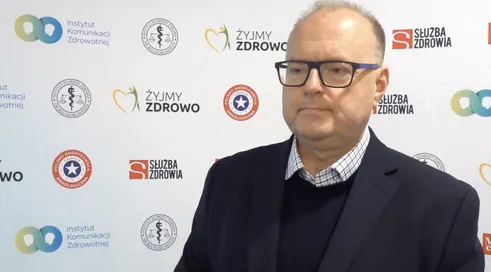
- We estimate that in five to six years we will be able to present the most modern and versatile robot of Polish manufacture. That is also when, I calculate, the replacement of foreign equipment recently purchased for hospitals will start. The estimated period needed to commercialize the Polish multi-arm robot is about 3 years," says Zbigniew Nawrat, MD, professor at the Institute of Heart Prostheses of the Foundation for Cardiac Surgery Development and the SUM Biophysics Department of the Faculty of Medical Sciences in Zabrze. - Launching our own line of robots for medicine gives us a chance to attract foreign investors. After all, we are gaining a global technological product, probably at a more affordable price, and a chance to develop this field in the form of domestic technical thought.
As Prof. Nawrat explains, the construction of the Polish robot began faster than competing ones, but we operated with a disproportionately smaller budget. - Surgical robotics in Poland began in Silesia. When we finished with Prof. Zbigniew Religa the first project of "Robin Heart" we had a prototype with seven degrees of freedom and functionality similar to "da Vinci", which was then crawling, and at the time when the wooden model of "Versius" was shown in Cambridge, we were finishing the first experiments on animals with probably the largest surgical robot in the world, the model "Robin Heart mc2", explains Prof. Nawrat.
In 2010, specialists from the Foundation for the Development of Cardiac Surgery did the first model experiment of teleoperation at a distance Zabrze (FRK) - Katowice (SUM Center for Experimental Medicine).
- To date, we have spent an amount of about... 5 million zlotys on the "Robin Heart" robot project since 2000. That is, one-third of the price of one "da Vinci" robot," Nawrat adds.
According to Prof. Nawrat, robotics is the future of surgery, because medical graduates are increasingly less likely to choose this specialty. The result - there is a shortage of young surgeons. - Not long ago everyone wanted to be like Religa, "God", who first successfully transplanted a heart in Poland in 1985. Today they no longer want to. It is necessary to make the profession of a surgeon attractive, but also to properly select candidates for the profession, because they must have certain skills, not only manual, but among others psychological: resistance to stress, decision-making," assesses Professor Nawrat.
The latest version of the robot being developed at FRK is equipped with artificial intelligence. - This is simply indispensable these days. Artificial intelligence will allow robots to learn from experience and react to situations that arise. At the Foundation, we are currently developing work on the use of the "Robin Heart" robot for teleoperations. Reducing the risk of operating while there are interruptions or long delays in communication between the operator and the robot requires that we make the robot independent in such a situation. So that the robot can decide "what to do" when it judges that there is no contact with the doctor. The robot must "know" what it is doing. It also needs to know its responsibilities when the patient's life is in danger. This cannot be done without the introduction of artificial intelligence," stresses Prof. Nawrat.
Source: Silesian Medical University