Patients and the expert community are waiting for a decision that could make life with the disease easier for many patients. In October, the President of the Agency for Health Technology Assessment and Tarification issued a positive recommendation to include the tablet form of the drug for the treatment of spinal muscular atrophy in reimbursement under the drug program. As indicated in the rationale, the new form of the drug "represents a therapeutic option that will provide the opportunity to better tailor treatment to the individual needs of the patient, such as in the case of older children and adults who do not have difficulty swallowing and do not require feeding through a probe. It is also worth noting that the introduction of rysdyplam in the form of film-coated tablets into reimbursement will involve a slight reduction in the budget of the public payer."
New form of SMA treatment will make life easier for patients and ease the burden on the health care system

Published Nov. 21, 2025 07:00
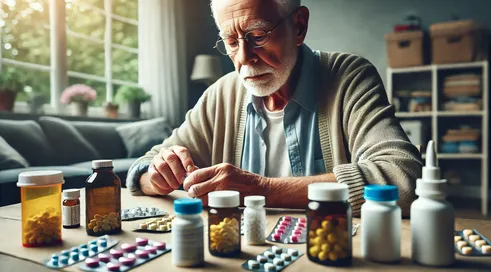
fot. iStock
The AOTMiT President's recommendation paves the way for an important change in the care of SMA patients, in which convenience, ease of use and minimizing the burden on patients and the health care system are as important as the effectiveness of treatment.
Through the eyes of a health care expert: tablets are a benefit to patients, hospitals and the state budget
"Drug programs are one of the key pillars of the system of care for the sickest patients in Poland. According to the Health Needs Maps, in 2024, 127 drug programs treated 293,000 patients at 560 clinical centers. Services under these programs were billed for 1,152,543 outpatient visits (68%), 480,471 same-day hospitalizations (28%) and 67,801 hospitalizations (4%). The cost of these programs amounted to PLN 12,648,745,534, of which PLN 11,210,149,483 were drug expenses, and PLN 1,438,596,051 in benefits, for operating the programs. The average annual cost of a patient in drug programs was in 2024. - PLN 43,166. According to the report "Flexcare. Opportunities for a Flexible Care Model in Drug Programs," drugs in drug programs come in 10 different forms of administration, with most being administered orally, followed by intravenous and subcutaneous. The 2024 analysis showed that there were 108 drugs in drug programs administered orally and 56 administered subcutaneously. The European Medicines Agency approves dozens of new drugs each year. One noticeable trend is to increase the number of drugs that can be administered in a formula that does not require the assistance of medical personnel - such as oral or subcutaneous. According to the report, the optimization of care under drug programs is based on moving some of the services to lower levels of health care, while maintaining constant supervision by a specialized facility. This will allow patients to avoid frequent visits to specialized centers, which will increase the comfort of treatment. Hospitals will gain the ability to better utilize their resources. Access to an increasing number of drugs with a form of administration that does not require close supervision in a hospital setting, including those that can be administered at home. The most preferred is the oral form of the drug administered under the drug program.
Also, the report "Drug Programs in Poland - Conclusions from a Survey. Analysis of Challenges and Needs of Providers in Contracting, Implementation and Financing of Drug Programs" showed that some of the drug programs have a significant treatment component (ophthalmology programs, programs for patients with spinal muscular atrophy) and programs where the administration of drugs to the patient uses several hours of drug infusions. However, there are also programs where the patient receives the drug orally and only picks up the drug packages and applies them himself at home and the hospital only monitors the therapy and the effectiveness of the treatment.
The B.102 FM drug program "Treatment of patients with spinal muscular atrophy" currently reimburses three forms of the drug: nusinersen administered intrathecally, onasemnogen abeparwowek - administered via intravenous infusion, and rysdyplam in the form of an oral solution. The inclusion of rysdyplam in the drug program in tablet form, intended for patients aged ≥ 2 years, weighing ≥ 20 kg, may allow the drug to be conveniently administered at home, and clinical centers to dispense the drug to the patient at home, once every six months. According to the Health Needs Maps, in 2024, the drug program B.102 FM "Treatment of patients with spinal muscular atrophy" treated 1130 patients at 32 clinical centers. Services under this program were billed for 1,190 outpatient visits (27%), 2,163 same-day hospitalizations (48%) and 1,111 hospitalizations (25%). The cost of the B.102 FM drug program in 2024 was. PLN 583,462,911, of which PLN 579,253,978 were drug expenses, and PLN 4,208,933 in benefits, for operating the program. The average annual patient cost in the B.102FM drug program was PLN 516,339 in 2024. This shows that due to the administration of nusinersen and onasemnogen abeparwowek in the hospital, as much as 75% of the program service was performed in single-day and inpatient hospitalization. Recall that this rate for drug programs overall in 2024 was 32%.
The report, "Financing of benefits in the B.102 FM drug program and their costs on the part of providers implementing the program," shows that in March 2025, the lump sum for diagnostics was calculated in such a way that, for each drug technology, the cost of diagnostics was not additionally charged to the provider. In contrast, the pricing of the program's services was not adequate for the costs incurred by the centers. In the case of nusinersen and onasemnogen abeparwowek, the costs of centers implementing the drug program are higher than the revenue from NHF contracts. In the case of rysdyplam, the center does not subsidize the implementation of the drug program.
The latest report by the We Patients Foundation, "Availability of drug programs as assessed by patients," included a recommendation to flexibly tailor services to the patient's situation (outpatient and home-based forms of treatment where possible) and individualize the plan of care, which will improve patient comfort and increase system efficiency. This was also confirmed by the Patient Audit of the National Orphan Forum 2025, in which rare disease patient organizations advocated for greater access to oral form therapies under drug programs, including Rysdiplam in tablets," - says Dr. Jakub Gierczynski, a health system expert.
Through the eyes of a clinician: tablets mean more independence for patients
"As of 2022 in Poland, we have access to orally administered Rysdyplam in liquid form. This is a drug with proven efficacy in a wide patient population, used by almost 40% of SMA patients. When using rysdyplam in liquid form, it is necessary to prepare the drug at a pharmacy, and the shelf life of the prepared solution is limited at two months. This means that the patient or family has to come to the center every two months to pick up another dose of the drug, even if the patient does not require tests or follow-up. This is a logistical burden, especially for patients who live far from the centers running the drug program. In addition, the liquid medication must be stored in a refrigerator, which can be a challenge, for example, for a teenager going on a school trip. Tablets do not need to be stored in the refrigerator and have a longer shelf life, which means there will be no need to pick up the drug every two months. In the drug program, follow-up visits can take place every six months, so the pills will reduce the number of visits by two every six months. For patients, this offers the possibility of greater mobility, free travel and a real increase in their independence. The tablet form of the drug can also improve the functioning of the centers - it will reduce the burden on the hospital pharmacy, as the drug does not have to be prepared, stored in refrigeration conditions or dispensed every two months; the number of visits will also decrease, which will relieve the burden on the outpatient clinics and neurological wards," emphasizes Prof. Katarzyna Kotulska-Jóźwiak, head of the Department of Neurology at the IPCZD in Warsaw and chairwoman of the Coordinating Team for the Treatment of Spinal Muscular Atrophy Patients.
According to the Coordinating Team for the Treatment of Spinal Muscular Atrophy, as of October 2025, the B.102 FM drug program was treating 1,148 patients with SMA, including 678 patients receiving nusinersen, 398 receiving rysdyplam and 72 receiving onasemnogen abeparwowek.
The introduction of rysdyplam in tablets makes clinical and systemic sense. This is a very tangible benefit for patients, their families, hospitals and the entire system, and a step toward more friendly and modern care for patients with spinal muscular atrophy.
Source: press mat.