The right to free medicines for seniors 65 plus and adolescents under 18 was supposed to improve access to treatment, but most importantly, it was supposed to abolish the sense of health inequality in certain age groups. Meanwhile, as the doctors of the Healthcare Employers' Agreement emphasize, age is only one of several factors determining reimbursement. - The sense of injustice among our patients, unfortunately, is growing! - emphasizes Bożena Janicka, president of PPOZ.
PPOZ: The sense of inequality among patients is growing!

Published Oct. 12, 2023 11:27
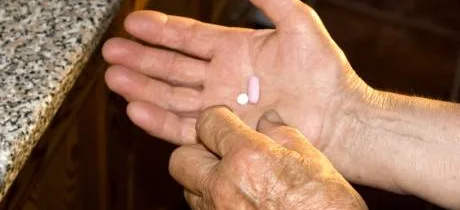
Fot. Thinkstock/Getty Images
Since the beginning of September, people who are at least 65 years old and children and adolescents up to the age of 18 have been eligible to receive medicines free of charge. The drug list includes more than 420 active substances for seniors and nearly 280 active substances for children.
- Everything seems simple and obvious! There is an age, there is a list! In reality, however, the matter is more complicated. Why? The patient must be diagnosed with a disease, but with specific conditions! For example: it is not enough to have diabetes mellitus, it must still be "post-diabetic". Let's imagine - which, by the way, is a "real-life" example - a husband and wife suffer from circulatory failure. Both have reached "reimbursement age." And it is she, although slightly younger, but meets the added conditions - she has the right to free medicines, and he, although older - has no such right! This is not only incomprehensible to them, but also frustrating! Reimbursement was supposed to simplify access to medicines, it was supposed to be automated and clear for both patients and doctors. Meanwhile, it is again on us doctors that all the bitterness of patients who come for discount prescriptions is focused. We are the ones who have to explain to them that age, is only one of the required factors. Few patients know that a reimbursed prescription will not be issued by a doctor in a private practice, for example, they are referred to the PCP. Again, we have the impression that everything was and is being "done" - as always - on short notice," stresses Bożena Janicka.
In the wake of the confusion surrounding free drugs, PPOZ doctors are inundated with questions from patients, burdened with additional requests to discharge drugs with reimbursement from private practices.... To dispel at least some of the doubts, they suggest reading the Ministry of Health's guide.
"Free medicines - who, to whom and when?"
As the MZ explains, under current regulations, a patient can receive the drug free of charge if the following conditions are met:
- the drug is either on the "18-" list or the "65+" list (these are drugs that are covered by reimbursement under the current reimbursement notice and have documented efficacy and safety for use in the patient population under 18 or over 65);
- the patient is either under 18 years of age or over 65 years of age (age verified by the PESEL number, and in the case of those who do not have a PESEL number, it will be the date of birth);
- The doctor has diagnosed the patient with a condition that falls within the scope of the indications covered by the reimbursement for the drug (indications can be found in Annex A1 of the reimbursement notice);
- The prescription is issued by a doctor or nurse authorized to write free medicines on the prescription for a patient under 18 years of age or over 65 years of age;
- On the prescription, under the heading "patient's additional entitlement code," the doctor will write "DZ" for patients under 18 years of age or "S" for patients over 65 years of age.
- Prescriptions for people under 18 and over 65 years of age written without code "S" cannot be filled free of charge at any time.
Who can issue free prescriptions to patients?
The prescription can be issued by a doctor or nurse providing services in the field of primary care, AOS, hospital treatment (including doctors working in Hospital Emergency Departments and Emergency Rooms - but only in connection with the end of hospital treatment); a doctor with a license to practice who has ceased to practice and issued a prescription for himself or herself, or for a spouse, or for a person in cohabitation, or for relatives or affinities in the direct line, and in the collateral line to the degree of kinship between children of siblings.
Any person issuing a prescription, before issuing it, must verify, through the information system (IKP), the quantity and type of products prescribed to the patient in terms of safety and necessity, taking into account the prescriptions issued and filled for that patient. This obligation also applies to the issuance of pro auctore and pro familiae prescriptions.
Prescription with "DZ" and "S" authorization cannot be issued by:
- Doctors employed in hospices and home hospices (scope of palliative and hospice care);
- Doctors providing guaranteed services in the field of nursing and long-term care services;
- doctors from mental health centers and psychiatric hospitals;
- doctors from private practices.
Who can issue pro auctore and pro familiae prescriptions?
Pro auctore and pro familiae prescriptions can be issued by any doctor and nurse listed in question 2, if the person for whom they are issued meets the conditions listed in question 1, and the person issuing the prescription meets the requirements set forth in 43a (1b) of the Law on Benefits (verification in IKP).
Can prescriptions for free drugs be given to uninsured children?
Entitlement "DN" on a prescription, can appear on the same prescription with entitlement "DZ". Similarly, there is no legal objection why the "DZ" entitlement cannot be combined with the "C" entitlement for a pregnant woman.
Is the right to free drugs available to Ukrainian citizens?
Citizens of Ukraine who have arrived in Poland in connection with the armed conflict and who have been assigned a PESEL number are entitled to free medical supplies on the same terms as those covered by mandatory or voluntary health insurance.
Note that the Pole's Card does not entitle you to receive free medicines! The document entitles you to receive emergency health care services (in the event of a health emergency), to the extent specified in the Law on Benefits, unless an international agreement to which the Republic of Poland is a party provides for more favorable rules.
Source: PPOZ