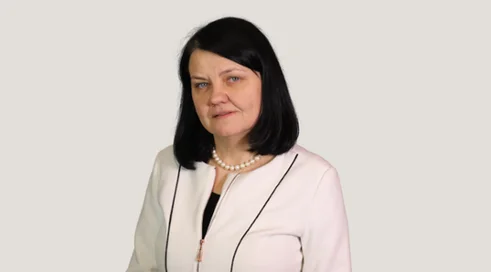
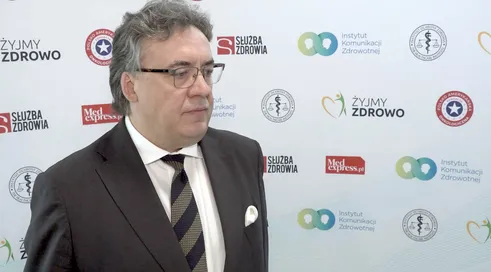
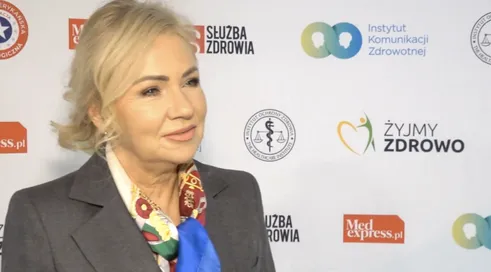
An interview with Professor Anna Kostera-Pruszczyk, head of the Department of Neurology at Warsaw Medical University's UCK WUM Central Teaching Hospital, ERN EURO NMD.
Prof. Anna Kostera-Pruszczyk on nusinersen therapy in SMA: Each subsequent administration of the drug means another statistically significant improvement

Published Sept. 4, 2023 10:57
The Orphanet Journal of Rare Diseases published in August this year the first Polish real-world practice data for adult and elderly SMA patients treated with nusinersen. How large a group of patients do these observations apply to and what are the results?
This is a study that my team, that is, the team from the Department of Neurology at the Warsaw Medical University, carried out together with a team led by Dr. Ryszard Nowak from the Rydygier Hospital in Krakow. We treated a total of 130 patients, 120 were included in the analysis. The most important element was the fact of evaluation after at least 6 months of treatment. In fact, a very large group of these patients were observed by us and also evaluated in appropriately selected scales, for a period of time, reaching 30 months. There were no criteria narrowing access to treatment, since the nusinersen treatment program in Poland allows us to treat patients with all types of the disease, with all stages of spinal muscular atrophy. The long follow-up allowed us to draw very positive and, I think, very interesting conclusions, also for neurologists from other centers around the world.
What is behind the terms "positive" and "interesting"?
The first publications from Germany or Italy showed improvements that marked themselves by the 14th month of treatment. We didn't really know how big the ceiling of improvement was, how long it could last in people who have been de facto ill since birth, and who are 18; 20 or about 40 years old at the time of starting treatment, so they have had many decades of active disease process and many retrograde changes associated with disease progression. Meanwhile, as it turns out, our patients continue to gradually improve. When assessed on scales adapted to spinal muscular atrophy, such as the Hammersmith or CHOP INTEND, but also the RULM scale dedicated to upper limb function, we have noticed that each successive administration of the drug means another statistically significant improvement over the previous time point. The number of patients who achieved so-called clinically significant improvements is increasing. At one time, in early 2019, we hoped that the treatment would simply stop the progression of the disease. Today we are seeing much more.
What role does the SMPT system play in monitoring SMA treatment? What factors in this system are evaluated?
SMPT, the monitoring system for therapeutic programs, is a system in which we are required to report various elements. Of course, in different National Health Fund programs, these are different elements. In the case of SMA, we report on one of the selected scales. The assessments we went for in preparing the observational study, which are also included in the results of the publication, go a bit more broadly beyond what is in the SMPT. The system, on the other hand, is undoubtedly a very valuable tool that allows all centers treating patients with spinal muscular atrophy to determine their current functional status on an ongoing basis. It is also a very, I think, valuable tool for conducting observational studies, although I make no secret of the fact that all of us running NFZ drug programs sometimes wish there was less of this data to enter, because it is the time of very busy teams, but on the other hand, the information that is there is also invaluable and very important.
The Polish SMA Patient Registry was established in January 2010 as part of the Polish Registry of Patients with Neuromuscular Diseases. What benefits does it bring to SMA patients, and what role does it play in such a systemic approach to treating rare diseases?
The registry of patients with SMA, which we have been maintaining at the Neurology Clinic of the Warsaw Medical University for more than a decade, was established as part of the international TREAT-NMD project, which at one point covered countries on all continents of the globe, and was first aimed at mapping how many and what kind of patients there are with these most common rare neuromuscular diseases. This primarily involved spinal muscular atrophy and Duchenn-type muscular dystrophy. Now there are more diseases included in the TREAT-NMD registry. Historically, the first major publication in which our nationwide registry also provided important information covered a population of more than 5,000 patients with SMA. It allowed us to say what the proportions were between pediatric and adult patients, to look at the standard of care that was there, which we would also like to work on and improve. Our Polish registry, from my point of view, was very supportive of the start of the NFZ drug program, because as soon as the Ministry of Health published the reimbursement decision for the first drug, we knew how many patients we had, what the proportion between children and adults was, and where these patients lived. So it was clear which centers should be set up first, and today we have almost 40 of these treatment centers. I think this is a huge success, including in terms of organization, supported one day for sure by the operation of the registry.
Since we mentioned the drug program, indeed this program in Poland is run in an exemplary manner. What factors and systemic decisions have influenced such a great success, which, as also often emphasized by experts today, places Poland among the world leaders in the treatment of this disease?
It is very nice to talk about what is happening in our country in terms of how we are pointing others in the direction they should go. I think this was influenced, first of all, by this well-identified population of SMA patients before there was a treatment option. It was important to be fully aware that these were not only pediatric patients, but also adult patients. Then came the very important and very good reimbursement decisions, for a drug administered intrathecally. This was the first drug registered in Europe and the world at the time. As of 2019, we have access to it in the drug program. Incredibly important and absolutely groundbreaking was the decision to include spinal muscular atrophy in the newborn screening program, which provided an opportunity for therapy in the pre-symptomatic period, which is when it is by far the most effective. We have babies under our care who received treatment in the first weeks and even on the first day of life. Finally, we have another reimbursement decision, for an oral drug, and also for reimbursement of gene therapy for the youngest children identified through the screening program. This is no longer just access to drugs. It's a comprehensive diagnostic and therapeutic program that makes us able to use the most modern tools of today's pharmacotherapy in this very difficult, severe, progressive disease, in a way that I dare call optimal.