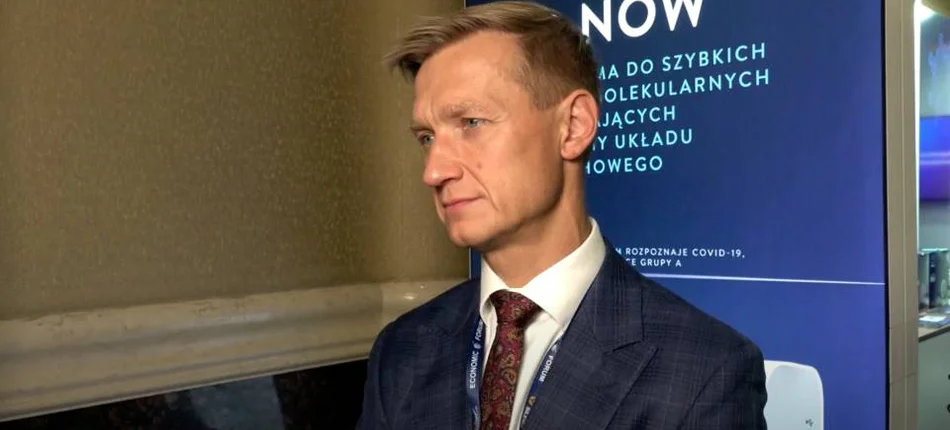
We ask Prof. Marcin Grabowski, head of the 1st Department and Clinic of Cardiology of the Medical University of Warsaw.
Prof. Marcin Grabowski: Priorities in cardiology

Published Sept. 7, 2022 10:43
Cardiological diseases lead among the diseases that create the so-called health debt accumulated in connection with the Covid pandemic. Currently, the Ministry of Health is undergoing a number of reimbursement processes covering medical technologies concerning, inter alia, treatment of cardiological diseases (financing of loop recorders, tricuspid valve repair systems, telemonitoring of implantable devices or mechanical support of the left ventricle LVAD). How can the introduction of these technologies affect the well-being and prognosis of patients with heart failure and can they help to improve the health care system and contribute to reducing the health debt in Poland?
The listed technologies are an excellent example of technologies that meet the criteria of Value Based Medicine. They are examined from the perspective of scientific data in large clinical trials. These are technologies that have been shown to benefit patients in terms of effects on prognosis, including effects on mortality (reduction of deaths). They have also been tested in terms of quality and cost-effectiveness. Implantable arrhythmia recorders, telemonitoring of implantable devices, percutaneous valve repair (we are waiting for intervention on the tricuspid valve and mechanical heart support, i.e. LVADY, are technologies that are already being assessed or in the process of being assessed by AOTMiT and which are awaiting the decision of the Ministry of Health to introduce guaranteed services to the package. We are convinced that these technologies can reduce the health debt that results not only from the negative impact of the pandemic but also from the war in Ukraine. We know that this is a cost-effective impact from the perspective of the decision-maker and payer. In the long term, this intervention will pay off. We will reduce the exacerbations of chronic cardiac diseases (heart failure is a perfect example, especially in elderly patients). spy tala. We can also make a cost-effective impact by shifting all or most of the burden of chronic cardiac patient care to outpatient care. The benefit here is therefore multifaceted and developmental from the perspective of long-term patient care. There is no turning back from this.
What are your priorities when it comes to treating cardiac diseases or heart failure?
We make these priorities quite clear. First of all, introducing refunds for the mentioned technologies. These are innovations or technologies that are not at the stage of clinical or preclinical trials, but only tested and registered technologies that are already reimbursed in many neighboring countries. Secondly, support for outpatient specialist cardiology care, by strengthening the valuation of specialist care and clarifying the services that are provided in the field of AOS. Then there is the issue of developing coordinated specialist care. We have a success, there is no need to hide it, when it comes to coordinated care for patients after a heart attack. Today there is a need to introduce coordinated care for patients with heart failure and after invasive treatment of cardiac diseases, percutaneous valve interventions or after invasive treatment of arrhythmias. Another issue is secondary prevention and support for long-term pharmacological care. We have a few tested molecules, but unfortunately not reimbursed in Poland or not fully available to patients with chronic heart diseases. And the issue of primary prevention and putting some emphasis on the education of healthy people, adolescents, obesity prevention, as well as preventing and combating heart disease risk factors.
Topics
kardiologia / niewydolność serca / AOS / innowacje / Opieka koordynowana / świadczenia gwarantowane / Marcin Grabowski / LVAD / zastawka