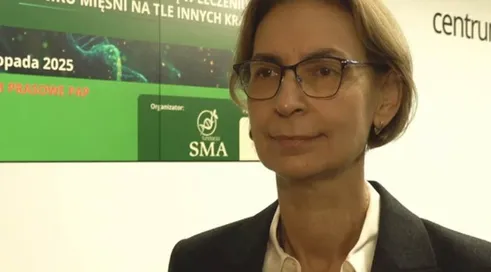
- Patients very often circulate from doctor to doctor, from clinic to clinic, from specialist to specialist. On average, a rare disease is not diagnosed until five years after the first symptoms appear," said Prof. Mieczyslaw Walczak, head of the Department of Pediatrics, Endocrinology, Diabetology, Metabolic Diseases and Cardiology of the Pomeranian Medical University, national consultant in pediatric endocrinology and diabetology, in an interview with Medexpress during the Economic Forum in Karpacz.
Prof. Mieczyslaw Walczak: More and more rare diseases can be treated. However, the patient receives a diagnosis on average 5 years after the first symptoms

Published Sept. 11, 2023 09:51

- The Plan for Rare Diseases was developed for many years, along the lines of what is in other countries around the world, and especially in the European Union. It was statutorily approved only two years ago.
- Activities are being carried out in many directions. These include an information platform or registries for rare diseases, which should be available later this year.
- A very important issue is the diagnostic odyssey. On average, a rare disease is not diagnosed until five years after the first symptoms appear. This is to be improved, among other things, by the information platform mentioned above. The question of legislative work related to expanding the panel of tests - reimbursement of genetic tests - remains open. After all, 80 percent of rare diseases are genetically determined.
- Diagnostic centers are being established. The first ones have European certification. However, there are not enough of them, so applications will be developed in the near future. The best centers for rare or ultra-rare diseases will be able to apply that they want to become a treatment center for a particular rare disease.
- The number of reimbursed drugs has improved in recent years. Poland was at the tail end of Europe, and now it has caught up with other countries. More and more diseases can be treated.
- Unfortunately, only about 5 percent of rare diseases have targeted treatments. This raises further needs for the development of new drugs, as well as the rehabilitation of patients.