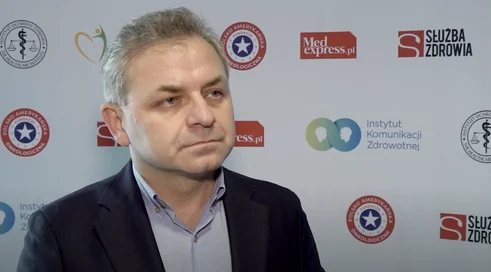
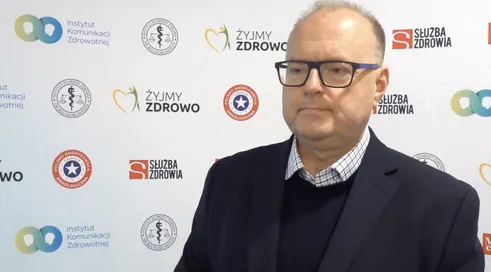
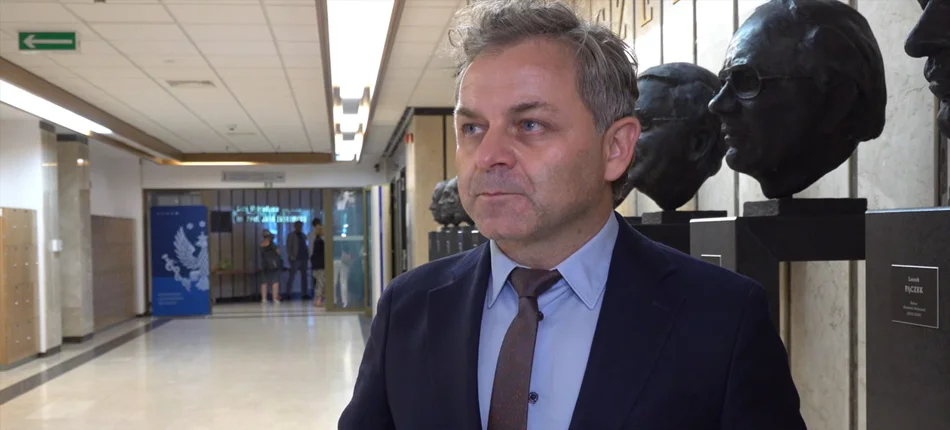
An interview with Prof. Piotr Galecki, national consultant in psychiatry.
Prof. Piotr Galecki: Poland is at the forefront of countries where esketamine is available in the drug program

Published June 29, 2023 09:10
How does the availability of esketamine in the drug program position Poland against European standards?
Esketamine in intranasal form, for the indication of drug-resistant depression, is already available in several European Union countries, but we must boast that Poland is at the forefront of the countries in which a drug program or drug is reimbursed. We are very happy about this, because it was usually the case that in Poland modern molecules used in psychiatry were available, but they were usually expensive for quite a long time, and reimbursement only took place when we were already one of the last countries with lump sum availability.
The treatment of drug-resistant depression is undoubtedly very challenging for doctors. How is this changing with the availability of this formulation?
In the case of drug-resistant depression, the patient has been suffering from a moderately severe or severe depressive episode for several months, so you can imagine how much of a burden this is on the performance of his social roles, if he is still performing them at all. If we follow this treatment regimen and add esketamine to the antidepressants in use, there is a chance that 40 percent of patients can be helped. So optimism in us is quite high, especially since this drug is already available, but very expensive for full payment. We are happy that there is this new molecule, and it is also worth noting that this is the first drug program in Polish psychiatry.
If we're talking about this drug, we're talking about a completely different mode of administration than other antidepressants, but also probably a different mechanism of action.
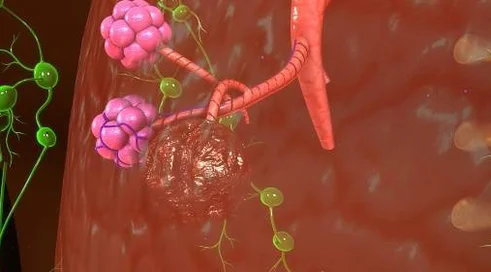
Indeed, escetamine has a completely different mechanism of action than the classic antidepressants used so far, which acted at different points in the monoamine system: dopamine, serotonin or norepinephrine. Esketamine acts on NMDA relay, that is, it increases glutamate, improves relay in those regions of the brain that are responsible for regulating mood and thus improves synaptogenesis or causes this syn pathogenesis to occur. What is important - esketamine alone given to a patient at the first episode of depression in monotherapy as the first drug will not have an antidepressant effect. This drug works only when used concurrently with antidepressants. It is worth noting that the method of administration is also innovative, as the drug is administered by intranasal inhalation.
Why is it so important that patients have access to the widest possible range of modern ones?
If we talk about modern treatment in psychiatry, the first classical neuroleptics appeared in the 1950s. Then, in the late 1980s, new antidepressants from the serotonin reuptake inhibitor group appeared, followed by atypical neuroleptics and various modifications of these drugs. Now we have the first breakthrough in many years in the perception of the pathophysiology of depression, which is the result of brain research, and that is why it is so important.
The drug program for drug-resistant depression will be available to patients starting July 1.