- In the current extremely dangerous geopolitical situation, this is a very important project for the security of all residents of the Union. I hope that in the course of its work it will be supplemented with a fund for critical medicines, which will actually increase their production in Europe," says Krzysztof Kopeć, president of National Drug Manufacturers, about the assumptions of the Critical Medicines Act presented on March 11 at the plenary session of the European Parliament.
Draft Critical Medicines Act - manufacturers' position.

Published March 12, 2025 11:09
Fot. Getty Images/iStockphoto
- This is a strategic project that we have been waiting for a very long time, as we petitioned the European Parliament for its creation in 2022. We are glad that it has come into being, because it is the basis for further work on its completion and clarification. The EU must take bold steps to guarantee our safety for all of us," adds Grzegorz Rychwalski, vice president of National Drug Manufacturers.
Critical drugs
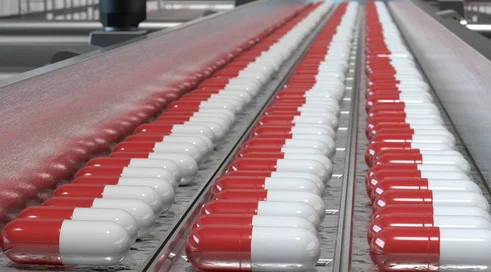
The EU list of critical medicines updated in 2024 includes more than 270 active substances, covering treatments for diseases such as infections, cardiovascular diseases, mental illnesses and cancer. Critical medicines are those with limited or no alternatives, and their shortage would cause serious harm to patients. In Poland, only more than 30 of the EU's list of 270 most-needed drugs are produced.
- In the current uncertain reality, during ongoing armed conflicts and trade wars, autonomy in the production of critical medicines becomes a guarantee for the security of Europeans, Krzysztof Kopeć points out. - To achieve this autonomy, the production of critical medicines in Europe, must become profitable, he adds.
Support instruments
The assumptions of the Critical Medicines Act indicate that related strategic industrial investments will be eligible for support. However, they must create, increase or modernize EU production capacity. They may also include processes to ensure more sustainable development or increased efficiency, as well as the implementation of key technologies that enable the production of these drugs. Strategic projects will receive incentives to strengthen the EU supply chain, including expedited permitting procedures, streamlined environmental impact assessments, and administrative and scientific support. Strategic projects that eliminate vulnerabilities in the supply chain may also have easier access to EU funding (including through the STEP program), and member states will be able to prioritize their financial support under certain conditions. The implementation of strategic projects receiving financial support will entail certain obligations, including the prioritization of EU supplies. When procuring critical medicines, price will not be a single criterion. Consideration will have to be given to, among other things, diversification of sources of manufacturing materials, stockpiling or monitoring of supply chains.
For critical medicines that are heavily dependent on a single country or a limited number of countries for supply, the public payer will apply requirements favoring suppliers that produce a significant portion in the EU, if warranted.
Work is just beginning
Work on the Critical Medicines Act will now proceed in the Council and the European Parliament. According to Medicines for Europe, an organization of European drug manufacturers, a new approach to EU state aid rules and support programs, a special EU Critical Medicines Production Fund, its inclusion in the future multi-year financial framework of the EU budget, and more flexible regional aid funding are needed for the Act to fulfill its role. There is also a need for greater EU solidarity on strategic reserves and flexibility in the approach to national stockpile rules so that patient access to medicines takes precedence over stockpiles in the event of drug shortages.
The lack of financial mechanisms in the EC's proposal was also pointed out by MEPs during discussions in the European Parliament.
MEP Adam Jarubas, chairman of the Public Health Committee, pointed out that there is a certain level of drug production on which the health and lives of Europeans depend, which draws the line between simple business and safety. - We need a critical medicines fund to secure this level in the Union, he urged.
Source: National Drug Manufacturers