Polish women eligible for free mammography under the National Health Service expect systemic solutions that will increase the sense of security and quality of breast cancer treatment - especially coordination of oncology care, the ability to get a "second opinion," and access to multi-gene testing to support the decision to forego chemotherapy in follow-up treatment.
Research report: Attitudes of Polish women towards systemic solutions supporting breast cancer diagnosis and therapy

Published Oct. 28, 2025 07:20

Fot. Getty Images/iStockphoto
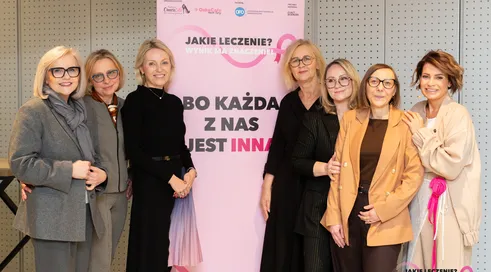
October is Breast Cancer Awareness Month. The Healthcare Institute, in cooperation with the OmeaLife Foundation, the OnkoCafe - Together Better Foundation and the Federation of Amazon Associations, has prepared a research report: Attitudes of Polish women toward systemic solutions supporting breast cancer diagnosis and therapy.
Key findings
- Fears and expectations: More than half of those surveyed fear a diagnosis of breast cancer in themselves or a loved one. At the same time, less than half believe that chemotherapy is necessary in every case (47.7%).
- Strong support for systemic solutions:
- Oncology care coordination - 87.4% "in favor."
- The possibility of a "second opinion" and confirmation of diagnosis/therapy - 87.4% "in favor."
- Access to diagnostic tools (multi-gene tests) to support the decision on chemotherapy - 80.7% "in favor."
- Avoiding unnecessary chemotherapy: More than 90% of Polish women support measures that, if safe, would avoid chemotherapy.
- Acceptance of treatment vs. multigene testing: More than 80% of respondents say they would feel more confident and accept their oncologist's recommendations more easily if the chemotherapy decision was based on a multigene prognostic test.
- Organization of treatment: 3 in 4 Polish women support limiting the number of hospital visits to the minimum necessary.
- The role of patient communities: 77% of respondents said they would like to share their experiences with other patients - a strong mandate for patient organizations.
Breast cancer in Poland
Breast cancer remains the most common cancer among women in Poland (about 25% of cases); more than 20,000 Polish women hear the diagnosis every year. Despite free screening (NFZ: mammography every 24 months for women 45-74 without referral), about 33.5% of eligible women take advantage of the program - far from the 70-80% level considered to be the target. The report's findings suggest that strengthening the diagnostic and therapeutic pathway (coordination, second opinions, modern diagnostics) could raise confidence in the system and indirectly improve screening attendance.
The perspective of clinicians and patient organizations
Prof. Renata Duchnowska, MD, Head of the Department of Oncology, Military Medical Institute - National Research Institute: More than half of Polish women in the 45-74 age group (the group eligible for mammography under the National Health Service) are afraid of a breast cancer diagnosis in themselves or a loved one. Most patients say they would feel more confident and accept treatment with greater acceptance if the decision to undergo chemotherapy was based on the result of a multigene prognostic test. The report's findings point to the public's expectation of personalized medicine and the need to implement systemic solutions, such as reimbursement of multigene prognostic tests, to increase the sense of health security of Polish women
Dr. Katarzyna Pogoda, chairwoman of the Breast Cancer Section of the Polish Society of Clinical Oncology: The results of the report show that Polish women increasingly expect an individualized approach to breast cancer treatment. This reflects the direction in which modern oncology is heading - from uniform therapies for all patients toward precision medicine based on tumor biology and risk of recurrence. Today we have a wide range of effective treatments: from hormone therapy and targeted drugs to modern antibodies conjugated with cytostatics. Multigene testing is also becoming increasingly important to identify patients who truly benefit from postoperative chemotherapy
Anna Kupiecka, president of the OnkoCafe Foundation - Together Better: From the perspective of female patients, it is extremely important that therapeutic decisions can be based on individual test results rather than general treatment regimens. Women want to be sure that the decisions made for them are personalized and based on science. The report's findings are also a reminder that effective prevention requires not only access to modern research, but also education and communication. Polish women need clear information on where and how they can benefit from tests - especially those that can determine the success of treatment. That's why it's so important for the health care system to support informed decisions by female patients - through reimbursement of molecular tests, development of diagnostics and sound health education. This is an investment in better treatment, but also in women's sense of security.
Krystyna Wechmann, president of the Federation of Amazon Associations: The introduction of coordinated oncological care, the possibility of obtaining a second opinion from a doctor, and the use of multi-gene tests in breast cancer diagnosis are socially desirable solutions and expected by the majority of Polish women. Women are afraid of the side effects of chemotherapy, so they want to be sure that the treatment will actually be necessary and safe. Many women a few years ago did not have the chance to benefit from multigene testing. Chemotherapy didn't give them the results they wanted, and at the same time worsened their quality of life. Implementing these solutions will better tailor therapy to patients' needs, reduce unnecessary chemotherapy, and improve women's quality of life during and after treatment. It is also a way to make more efficient and rational use of the health care system's resources
Magdalena Cardinal, president of the OmeaLife Foundation: Polish patients expect tailored medicine, which means a decisive shift away from one-size-fits-all treatment protocols to therapies based on the biology of their own cancer. A key tool for realizing these expectations is multigene prognostic testing. These tests provide the doctor with precise information about whether the inclusion of chemotherapy will be of real benefit to the patient. The ability to avoid unnecessary chemotherapy is a priority for women, which directly translates into a better quality of life and minimization of the anxiety accompanying the disease. This is a modern approach to treating cancers that a decade ago were considered incurable in many circles
The need for systemic change
The report's findings show a clear societal mandate for solutions that improve the quality and predictability of breast cancer care: care coordination, second opinions and the implementation of multi-gene testing to support therapeutic decisions. These are directions that can simultaneously increase treatment acceptance, improve quality of life and rationalize system spending.
The survey was conducted on the days of September 25-30, 2025, using the CAWI method with the SW Research panel on a nationwide, representative sample of 707 women aged 45-74.
Topics
opieka onkologiczna / mammografia / rak piersi / onkologia / testy wielogenowe / chemioterapia