In line with the guidelines of the European Commission on the European plan to reduce gas demand, Medicines for Europe - an organization associating European pharmaceutical companies, which also includes National Drug Manufacturers (PZPPF), calls on the governments of EU countries to maintain energy supplies to pharmaceutical plants in the event of energy limitations in Europe. Such an appeal was also made by the National Medicines Manufacturers to the Polish government.
The European Gas Demand Reduction Plan and Drug Production

Published July 21, 2022 09:14

In the gas consumption reduction plan proposed yesterday (20/07/2022) by the European Commission, the pharmaceutical industry is listed as strategic from a social perspective, which should be treated as a priority in maintaining the continuity of energy supplies.
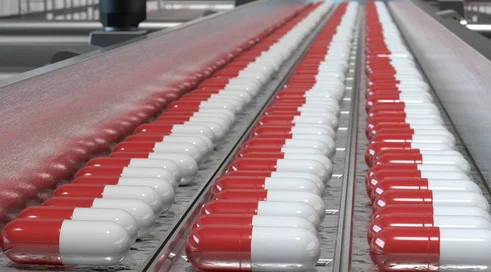
Many of the most needed drugs (sterile products, biologicals and antibiotics) require highly specialized manufacturing conditions, especially heating and cooling in the manufacturing process. And this means the need for a continuous supply of energy - gas or electricity. This is why drug production cannot simply be turned off for a few days and turned on again.
Companies affiliated to PZPPF conducted analyzes of the impact of interruptions in energy supplies on the production process. It turned out that even the lowest foreseen degree of reduction of energy supply means the necessity to shut down entire production lines and even plants.
- Considering that domestic drug manufacturers supply every second drug reimbursed in Poland, one can imagine how dramatic the consequences would be. Limitations in the supply of electricity are a disaster for production and R&D processes, the storage of raw materials, semi-finished products, finished products and the operation of laboratories. It is a paralysis of technical systems, in particular those ensuring the required environmental, fire and work safety conditions. And the lack of appropriate temperature and humidity means the degradation of raw materials, samples and products - warns Krzysztof Kopeć, president of the National Medicines Manufacturers.
Even a temporary halt to production would require enormous effort and a long time to restart due to the technical challenges of temperature control, sanitation and pollution control, and good manufacturing practice (GMP) compliance. - Resumption of production after a longer break must be preceded by a number of service activities combined with the obligation to perform the necessary tests and measurements, e.g. pressure cascade regulation, microbiological measurements, room regeneration tests, washing production equipment and carrying out qualitative explanatory activities. It also requires prior checks by authorized personnel. Carrying out all these activities is costly and time-consuming. Lack of energy supply for several hours causes production stoppage for several days - emphasizes Krzysztof Kopeć.
- That is why we asked the government to ensure the liquidity of energy supplies and guarantee the longest possible access to electricity and gas supplies in the event of the introduction of compulsory restrictions on their transmission in Poland - he adds.
National Drug Manufacturers work in working groups with the Ministry of Climate and Environment, which analyzes the impact on retail recipients of leaving energy supplies for the pharmaceutical sector at the current level in a situation where it is necessary to limit them.
The National Medicines Manufacturers held several meetings with the European Commission and applied for an initiative enabling the governments of the Member States to recognize pharmaceutical producers and distributors as entities of special importance that should be subject to tariff protection of electricity and gas prices and cut off from their supply in last order.
This issue was also raised in the "Petition on the need to support the production of active substances for medicinal products in the EU" submitted to the European Parliament. The petition was submitted for work in parliamentary committees on July 14 this year.
Medicines for Europe in its appeal to the governments of the EU Member States also stresses the importance of recognizing pharmaceutical production as a key sector. Medicines for Europe members have over 400 production plants in Europe and supply 70% of the medicines used by Europeans. During the Covid-19 pandemic in 2020, Medicines for Europe worked with EU authorities to maintain drug production and supply chains. - We must now maintain this constructive cooperation to keep the production of drugs in the face of threats related to energy supplies - emphasizes M4E, of which PZPPF is a member.