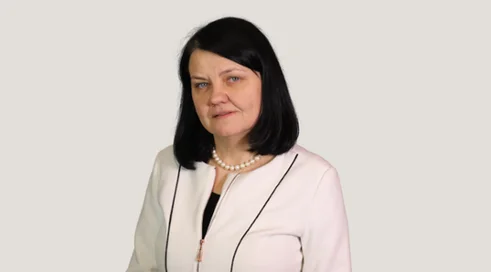
Since when and how the drug program of infusion therapies for the treatment of Parkinson's disease works tells us Joanna Siuda, MD, head of the Department of Neurology, Faculty of Medical Sciences in Katowice, SUM.
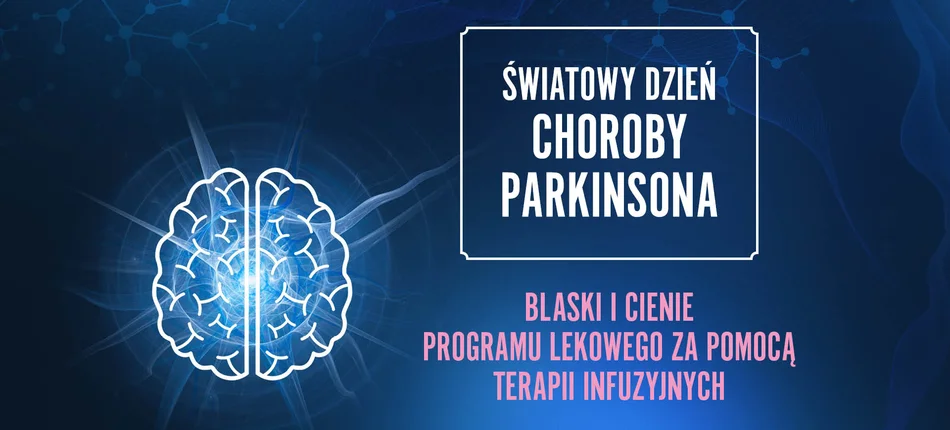
World Parkinson's Disease Day
Parkinson's disease: How the drug program for infusion therapies works

Published April 11, 2023 10:00
What group of Parkinson's disease patients are infusion therapies for?
As for the drug program, infusion therapies are reserved for patients with the so-called advanced form of the disease. Although a more appropriate name is complex Parkinson's disease, because the word advanced connotes a late form of the disease and the advanced age of the patient. And we also have young patients, in their forties or fifties, who already have complex, that is, a form of the disease with movement disorders, complications of dopaminergic therapy and extra-motor symptoms like memory disorders or autonomic symptoms (urinary disturbances, drops in blood pressure, etc.).
The B.90 program is fully funded by the National Health Service and has two infusion therapies. One is apomorphine therapy. This is one of the dopamine agonists. The other therapy is the so-called gold standard, which is levodopa.
What are the criteria for inclusion in the program? Do they need to be changed?
The program in Poland is now in its fifth year. We have more than a dozen centers providing this therapy. I work in one of the first centers that started providing this therapy. The program has evolved over time. In the beginning, the eligibility criteria were indeed very restrictive. One of the conditions was disqualification for treatment with deep brain stimulation (the third formula for treating the advanced form of the disease). Happily, it was also possible to dispense with the criterion of having an MRI scan of the head within 12 months before qualification. Currently, the criteria for the diagnosis of Parkinson's disease do not require a brain imaging study. However, in the course of diagnosis, most of our patients have such an examination, but currently there is no need to repeat it in patients qualified for infusion therapies. Since March, the program has undergone further changes in favor. One more element that limited us quite significantly so far was the condition that patients had to meet in terms of variability of disease symptoms throughout the day. That is, the patient must note down in the so-called Hauser diary the state of his performance throughout the day. He marks periods of poor functioning, the so-called "off" states, and the state of good functioning, i.e. the "on" state, within which, in addition, there are periods of on, but with involuntary movements known as dyskinesias, which are troublesome to the patient, and which we equally treat as bad functioning time. We then added up these "bad hours," i.e., off as well as on with dyskinesias, and the condition for entry into the program was that more than 50% of the daily activity time be obtained as a state of poor functioning. This meant that only patients already in a very advanced stage of the disease were eligible. This limited us greatly. At the moment, the criteria have been relaxed. And we have limited ourselves to the 5/2/1 algorithm, where 5 - means that the patient uses at least 5 doses of the drug per day. As a rule, patients with the complex form of the disease take more than 5 doses per day, because symptomatic treatment must be applied sometimes even every 2 hours. The number 2 means that we have at least two hours of off state, while 1 is 1 hour of on state with intractable dyskinesias. So we have gone from a requirement of 50% time of poor function to only 3. The current criteria will actually make it easier for us to qualify patients much earlier. Even though we're talking about a drug program for advanced Parkinson's disease, we don't want this form of therapy to be treated as a so-called last resort, because we're still talking about symptomatic therapy, because a form of infusion therapy or deep brain stimulation are still forms of symptomatic therapy. It is not a way to cure the disease. Therefore, we would like patients to get the most benefit and regain a good quality of life using these forms of therapy.
You mentioned that infusion therapy is carried out in more than a dozen centers. Is the number of these centers sufficient?
The distance of the patient's residence from the center is very important, as the patient must attend follow-up visits (once every 3 months) and pick up batches of medication. Apomorphine can be stored at room temperature, but levodopa/carbidopa (gel) must be stored in a refrigerator. A portion of this drug for a week is 7 cassettes, and one such package is the size of a shoebox. It is easy to imagine that one must have enough space in the refrigerator to store them. Distance from the treatment center is also important, especially in the early stages, because of the possibility that some problems may arise during treatment. Usually these are technical problems related to the functioning of the pump, but fortunately they are easily explained. An important issue, if not the most important, is the experience of the center's doctors. The therapy cannot be provided by every neurology department, because the doctors working in this program must have experience in the diagnosis and treatment of Parkinson's disease and differential diagnosis, since this program is designed only for people with Parkinson's disease. And parkinsonism is a broad term, it also includes atypical parkinsonisms like polycystic atrophy or supranuclear palsy, as well as secondary parkinsonisms like in normotensive hydrocephalus or brain tumor. It happens that in patients referred to us for inclusion in the program, we verify the diagnosis and then they are not qualified by us. So it has to be a center with experience. Currently, the network of centers providing infusion therapy includes 21 hospitals and covers Poland quite well, but there are still provinces, especially in the northeastern part of the country, where such centers are lacking.
Does the program need changes? Are we diverging from European standards?
As for the current formula of the program, it is definitely more optimistic and easier. It opens the patient pathway for us much earlier than its previous versions. The criteria have been relaxed enough that we hope to increase the pool of patients effectively treated with infusion therapies. Is it diverging from European standards? The program is only in its fifth year with us. In this context, there are far fewer patients than in countries where this form of therapy has been available for more than a dozen years. We doctors and our patients were previously mainly blocked by the lack of availability of this form of treatment in Poland. It is quite expensive, so for most patients the only way to benefit from this form of treatment is through reimbursement by the National Health Fund. And here thanks to the representatives of our Ministry of Health and the NFZ, who finally 5 years ago allowed this form of therapy to be funded by the NFZ under the drug program. In time, we will have to serve more and more patients, which will also increase our experience, but then the number of centers will probably have to increase.
What is the neurology community waiting for?
In the context of infusion therapies, we are waiting for a subcutaneous form of administration of levodopa with carbidopa. There are already completed clinical trials on this formulation of drug administration. It will definitely be more convenient for the patient. Our patients are also waiting for a reduction in the size of the pump that administers the drug. In the case of apomorphine, only one form of pump is available in Poland, i.e. syringe pump, in which the drug is administered through a 20-milliliter syringe, so the pump is quite large and bulky. In addition, the patient or caregiver must first transfer the drug from the vial to the syringe, which is sometimes difficult especially for the elderly. A much smaller pump about the size of half of a smartphone is now available in the West, in which the medicine reservoir is refilled automatically. We hope that these more modern forms of infusion therapies will soon be available to our patients.