Inflammatory bowel diseases are still mainly diagnosed when the patient is unable to function normally - stops eating, loses weight rapidly, suffers pain and is unable to control bowel function. Experts emphasize that the treatment of these diseases has undergone tremendous evolution, and patients are increasingly likely to live a good quality life.
It's a classic - if it bleeds, it's hemorrhoids. From diagnosis to treatment in IBD

Published Dec. 15, 2025 11:23
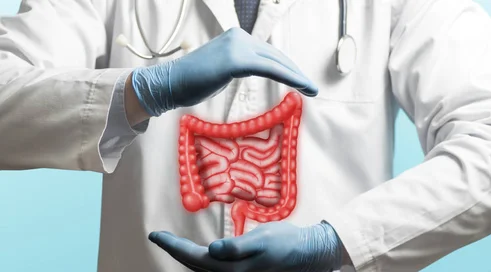
Fot. Getty Images/iStockphoto
Between 100,000 and 150,000 people in Poland suffer from inflammatory bowel diseases - including ulcerative colitis and Crohn's disease. The number is growing every year, and the disease is increasingly affecting young, working-age people who want to start families, work and pursue their plans. The second peak in incidence is among 50- to 60-year-olds.
The long road to diagnosis
One of the biggest problems for patients with IBD remains delayed diagnosis. In the case of Crohn's disease, the delay reaches 5 years, while in Poland it is about 3.5 years. For the patient, it's a drama: shame, years of living in pain and feeling misunderstood.
Piotr Wojcik, who suffers from Crohn's disease, tells his story. - When he saw blood in his stool, he looked for an explanation. He told himself it was hemorrhoids. - That's what the doctor who prescribed over-the-counter preparations also said," he recalls. The symptoms grew. I developed diarrhea, rapid weight loss and tremendous pain in my buttock area. - I couldn't finish my breakfast because I immediately had to run to the toilet. When the wound in the perianal area appeared, the pain was unbearable," he says. It wasn't until a visit to the ED and the intervention of a surgeon, and later another doctor who suspected Crohn's disease, that the real diagnosis was triggered. - It took six months from the first visit where I heard about the hemorrhoids until I ended up in the hospital," says Peter.
"It's a classic - if it bleeds, it's hemorrhoids."
Prof. Grazyna Rydzewska, head of the Department of Gastroenterology and Internal Diseases at the National Medical Institute of the Ministry of Internal Affairs and Administration in Warsaw, stresses that the problem of downplaying symptoms concerns both patients and doctors. - It's a classic: if something bleeds, it's hemorrhoids. Meanwhile, blood in the stool, chronic diarrhea, weight loss or nighttime abdominal pain should always arouse vigilance, the professor says. The expert adds that 25 percent of extraintestinal manifestations occur before intestinal ones. An additional problem is the lack of easy access to basic diagnostics. A simple stool test, which could be performed at the POZ level, is not reimbursed and costs between PLN 150 and PLN 200. Meanwhile, according to experts, the spread of such tests could significantly reduce the time to diagnosis.
A disease of the young
IBD is a disease that often starts very early. - About 25 percent of patients get sick as early as childhood. The second peak in incidence is after the age of 50, but young people definitely predominate," explains Prof. Rydzewska. In the Polish Crohn's Disease Registry, more than 70 percent of patients are under the age of 35 at the time of registration. These are people who are professionally active, starting families, planning for the future - and the disease can brutally take all that away from them.
Evolution of treatment - getting closer to a normal life
Although inflammatory bowel diseases remain chronic and incurable diseases, therapeutic options have changed dramatically. - Every year there are one or two new molecules that improve the fate of patients," stresses Prof. Rydzewska. The breakthrough came in 2000 and the appearance of the first biologic drugs, such as infliximab. Later, more formulations joined the therapy, including vedolizumab, as well as oral therapies such as tofacitinib. - And finally, something with which we have high hopes - but not yet in the program. They are in the reimbursement process. The new molecules have great safety - mirikizumab, risankizumab, guselkumab - are very promising," Prof. Rydzewska points out. Personalization of treatment is playing an increasingly important role. Doctors take into account the patient's age, gender, procreative plans, concomitant diseases and preferences - such as whether he prefers treatment at home, subcutaneously, or in a center in the form of intravenous infusions. - We already have drugs that work very quickly, some begin to inhibit the fibrosis process, and others can be administered subcutaneously or in tablets. This is a huge change from the days when steroids were the only option," says the expert, and points out that the short-term therapeutic goal is clinical remission, and the long-term goal is primarily the resolution of mucosal changes, which directly translates into fewer cancers. - We aim for endoscopic remission," stresses Prof. G.Rydzewska.
We treat too late and too little
Despite progress, access to modern treatment is still limited in Poland. - Less than 10 percent of patients are treated in drug programs. In the West, the figure is 20-25 percent. - emphasizes Prof. Rydzewska. The problem is not only the criteria for inclusion in the programs, but also the insufficient number of centers implementing drug programs. Large cities, such as Warsaw, have several centers, but there are regions where there is not a single one. This results in patients having to travel hundreds of kilometers to get help. Experts stress that investment in treatment brings real savings for the state. - Savings are visible not in the budget of the National Health Fund, but in the Social Security - because a patient who is successfully treated returns to work and does not use sick leave, explains Prof. Rydzewska.
Diet, microbiota and diseases of civilization
There is also increasing talk about the role of diet and the gut microbiota in the development of IBD. These diseases, like obesity, allergies or other autoimmune diseases, are strongly linked to lifestyle and food quality. - Since the 1950s, our diet has changed dramatically. Highly processed foods, full of emulsifiers, stabilizers and dyes, are destroying the microbiota and the intestinal barrier," explains Prof. Rydzewska. Of particular concern are additives such as carrageenan (E407), polysorbates (E433) and carboxymethylcellulose (E466), which are often present in ice cream, yogurt, sauces, mayonnaise, sweets and ready meals.
Comprehensive care - a goal for the future
According to experts, the future of IBD treatment is not just new drugs, but a completely new model of care. - We need centers where the patient has access to a gastroenterologist, nutritionist, psychologist and treatment coordinator," says Prof. Rydzewska. The Polish Society of Gastroenterology has prepared a project for comprehensive care for patients with IBD, which has already been submitted to the Ministry of Health and the National Health Fund. The idea is to shorten the diagnostic pathway, improve access to treatment and better control the disease. Together with the E-Gut Society, they are calling for the introduction of an ID card - a patient card - entitling patients to use the toilet immediately.
Hope for a real revolution
For many patients, the greatest hope is not just more effective treatment, but prevention. Research is being conducted on how lifestyle and dietary modification can reduce the risk of the disease. - The real revolution will come when we can prevent the disease before it develops," Professor Rydzewska concludes. The goal of treatment is not only the absence of pain, but a full life without limitations. Today, patients with IBD already have a chance to reclaim their daily lives. And although the road to ideal care is still long, the direction of change is clear: diagnose faster, treat more effectively and provide comprehensive care.