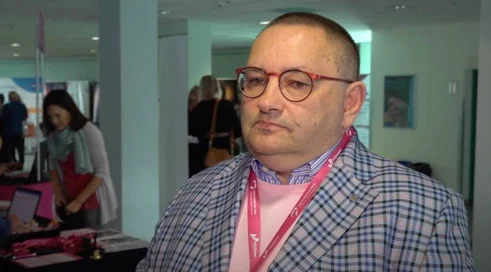
- An alternative to drug treatment may be neurosurgical treatment, including the use of spinal stimulators, says Prof. Tomasz Mandat, head of the Nervous System Tumor Clinic, National Cancer Institute in Warsaw.
Pain treatment in Poland can be more effective

Published Sept. 25, 2024 09:05
Medexpress: More than 8 million people in Poland suffer from chronic pain. Chronic pain is certainly a great challenge for doctors and modern medicine, because it often provokes depression, anxiety, cognitive disorders and sleep disorders. It is a problem not only for the patient, but also for the entire family. What kind of problem and what scale are we facing at the moment in Poland when it comes to chronic pain?
Prof. Tomasz Mandat: Chronic pain is a huge problem both socially and economically. It affects me more than one-fifth of the population, so in Europe it's up to 150 million and in Poland it's about 8 million people. Chronic pain also affects patients undergoing treatment for oncological reasons. It is estimated that about 30 percent of patients undergoing systemic treatment will suffer from chronic pain, that is, mainly neuropathic pain. The pain itself generates, of course, great discomfort for the patient, but it also affects family members. Their normal functioning is disrupted. Pain also affects the socio-economic situation of the family and the state (sickness absenteeism). The patient cannot work effectively. An additional problem is that chronic pain causes the development of new somatic diseases, such as cardiovascular diseases and neurological conditions. The problem is very complex and important from the socio-economic point of view of the country. It seems, due to its enormity, unresolved.
Medexpress: What does pain treatment look like in Poland at the moment?
Prof. Tomasz Mandat: Because of the scale of the problem, patients are mainly treated by general practitioners, that is, by family doctors. Patients who have very significant pain are often referred to pain clinics, where they are treated in a more targeted manner. Some patients, at the next stage, are referred to us - neurosurgeons. We then can offer more invasive, surgical treatment.
Medexpress: That is, on the one hand, most patients are treated pharmacologically, but on the other hand, there are other methods of non-pharmacological treatment of chronic pain. One such method is spinal cord stimulation. Could you tell us what this method consists of?
Prof. Tomasz Mandat: As for drug treatment, it is certainly very effective. Only, of course, treatment that is effective carries with it certain costs, health and economic. We are aware of what is happening now in North America. Because of the high availability of narcotic drugs with which we can control pain, in Poland we face a problem related to prescribers and poorly controlled access to these drugs. This will obviously generate some problems in the future. A more targeted alternative to drug treatment may be neurosurgical treatment, including the use of spinal stimulators. The procedure itself is relatively minimally invasive. And it doesn't carry those systemic costs I mentioned. It is a relatively small procedure with very good results. It should be noted that although this method is available in Poland, its prevalence is disproportionately lower than in other European countries. The number of implantations is at least one order of magnitude lower in Poland than in the Benelux countries, for example.
Medexpress: In which patients is spinal cord neuromodulation used? In which ones would it be most effective? Is it a procedure carried out painlessly for the patient? What does it consist of?
Prof. Tomasz Mandat: The procedure looks like this: we insert an electrode into the spinal canal. We leave it on the dorsal part of the spinal canal. We can perform the procedure under local anesthesia, which is especially reasonable for those with an internal medicine burden. We can also use general anesthesia, in which case patients under general anesthesia during surgery do not feel pain. The surgery itself is relatively short. It lasts from me more 20 to 40 minutes (in the operating theater, of course). In the next stage, the programming of the neurostimulator takes place. The purpose of the neuromodulatory action is to inhibit the pain impulse, which is mainly generated from the lower extremities, from the lumbar spine, but it is also possible to place neurostimulators in the cervical spine. In this way, it is possible to control pain that occurs in the upper extremities or chest. The main target of this type of treatment is neuropathic pain, that is, such burning, burning pains. This method is also effectively used for patients who have previously been treated for discopathy, such as lumbar discopathy (suffering from ineffective spinal surgery syndrome).
Medexpress: If one were to compare the patient's quality of life before and after this procedure, what does it look like?
Prof. Tomasz Mandat: The procedure is minimally invasive and patients tolerate it very well. The consequence of the procedure for the patient is the presence of a neurostimulator, usually sewn into the area of the right buttock. Patients report some discomfort, which they describe as if they had a wallet in their back pants pocket. That is, it is discomfort rather than pain. The stimulation itself can cause a tingling sensation in some patients. But now we generally try to use the kind of stimulation where patients have no pain and no side effects, they don't feel paresthesia. In terms of quality of life, the goal is for patients to live without pain and to be able to return to normal work activities, social activities, without the costs associated with drug treatment, that is, not to be drowsy and addicted to painkillers.
Medexpress: The spinal cord stimulation procedure itself is reimbursed. Do we have a procedure for qualifying a patient for this surgery? Are there procedures related to the subsequent programming of the stimulator itself? Is all this somehow described?
Prof. Tomasz Mandat: The National Health Fund provides for the insertion of a neurostimulator and this is reimbursed. A certain problem is the lack of recognition by the payer of the qualification algorithm itself, that is, patients are qualified under the usual neurological or neurosurgical consultation. Here, a psychological consultation should also be a certain element at the qualification stage, which is not provided for by the National Health Service. Another problem is that neuromodulation consultations, already after surgery, are not recognized by the payer. That is, patients are admitted and consulted under regular neurological or neurosurgical advice, which, compared to other advice from doctors in these specialties, can be much more time-consuming and demanding. Some improvement in the availability of this method would be recognition by the payer of the qualification process itself and then possibly the process of changing pacing parameters. As in cardiology, for example, in the case of pacemakers, where the NHF recognizes so-called pacemaker advice. A clear qualification algorithm is also a certain limitation. There are some guidelines from international pain societies, saying which patients should be qualified. However, this is still not so clearly codified in Poland. There are some centers that qualify patients according to these guidelines, but there are also some that qualify, for example, without psychological consultation, which it seems should be done for the sake of increasing the effectiveness of this method.
Medexpress: What should be done to improve the situation of patients suffering from chronic pain? What systemic or other types of changes should be carried out?
Prof. Tomasz Mandat: Certainly, there should be education of patients and patient communities to increase their awareness of the possibilities for effective pain treatment. It would be worthwhile for the National Health Service to recognize the qualification process, possibly the process of changing the parameters of stimulation, which would encourage physicians to carry out these qualifications and take care of these patients. This will, of course, have an impact on the quality of life of a significant group of patients who are, in fact, now doomed to suffer. Attention should also be paid to patients who are receiving pharmacotherapy, but it is not fully effective in them. Implantation of a neurostimulator alone does not eliminate the possibility of using drug therapy (possibly in smaller doses to achieve an optimal effect).