It is already clear that artificial intelligence in medicine and healthcare means development on an unprecedented scale. Models based on learning algorithms can provide a lot of personalized recommendations in a very short time, help in decision-making. Nevertheless, it is still the human being with emotional intelligence who has the last word. But the question is increasingly being asked if and when this will change.
Is artificial intelligence capable of empathy?

Published June 15, 2023 10:57
Fot. Getty Images/iStockphoto
Artificial intelligence is a current tool used in many medical disciplines and in healthcare. Its capabilities seem limitless and as a result, there are concerns that over time, if not properly supervised from the beginning, it will become a threat to humans. Stephen Hawking stressed that "the real risk associated with the development of artificial intelligence is not that it will be malicious, but the competence with which it will be equipped." Meanwhile, all indications are that in the world of medicine, artificial intelligence is an instrument that promises a breakthrough on an unprecedented scale in, among other things, diagnosis, laboratory tests, radiology, laser therapies, the creation of robots and the monitoring of their own health by patients themselves. For the time being, it is unable to replace humans but can improve diagnostic and treatment procedures in a significant way.
When it comes to self-monitoring of health, more and more apps are appearing on smartphones or smartwatches to monitor blood pressure, blood oxygen levels, blood sugar, heart rate, brain activity or to notify when a medication is needed. The data collected and organized in this way, made available to the doctor, allows for better tailoring of possible therapy to the patient's needs. In turn, they make it easier for the patient himself to effectively monitor his health and take preventive measures, if only because they make it possible to see the dependence of health on lifestyle, sleep quality, diet and stress. These are tools that significantly reduce the risk in the onset of diseases such as diabetes, cardiovascular disease, cancer, and help create treatment plans. Algorithms analyze data in real time and this makes it possible to detect abnormalities at a very early stage and makes it easier to take preventive measures.
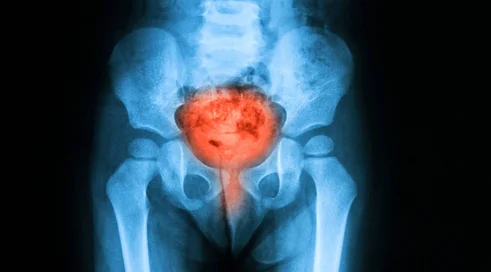
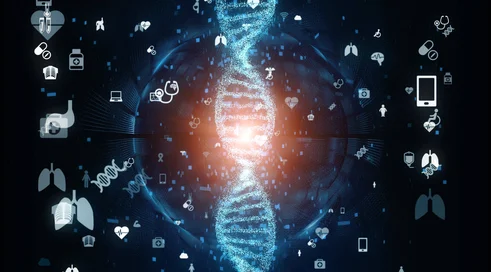
Doctors and medical staff are still indispensable in making final decisions on diagnosis and treatment, but artificial intelligence can be a support, one of the instruments to facilitate decision-making through collected population data, clinical trial results and scientific evidence. It is artificial intelligence that can, in a very short time, provide doctors with the latest scientific information, clinical trial analyses, and process these collections so that it is easier to project a treatment outcome based on them. It becomes invaluable to remotely monitor a patient with the ability to directly transmit data to a doctor or monitoring center, for example, heart function. Artificial Intelligence also " owns" information about the effectiveness of drugs, possible interactions between them and the predicted results of treatment. Algorithms based on previous cases and patterns can suggest specific diagnostic tests. In clinical medicine, artificial intelligence is actively used in diagnostic imaging, such as computed tomography (CT), magnetic resonance imaging (MRI) or mammography, to detect lesions, tumors, anomalies or signs of disease. Machine learning algorithms are trained on large collections of medical images, allowing them to automatically recognize and classify various structures and pathologies. In radiotherapy, on the other hand, algorithms are used to optimize radiation doses, minimize damage to healthy tissues and precisely target pathologically altered areas. This helps increase the effectiveness of therapy and minimize side effects. Artificial intelligence can support the analysis of genetic and genomic data. AI algorithms can identify associations between specific DNA sequences and diseases, predict the risk of inherited conditions, and help design personalized gene therapies. In cardiology, there are ECG recording devices in which an algorithm analyzes data from the recording. In this way, atrial fibrillation, for example, can be diagnosed with a high degree of accuracy. Similarly, analysis of imaging data from cardiac CT scans can be done using an algorithm. On advanced mathematical algorithms, the Ictal robot was constructed in Poland to help diagnose epilepsy. It can analyze even the most difficult, drug-resistant cases of the disease, making the selection of appropriate therapy easier. Its system introduces dozens of epileptic types classified by the International League Against Epilepsy, as well as drugs used in the treatment of epilepsy, along with doctors' recommendations for their dosage and use. These are just a few examples that illustrate the potential of artificial intelligence, which already accurately supports personalized diagnosis and treatment. Given that, in fact, artificial intelligence is at the beginning of its capabilities, the question arises whether it also has potential in the realm of feelings and emotions or recognition of mental states. Ethical, data protection and liability issues, i.e. patient safety, also become important.
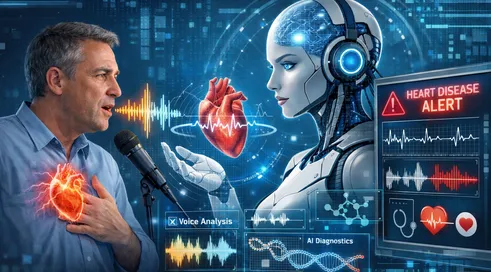
So what does the realm of emotions look like for artificial intelligence? As it turns out, learning emotions is the most difficult challenge, for models based on machine learning algorithms and neural networks cannot have the ability to feel as the human brain knows it. They are based only on the analysis of data and patterns but not on the understanding of emotions themselves, which are a complex experience that depends on the context of life and individual characteristics, a subjective human experience. Algorithms are incapable of empathy, which involves empathizing with emotions and looking at the world through the eyes of the interlocutor, understanding and imagining his emotions and responding appropriately. While research is underway to develop models that can recognize emotions based on voice timbre, gestures or facial expressions, which could prove particularly useful in psychiatry. But it is difficult to talk about experiencing them authentically in this case. An experiment was conducted at the University of California, Qualcomm Institute in San Diego, involving a conversation with a patient carried out in parallel by algorithms and doctors, with the goal of answering the same questions about health, based on the results of the people involved in the experiment. Responses to questions intended for 200 patients were analyzed. The results turned out to be surprising, for as many as 79% of them found the answers provided by the artificial intelligence in terms of the information contained to be of better quality and more empathetic. Experts and patients evaluating the quality of the answers did not know which ones were generated by artificial intelligence and which belonged to the doctor. In this case, the opinion-generating algorithm performed better. The ability to process a huge amount of data was probably of considerable importance in this study. However, the conclusions of this experiment do not allow "optimism" for the time being that artificial intelligence is capable of fully replacing the human experience of empathy; at best, it can only support and complement these qualities. Rather, for the time being, one can count on the ability to analyze medical data ultra-fast, leaving doctors more space to have patient, sympathetic, and therefore empathetic conversations with patients.