A list of critical medicines and an emergency plan jointly developed by the Ministries of Health, Development and Defense, as well as national drug manufacturers, doctors, pharmacists and wholesalers, are essential tools to respond effectively to increased demand for medicines, according to a discussion at the Operation Polish Medicine panel held as part of the Ninth Congress on Health Challenges.
Congress of Health Challenges
Adamed: there should be an inter-ministerial plan in Poland to ensure drug security in case of crises

Published March 13, 2024 08:25
Fot. Getty Images/iStockphoto
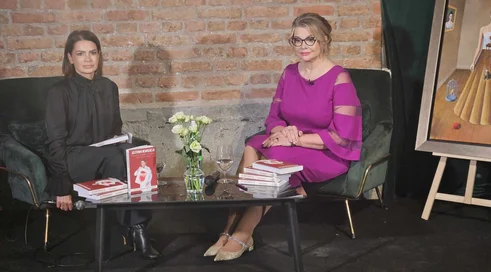
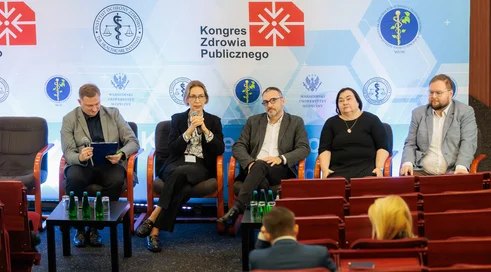
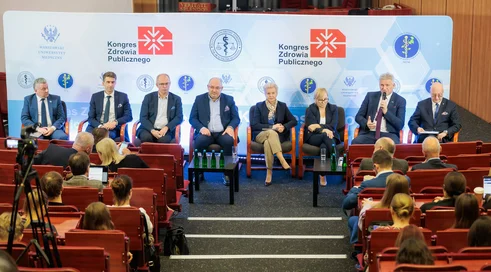
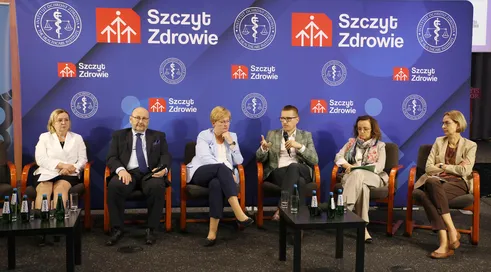
During the first day of the 9th Congress of Health Challenges in Katowice, a panel titled Operation Polish Drug was held, focusing on the role of domestic manufacturers in the context of Poland's drug security and innovative approaches to drug production. In addition to other industry representatives, the discussion also included Katarzyna Piotrowska-Radziewicz, director of the Department of Drug Policy and Pharmacy at the Ministry of Health
We will talk to the pharmaceutical industry about amending the reimbursement law, because there are problematic provisions," announced Katarzyna Piotrowska-Radziewicz.
The head of the Drug Policy Department also assured that on April 1 this year, the reimbursement list will include about 400 drugs produced in Poland, for which patients will pay less. Lower co-payments for Polish drugs is one of the incentives included in the reimbursement law, which is expected to increase pharmaceutical production in the country.
Domestic drug production guarantees health security
Katarzyna Dubno, director of external relations, ESG and health economics at Adamed Pharma S.A. and vice chairman of the board of the Polish Pharmaceutical Industry Employers' Association - Domestic Drug Manufacturers, pointed out that in the current geopolitical situation, it is important to produce as many drugs as possible in Poland and thus build the country's resilience - crucial in NATO's doctrine of deterrence through the presentation of real power. Strong manufacturers develop medicines, increase production capacity and stocks, both of substances and finished medicines. They are ready for all kinds of crises. As an industry, we have the knowledge, resources, competence and experience, and we want to take advantage of this. - The United States and Europe have already understood that strategic industries, strategic industries, must return from Asia. The question is one: is Europe in particular willing to pay for it? We know very well that the transfer of drug production to Asia was due to, among other things, price pressure, pressure from the regulator, from the payer to lower these prices," she said.
Prof. Robert Rajczyk, a political scientist at the University of Silesia in Katowice, recalled that Europe is dependent on supplies from Asia, especially ingredients for drug production. In his view, China may introduce export restrictions in response to possible sanctions. That's why Europe and the US have already begun to pursue a policy of returning production from Asia to each other and reducing dependence on China. However, one must realize that manufacturing in the EU will be more expensive.
Is Europe willing to pay for drug safety?
Dr. Jaroslaw Frąckowiak, president of PEX PharmaSequence Ltd. pointed out that Europe has already decided to bear these costs. New drug factories are already being built in the EU - in France or Austria. - And the governments of these countries are contributing to these costs, he stressed.
- The construction of a factory of pharmaceutical substances that are the main ingredient of medicines, producing about 100 such medicinal substances is a cost of 1, 8 billion zlotys. For such an amount, 36 to 63 kilometers of highway could be built. On the other hand, putting up a factory for finished medicines would cost half a billion zlotys. That's the cost of building about 18 km of highway," calculated Dr. Jaroslaw Frackowiak. However, building a factory is not the only problem.
Catherine Dubno suggested the need to create a team to coordinate activities and exchange information on the issue of drug security: - Such a team would include the Ministry of Health, the Ministry of Defense, Development and representatives of national drug manufacturers, as well as pharmacists, doctors and wholesalers, in order to prepare procedures in case of a crisis. We missed this in the pandemic or when war broke out in Ukraine. Information should flow in a structured way.
Reimbursement policy affects production volumes in Poland
Companies' investment decisions are also influenced by reimbursement policy. Krzysztof Kopeć, president of the National Drug Manufacturers, noted that until now the health ministry has followed the principle of "it doesn't matter from whom, as long as it's cheaper." As a result, we have some of the cheapest drugs in the EU. In addition, many provisions of the amended reimbursement law make it difficult to do business in Poland. - Excessive penalization, a flawed algorithm of guaranteed supplies or the obligation to supply drugs to ten wholesalers designated by the health ministry are provisions that will not increase the share of Polish drugs in our market, he stressed.
Katarzyna Piotrowska-Radziewicz replied that the ministry will look at the new provisions of the law. - The algorithm for calculating mandatory supplies causes a problem not only for producers, but also for the health ministry. Therefore, an amendment to the law is planned," she announced. She assured that it will be held in dialogue with drug manufacturers. She also informed that unclear provisions are now being clarified by the ministry in issued communications, which are consulted with the industry. - We are trying to be flexible," she assured.
Regulations hampering the development of the domestic industry
Katarzyna Dubno pointed out that in order to increase the share of domestic drugs in the Polish market, regulations preferring the cheapest drugs from Asian manufacturers cannot be introduced. Meanwhile, the Team for the Preparation of Solutions to Facilitate Medical Prescription, established at the Health Ministry, has proposed the introduction of drug prescribing by international names. This solution promotes non-European companies and would lead to the marginalization of domestic production.
Katarzyna Piotrowska-Radziewicz informed that not all of the findings of this team will be processed. However, it is primarily working on IT solutions related to e-prescription.
List of critical drugs
Katarzyna Piotrowska-Radziewicz announced that the health ministry has joined the European Critical Medicines Alliance. Barbara Misiewicz-Jagielak, vice president of the National Drug Manufacturers, indicated that the industry expects a Polish list of critical drugs. - Domestic companies can, of course, make money from the production of over-the-counter drugs, but would like to primarily produce those essential to Polish patients. The Health Ministry should define a list of such drugs and talk to us about the possibility of manufacturing them domestically, she urged.
Magdalena Bogucka, president of the board of directors, AMARA Pharmaceutical Plant Ltd. pointed out that in emergency situations, pharmacies with a prescription room can make the medicine for the patient. Therefore, it would be worth creating a list of such pharmacies. Also needed are state subsidies for the production of active substances so that they are produced domestically even in smaller quantities.
Aneta Grzegorzewska, director of corporate affairs and external relations, Gedeon Richter Polska Sp. z o.o., recalled that such tools have already been used by the European Union to restore semiconductor production in Europe. - Constructive dialogue is needed. We can't set the ministry and the industry at two opposite poles," she noted.
- We all live in Poland and want to make a good living here. That is why it is necessary for the ministry to cooperate with the national pharmaceutical industry so that no one leaves the pharmacy without the medicine they came for," assured Katarzyna Piotrowska-Radziewicz.