Approximately 300 million people worldwide suffer from asthma, with up to 4 million in Poland. If unrecognized or inadequately treated, the disease can lead to the development of a severe form. In our country, 35-40 thousand patients suffer from severe asthma, which is why education is so important. Awareness building is served by the World Asthma Day, established by the Global Initiative for Asthma (GINA), which is celebrated every first Tuesday in May. This year it falls on May 7.
World Asthma Day
Severe asthma is a disease entity that can be successfully treated on an outpatient basis

Published May 6, 2024 11:00

Fot. Thinkstock/Getty Images
Building awareness of the disease involves providing the public and patients with knowledge about available forms of diagnosis and treatment. Despite the operation of the B.44 drug program "Treatment of severe forms of asthma" in Poland for more than 10 years, only about 10 percent of patients are able to benefit from modern biological therapy. Specialists have identified the main barriers to type accessibility: the program's inclusion criteria, as well as organizational and financial challenges, including the underpricing of health services. This makes it very difficult to shift patient care to outpatient clinics, with the possibility of dedicating medication to patients at home.
Typical asthma symptoms include coughing, wheezing and shortness of breath. Of the 4 million people who show features of asthma in epidemiological studies, i.e. have at least two of the listed symptoms at the same time, 2 million are treated. This means that as many as half of the patients do not have a diagnosis and are not properly treated.
- In Poland, we wait more than 7 years for asthma to be diagnosed. During this time, inflammation within the respiratory system, which gives occasional shortness of breath, coughing, wheezing, leads to progressive remodeling of the bronchial mucosa and exacerbation of the disease. Patients with severe asthma are those who, despite taking high doses of inhaled steroids and other bronchodilators, still do not have control of the disease, says Dr. Piotr Dabriecki, an allergologist at the Department of Internal Medicine, Infectious Diseases and Allergology at the Military Medical Institute (WIM) in Warsaw, chairman of the Polish Federation of Associations of Asthma, Allergy and COPD Patients.
Although the average time to diagnosis of the disease in the European Union is twice as short, the need to raise global awareness of asthma is still so important that GINA has established the first Tuesday in May as World Asthma Day. This year, the celebration falls on May 7 and is dedicated to the need for education.
Education is integrally related to the diagnosis of the disease. If we do not include education in our therapeutic approach, we will fail. It's about teaching the patient how to use an inhaled drug correctly. At the moment, half of the patients who use medications use them incorrectly. It's also about convincing the patient of the need for consistent use of inhaled med ications," emphasizes Dr. Dabriecki.
Polish criteria narrower than GINA guidelines
The long time taken to diagnose the disease, inappropriate use of inhaled steroids, patient withdrawal and lack of education mean that asthmatic patients can develop severe asthma over time, to whom biologic therapy is dedicated.
In Poland, patients with severe asthma have had access to modern biological therapies since 2012. In recent years, clinicians' efforts have led to the National Health Fund's coverage of the 5th therapies for this indication: omalizumab, benralizumab, mepolizumab, dupilumab and tezepelumab.
- Treatment of asthma in Poland is in accordance with the current GINA standard and in line with global recommendations. Drugs that are registered are also available in Poland and we can provide pharmacotherapy for severe forms of bronchial asthma. I think this is a huge achievement
and itconcerns not only new drugs added to drug programs, but also subsequent changes in the provisions of these programs," says Prof. Maciej Kupczyk, president of the Polish Society of Allergology.
This does not mean that further measures are not needed. In Poland, the criteria for including patients in the drug program are narrower than the GINA guidelines and say
at least two episodes of asthma exacerbations, associated with hospitalization and/or use of oral steroids.
- Let's consider whether we should include biological therapy at an earlier stage in the development of severe forms of asthma. This is still an open question, and we will strive, when new biologic drugs appear, to make them available to our patients as soon as possible," adds Prof. Maciej Kupczyk.
Introducing biologic treatment at an earlier stage, in order to achieve full control of the disease, would avoid further exacerbations and the development of comorbidities. It would also protect patients from overuse of systemic steroid drugs, the use of which is not indifferent to their health. It is important to realize that the use of systemic steroids causes the development of diseases that place an additional burden on the patient: osteoporosis, hypertension, diabetes, obesity, peptic ulcer disease, glaucoma and cataracts. It also means additional financial costs for the payer.
- The biggest problem is severe uncontrolled asthma, which is the biggest financial burden, because practically 50 percent of asthma treatment expenses are consumed by the treatment of these very patients-emphasizes Prof. Radoslaw Gawlik, president-elect of the Polish Society of Allergology.
Home delivery of drugs better than hospitalization
Specialists identify many barriers that result in only 10 percent of patients being treated with modern biological therapy. In comparison, in Italy it is about
70 percent of patients. Why is this happening? Currently, there are about 60 reference centers for the treatment of severe asthma, of which the B.44 drug program is implemented by only 20 percent of the centers. This small number of centers performs as much as 80 percent of the contracts, which is a huge burden for them and slowly leads to inefficiency. Running the program is therefore unprofitable and burdensome for the hospital.
- We are very well aware that the preparation and smooth management of a patient
in abiological therapy program is a huge challenge for a center. A larger number of patients requires a change in organization. Additional staff must be hired. The bureaucratic and organizational burden is very significant. This is also due to the fact that these are severely ill patients with comorbidities, and taking care of them poses some challenges," says Prof. Maciej Kupczyk.
The Polish Society of Allergology is a partner in a report that analyzed the organization and operation of the B.44 drug program from a pharmacoeconomic and benefit pricing perspective. The report shows that the least favorable method, from the point of view of hospital finances, is to dispense the drug to the patient at home. Meanwhile, as specialists emphasize, severe asthma is a disease entity that can be successfully treated on an outpatient basis.
Despite the fact that as of 2022 this is a possibility, facilities are choosing one-day hospitalizations, which are more cost-effective. Therefore, specialists will try to talk to policymakers about inadequate pricing of services, among other things.
- We would be most concerned with the possibility of billing a new benefit related
to theperformance of the program, when a patient is admitted once every three months, and has a drug dispensed at home. It is also about changing the valuation of the billing point. These are ideas that I think we will be able to discuss in the near future, perhaps some of them can be introduced
inpractice," says Prof. Kupczyk.
Treating closer to the patient means improving quality of life
A change in pricing and the ability to accept patients on a broader outpatient basis would not only benefit the payer and regulate provider costs, but most importantly would allow patients to be treated closer to home, bringing patients a better quality of life.
- On World Asthma Day, we would especially like to draw attention to the fact that early diagnosis and the possibility of rapid administration of biological therapy to patients with severe asthma should be a priority for the entire medical community and the health care system.
From thepatient's point of view, it is not only a cost savings for the payer in the treatment of asthma, but also in the treatment of other comorbidities, which are most often the result of the use of oral systemic drugs - ICS.We should be preventing them, not treating them additionally. It would also be good to increase the number of patients treated
inhospital outpatient clinics with the possibility of home dispensing. Let's make sure that patients are properly taken care of, so that they can be treated in accordance with the guidelines of the Polish Society of Allergology and the world standards of GINA 5," says Joanna Zawadzka, president of the Allergy Center Foundation.
The psychological aspect of patients with severe asthma was highlighted in a research project carried out as part of the activities of the Asthma Treatment Coalition, an initiative of the PTA. The initiative resulted in the report "Living with Severe Asthma. A Patient's Point of View," in which patients tell how they get severe asthma and how biological treatment has changed their lives.
- The report by the Asthma Treatment Coalition reflects the daily struggles of patients
in thedisease and shows the changes that come into their lives, thanks to the inclusion of treatment with biological therapy. As we know, severe asthma often leads to social
andprofessionalexclusion. Living with the disease is fraught with anxiety, shame, many limitations and a sense of stigma. The emotions that accompany patients, such as anxiety or fear, cause the occurrence of exacerbations and exacerbation of dyspnea, often there is a lack of asthma control
andthe development of depressive states. Successful treatment gives patients a sense of security and a chance to return to a normal life, professional activity, fulfill social and family roles. So let's give a chance to those patients who are still waiting to be included in the B.44 drug program. Let's give them a chance for a good quality of life, because the treatment shows that it is possible," adds Grzegorz Baczewski, a psychotherapist and member of the Allergy Center Foundation Council.
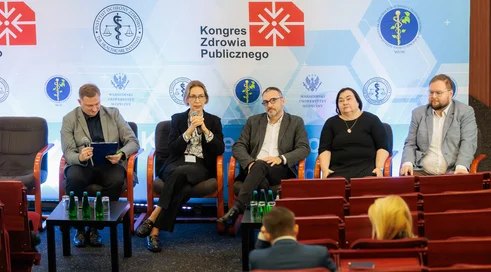
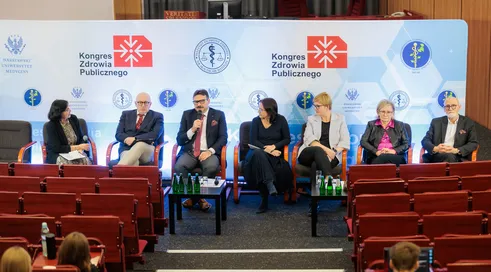
Expert statements from the 16th Training Conference of the Polish Society of Allergology (April 10 - 13, 2024, Torun).
Source: press material of the Allergy Center Foundation