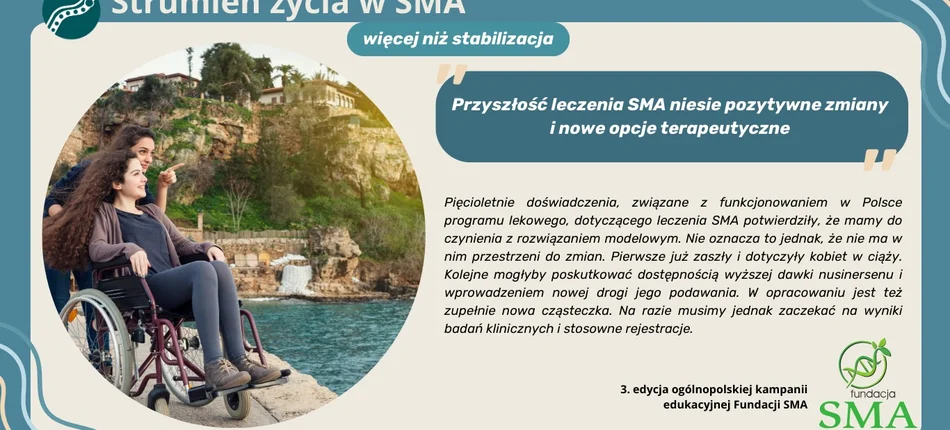
Five years of experience, related to the functioning of the drug program in Poland, concerning the treatment of SMA, confirmed that we are dealing with a model solution. This does not mean, however, that there is no room for change. The first ones have already occurred and concerned pregnant women. More could follow with the availability of a higher dose of nusinersen and the introduction of a new route of administration. An entirely new molecule is also in development. For now, however, we must wait for the results of clinical trials and relevant registrations.
The future of SMA treatment brings positive changes and new therapeutic options

Published Sept. 17, 2024 09:03
Positive changes in drug program for women with SMA
An important change introduced in the drug program B.102.FM. "Treatment of patients with spinal muscular atrophy," took effect on April 1, 2024, and applies to women with SMA who want to have offspring. The Ministry of Health has decided to continue nusinersen treatment during pregnancy. The changes introduced meet the existing needs of adult SMA patients, who previously had to discontinue treatment during pregnancy, which was associated with a worsening of their condition. The current decision will improve the quality of life of patients with spinal muscular atrophy who choose to become mothers.
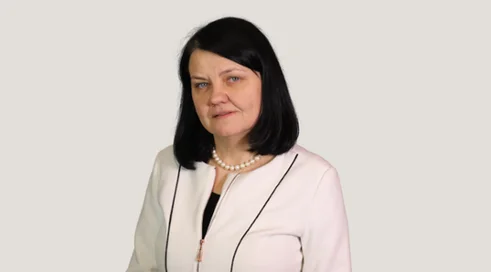
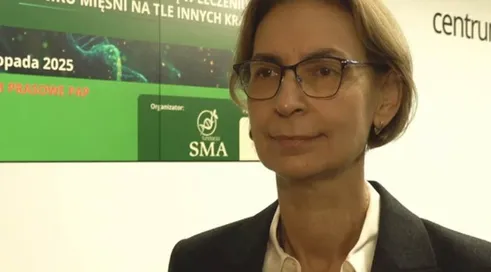
- The drug has been registered very broadly from the beginning for the treatment of SMA regardless of the patient's age or the copy number of the SMN2 gene, which is the most important factor modifying the rate of disease progression. In terms of the drug's use in pregnant women, the drug's product characteristics only mention caution, but not contraindication. It is precisely this provision that the Ministry of Health took advantage of, changing the program and allowing pregnant women to continue treatment or start it," says Prof. Katarzyna Kotulska-Jóźwiak, head of the Department of Neurology and Epileptology at the "Monument-Center for Children's Health" Institute.
New route of administration
However, this is not the end of the expected changes in terms of nusinersen treatment. Indeed, research is underway on a new way of administering the drug: through a so-called port.
- Nusinersen is administered into the fluid space in the spinal canal. The standard route of administration is lumbar puncture, which, with maintenance doses, is necessary every four months, or three times a year. For some patients this is inconvenient, especially if we are dealing with a person with a more advanced form of the disease, in which there have been, for example, changes in the spine, such as scoliosis," explains Prof. Katarzyna Kotulska-Jóźwiak
In such patients, it is sometimes necessary to administer the drug under radiological control due to scoliosis. This necessity will be circumvented by using the permanent implantation of a special feeder, known as a port, through which the drug is administered to a patient with SMA.
- Studies of such a system for administering nusinersen are ongoing. This should serve to improve the comfort of treatment," the professor points out.
Higher dose and new drug
Other expected changes are expected to relate to the drug's dose. Currently, under the drug program, a patient is given 12 mg of nusinersen as a saturating and maintenance dose. A saturating dose more than four times higher and a maintenance dose more than twice as high are being tested in clinical trials.
- This is the most advanced study as far as antisense oligonucleotide therapies for SMA are concerned. The clinical trials that led to the registration of nusinersen as the first drug to alter the natural course of SMA were based on several different doses, but the highest tested, 12 mg, was finally registered. At the moment, the manufacturer is researching much higher doses: 50 mg - saturating and 28 mg - maintenance. The expectation is that the drug will not only last longer, but also work faster and more effectively. We are waiting for the results, they should start appearing soon," says the clinic manager.
Also in development is a new molecule, BIIB115, which is an antisense oligonucleotide (ASO) administered intrathecally that exhibits a similar mechanism of action to nusinersen. The potential benefits of modifying the chemical backbone will potentially result in longer time between doses while maintaining high efficacy.
- Therefore, it would be possible to administer it even once a year, which would definitely improve the comfort of therapy for patients," says Professor Katarzyna Kotulska-Jóźwiak.
Changes are coming
New developments in SMA treatment will have to wait a while longer. Registrations of new options are expected in 2026 and 2027, but this is only the first step on the road to full availability for patients. The next is the reimbursement process, after which the drug program could be updated.
- In the case of SMA, the reimbursement process, which ended more than 5 years ago, went very smoothly, but remember that nusinersen was the first therapy for SMA. Now it will be a matter of changing therapies and adding more options. So the decision will require showing data that will convince decision-makers of the legitimacy of spending public money," says Prof. Kotulska-Jóźwiak.
Press material was created as part of the 3rd edition of the educational campaign SMA life stream
With this year's motto -. More Than Stabilization.
Source: press mat.
Topics
SMA