The Interdisciplinary Patient Safety Forum, organized by the Polish Society of Anesthesiology and Intensive Care (PTAiIT) and the Safe Patient Foundation, will be held in Krakow for the second time this weekend (September 15-17). The event will be a continuation of the "Decade of Patient Safety" project, initiated by PTAiIT last year through the signing of the "Interdisciplinary Declaration of Patient Safety Kraków 2022".
In Krakow, experts in various fields will talk about patient safety

Published Sept. 12, 2023 09:26

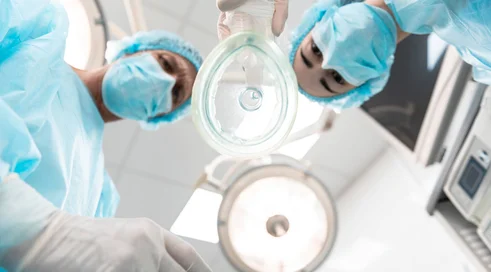
fot. iStock
As the organizers point out, last year marked the 12th anniversary of the publication of the Helsinki Declaration on Patient Safety in Anesthesiology. It is widely recognized as the basic document defining the main principles of safety in perioperative medicine .
- The two-day session will present current challenges and modern ways to ensure patient safety in anesthesiology and intensive care, as well as new monitoring methods, drugs and therapies. All this is in the spirit of the interdisciplinary declaration of patient safety, which was signed last year, at the first Forum. We will also talk about management in health care. Panel discussions will point out possible ways to improve patient safety, whether in the hospital, primary care office or outpatient specialty care. The law on quality and safety in healthcare will also be discussed among stakeholders, lists Professor Janusz Andres, president of the Polish Society of Anesthesiology and Intensive Care.
As Professor Andres adds, September 17 marks the World Health Organization's World Patient Safety Day . This year's slogan will focus on the place of the patient and family in ensuring safety. On this occasion, the event will be accompanied by an educational outdoor campaign at Krakow's Tauron Arena.
According to the president of the Polish Society of Anesthesiology and Intensive Care, the conversation about patient safety should always be interdisciplinary, because although individual specialties have developed their own solutions in this area, the problem of complications, especially in the perioperative period, is growing.
- In anesthesiology, we are pioneers in safety. It was our specialty in the 1960s that recognized the importance of baseline assessment of a patient's condition and the importance of monitoring methods and prevention of complications that can happen in the perioperative period. This perioperative safety has become our flagship since the 1970s, culminating in the reduction of anesthesia-related mortality at the beginning of this century. Today, safety in anesthesiology can be compared to safety in aviation. Although the issue of safety in individual specialties is recognized, looking generally at the incidence of complications and health damage in health care, the situation is worse than it was even 10-15 years ago even in the most developed countries. The patient must be the main point of reference and be our partner when it comes to treatment outcomes, and education is one of the most important challenges for the entire health care community," Professor Janusz Andres noted.
Meanwhile, as experts agree, it is the perioperative period that is a sensitive time, both for the patient and the surgical team.
- Complications in the perioperative period drastically worsen the patient's prognosis and his prospects for returning to proper function and improving his quality of life. The problem of infections is extremely important. Key in this regard are the tasks of the National Antibiotic Program. These are proper aseptics, antisepsis and perioperative prophylaxis," points out Prof. Lukasz Krzych, head of the Department of Anesthesiology and Intensive Care of the Faculty of Medicine in Katowice, physician in charge of the Department of Anesthesiology and Intensive Care of the Prof. Kornel Gibinski University Clinical Center of the Silesian Medical University in Katowice, and provincial consultant in anesthesiology and intensive care.
For anesthesiologists, patient safety is also a matter of properly preparing the patient for surgery.
- The line between anesthesia and sedation is somewhat fluid. Shallow sedation is procedural sedation. Deep sedation is the prescribing of drugs to put the patient into anesthetic sleep and allow more advanced procedures to be performed. We now have a full stock of safe and effective drugs, both for procedural, outpatient sedation, but also for those performed in hospital procedures. Such an alternative, for example, is remimazolam," explains Prof. Luke Krzych.
The drug in question belongs to the benzodiazepines. Among other things, its effectiveness has been demonstrated in sedating patients undergoing colonoscopy and bronchoscopy. They achieved 91 percent and 81 percent anesthesia success rates, respectively, without the administration of a significant number of additional doses or alternative sedatives. The figures for the older drug midazolam were 25 percent and 33 percent, respectively.
- In general anesthesia, there has also been a debate for many years between the superiority of inhaled anesthetics over intravenous anesthetics. So far, excluding the pediatric and elderly populations, it has not been possible to show that either one prevails, adds Prof. Luke Krzych.
***
The 2nd Interdisciplinary Forum on Patient Safety will be held on September 15-16 at the Fabryczna 13 Conference Center in Krakow. On September 17, World Patient Safety Day will be celebrated at the Tauron Arena in Krakow under the slogan "Involvement of the patient and his family as a condition for safety". The event is held under the honorary patronage of Polish President Andrzej Duda.