The World Health Organization (WHO) Country Office in Poland, together with national partners, has issued a Polish-language version of guidelines aimed at strengthening the health system's capacity to respond to cases of violence against women and girls in emergencies. According to the WHO, during emergencies, including conflict and natural disasters, women and children are more vulnerable to sexual violence and violence by partners with whom they have intimate relationships, as well as other forms of violence, including sexual exploitation and trafficking.
Health system in cases of violence against women and girls in crisis situations

Published June 1, 2023 14:11
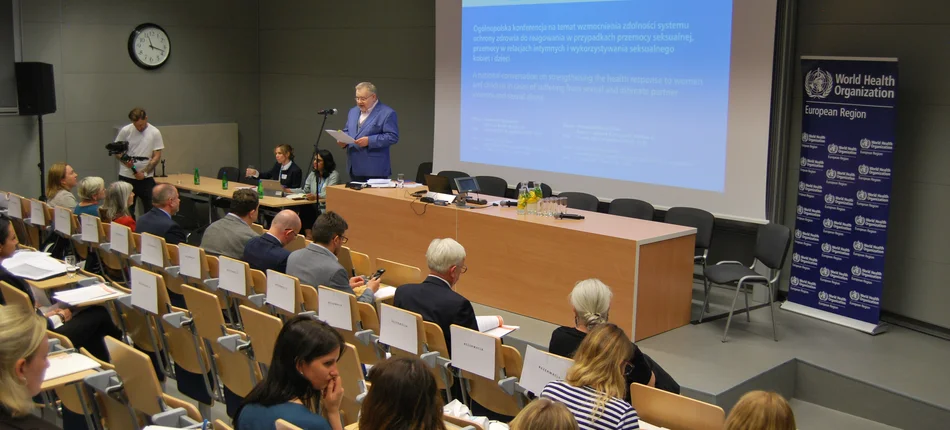
Since the beginning of the crisis in Ukraine in February 2022, an estimated 8.5 million refugees have left their homeland to seek refuge in neighboring countries. Poland has shown unprecedented support for border crossers, among whom were mainly women and children seeking protection and safety, by providing temporary shelter to 1.5 million refugees from Ukraine so far.
Meeting the health needs of those affected by the crisis placed a significant burden on the host country, including Poland. Providing assistance in cases of violence was particularly difficult.
Rates of violence against women and girls in Ukraine were already high before the conflict began. In 2018. WHO conducted the largest survey on violence against women in Ukraine, which found that nearly one in five women (18%) aged 15-49 participating in the survey had experienced physical and/or sexual violence from a partner at least once in their lives, and 9% said they had experienced violence in the past 12 months.
The WHO recognizes intimate partner violence and violence by a partner with whom a woman does not have an intimate relationship as the two most common forms of violence against women, with a prevalence of 26% in the European region among women aged 15-49. Women refugees living in conflict areas are at an even higher risk of violence. Women who have suffered violence are more likely to seek medical help, even if they do not identify violence as the main cause.
"Health care personnel are in a unique position to identify women who have experienced violence, provide them with appropriate care, refer them to institutions and organizations that will provide further support, including legal assistance, and potentially help prevent further harm in the future," said Dr. Paloma Cuchί, WHO Representative in Poland. "Violence, including violence in crisis situations, is a highly complex issue, encompassing various aspects of health and well-being, yet closely linked to issues of equality and justice. Understanding these interrelationships is crucial."
Working with leading researchers from the University of Warsaw and the University of Zielona Gora, the WHO has reviewed and translated three key WHO guidance documents. The guidelines will support the Polish health care system and equip frontline workers with the right tools and guidance to enable them to provide the highest quality health care to people who have suffered sexual violence:
1) Medical care for women who have suffered intimate partner violence and sexual violence. A clinical guide. https://apps.who.int/iris/bitstream/handle/10665/367629/WHO-EURO-2023-7505-47272-69339-pol.pdf?sequence=2&isAllowed=y
2) Providing assistance to children and adolescents who have been sexually abused. Clinical guidelines developed by WHO. https://apps.who.int/iris/handle/10665/367637
https://apps.who.int/iris/handle/10665/367834
The WHO guidelines include protocols for handling cases of sexual assault and intimate partner violence. They also include protocols for managers and directors of health facilities, the use of which will help strengthen the health system's capacity to respond to cases of violence against women and girls.
Health experts have reviewed the substantive translation of the guidelines into Polish, ensuring that the publications are useful to health care personnel who may come into contact with people who have experienced violence and that they indicate actions consistent with the provisions of Polish law.
"The WHO recommends that as part of the education pathway, health care personnel should become familiar with how to deal with situations of violence against women. In this regard, universities play a key role in ensuring that health care workers have the right skills and knowledge to respond appropriately in cases of violence against women," explained Professor Zbigniew Izdebski, a sexologist at the University of Warsaw and the University of Zielona Gora.
"I look forward to the moment when more health care workers in Poland will have the skills to recognize the signs of violence, provide first-line support, perform obduracy, provide medical care to those who have suffered violence and refer them to other units if necessary," Professor Krzysztof Czajkowski, MD, national consultant in obstetrics and gynecology.