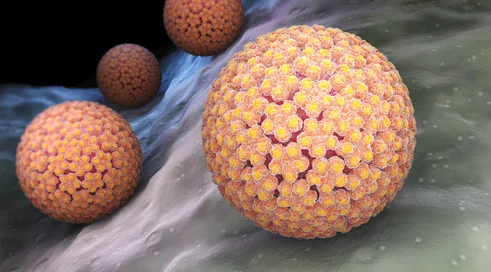
Smoking marijuana has also joined the risk factors for neck and head cancers, experts from the University Clinical Center in Gdansk point out. However, it turns out that even a person who never smokes and does not abuse alcohol can get sick. The culprit is the human papilloma virus, or HPV.
European Head and Neck Cancer Prevention Week is underway. How to avoid the disease?

Published Sept. 18, 2024 11:05

Autorstwa Artur Andrzej - Praca własna, CC BY-SA 3.0
- Prevention should take place every day, all year round. We talk about prevention in the context of early detection and identification of health problems that we tend to underestimate, such as hoarseness. Prevention avoids problems whose treatment requires radical measures and can be turned into small interventions that allow us to function normally," stresses Tomasz Stefaniak, MD, medical director of UCK.
Head and neck cancer is the fifth most common malignancy and the eighth most common cause of death from malignant tumors in Europe. Although it is considered a preventable disease, about 60 percent of all head and neck cancers are diagnosed in patients at a late clinical stage. In this group, two-thirds of patients do not survive five years. And those who survive struggle with a range of physical, social and occupational consequences caused by the disease.
- We are one of more than 1,200 clinics across Europe joining the European Head and Neck Cancer Prevention Week. We encourage preventive examinations. We have the knowledge, technology and capabilities to diagnose head and neck cancers at an early stage. We can offer treatment that gives a very good chance of recovery," notes Boguslaw Mikaszewski, MD, head of the UCK Department of Otolaryngology.
- 12 years of prevention means that it is inadequate, because these cancers are still occurring, and their number is even increasing. The main factors contributing to their development are alcohol abuse and smoking, and, as current research shows, also smoking marijuana. The last major factor is infection with the human papillomavirus, or HPV. This campaign aims to raise awareness that people who never smoke and do not abuse alcohol can also develop malignant tumors in the head and neck," says Dominik Stodulski, MD, deputy head of the UCK Department of Otolaryngology.
The Make Sense campaign in 2013 created the "1 by 3" rule to contribute to the rapid diagnosis of the disease. A person who notices one or more of the six uncharacteristic symptoms of head and neck cancer and whose complaints last for at least three weeks (the so-called "1/3 pattern") should see a doctor immediately. These include the following symptoms:
- Tongue pain, untreated mouth ulceration and/or red or white spots in the mouth,
- sore throat,
- persistent hoarseness,
- Pain and/or difficulty swallowing,
- Neck lump,
- Unilateral nasal obstruction and/or nosebleeds.
- When something worrisome appears it needs to be checked," stresses Andrzej Drewniak, president of the Pomeranian Association of Head and Neck Tumor Patients. - If patients had reported to a specialist earlier, Mr. Andrzej, one of the members of our association, who is currently unable to produce a voice, would have spoken after undergoing laryngectomy. If Ms. Maria had been diagnosed early, she would most likely be able to hum a lullaby to her grandchildren now. It's worth getting tested, I know something about that.
Source: UCK Gdańsk