On the occasion of Father's Day, the third edition of the Guy at 100 PRO campaign was launched, reminding people of the importance of the role of dads in children's lives, but also how fatherhood serves men themselves. It also aims to educate parents about the new rights of fathers, which came into effect in 2023. Thanks to the new rights, 19,000 fathers took parental leave in 2023. Between January and May of this year - already 16.2 thousand.
More and more fathers are taking parental leave. Because he wants

Published June 21, 2024 10:50
Fot. Getty Images/iStockphoto
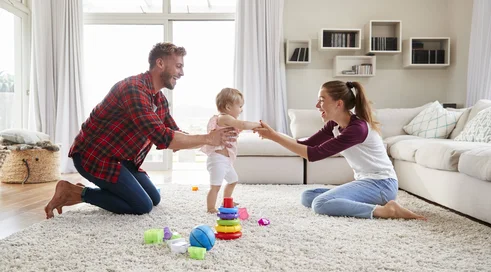
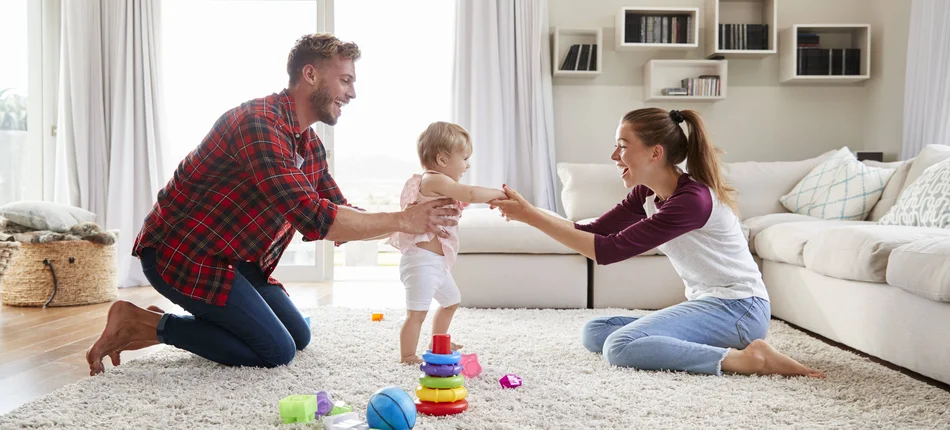
Involved fatherhood refers to men's active and informed role in raising and living their children. It includes daily caregiving activities, as well as participation in education, emotional support and building a strong bond with the child.
Modern men want to take an active role in their children's lives, which not only benefits the children, but is also good for themselves. This year's "Guy for 100 PRO" campaign is held under the slogan "I am a dad 100 percent Because I want to."
It is organized by the Share the Care Foundation, which, together with the Gillette brand, a strategic partner of the project, emphasizes that fatherhood is not only a duty, but above all a pleasure and an opportunity to build deep emotional ties with children.
Is committed fatherhood becoming the norm?
The trend of involved fatherhood is becoming more and more noticeable. Men are becoming more and more involved from the moment of pregnancy - they can be seen together with their moms in gynecological and obstetric surgeries and at delivery rooms. They can be seen at doctor's appointments for vaccinations and when children get sick, at gatherings at kindergartens and schools.
The cyclical survey by the Giving Children Strength Foundation "Dads" confirms what we see out of the window - fathers see more and more space for themselves to be involved in their children's lives. 85 percent of fathers believe that both mother and father should equally talk to their child about their problems. 83.7 percent say that important decisions about the child should be made together. When it comes to playing and helping with school, 81.6 percent and 78.2 percent of fathers, respectively, favor an equal division of tasks.
However, it is worth quoting the results of a qualitative study conducted by IQS agency on behalf of the Foundation with Share the Care from 2022. "What surprised us then was that although the role of the father in a child's life is changing, the child's bond with the mother was still considered more important than with the father for most of those surveyed, especially in the first year of the child's life. Fathers did not realize that they had a role to play in their children's lives independent of mom. We were shocked that many of them considered themselves an inferior substitute for mom." - says Karolina Andrian, president of the Share the Care Foundation. The goal of the "Guy for 100 PROs" campaign is to make fathers aware of the important role they have to play in their children's lives and why parental leave is a great opportunity to build a bond with their child.
"It's very important to emphasize that this involvement of the dad is important from the very beginning. Not only when the child begins to communicate verbally, but right when the toddler can't speak yet, and involvement means mainly nursing activities, cuddling and babbling," stresses Renata Szredzińska, president of the Give Children Strength Foundation, and adds that children who have fathers involved in their care from the beginning benefit from this secure emotional bond throughout their lives.
"This primarily translates into greater trust in dad. The child gains another person besides mom to whom he can turn to in difficult moments for himself, also in later life. And this is important. Right now in Poland we are talking a lot about the mental health crisis of children. It's important to remember that children who have had fathers involved from the beginning are less likely to develop mental health problems, less likely to engage in self-destructive behavior, like self-mutilation or suicide attempts. Children who have a good relationship with their dad, precisely because of that dad's involvement from the beginning too, have higher social competence, do better in peer relationships, and are more able to resolve conflicts constructively. They are also better at mediation, because they have role models from both mom and dad, and not just from one primary caregiver. The emotional development of these children is also at a higher level. These are children who manifest a higher sense of self-worth, because they are important to two people, not just one. Such children, who have good contact with both parents, are less likely to commit crimes, engage in risky behavior or turn to stimulants in their teenage years. Splitting parental leave between mom and dad is really a great prevention of many problems." - Renata Szredzinska enumerates.
Since the work-life balance directive came into effect in April 2023, men have increasingly taken parental leave. According to data published in a joint report by ZUS and the Share the Care Foundation, "Dads on parental. What the numbers say about fatherhood in Poland," 19,000 men took parental leave last year and the number is growing steadily. Between January and May of this year, another 16,200 fathers exercised their right to be with their child.
The results of a survey conducted in June 2024 by the WiseRabbit agency indicate that Poles' willingness to share parental leave is growing. 66 percent of respondents aged 18-64 (both men and women) indicated a willingness to share leave. Legal awareness of the new regulations in Poland is also growing. "The survey showed that efforts to promote the EU work-life balance directive granting fathers the right to a non-transferable 9 weeks of parental leave are bearing fruit. Already ¾ of respondents declare that they have heard of this directive. However, it is worth bearing in mind that various forms of leave for fathers continue to create confusion in the minds of Poles. While paternity leave speaks for itself (that it is only for fathers), parental leave is still, according to the majority, intended for mothers, and less often for fathers," comments Dr. Marta Bierca, co-founder and partner at WiseRabbit agency.
That's why educational campaigns that build legal awareness among parents, including fathers, who until now have not necessarily felt targeted at parents, are important. This was also due to the fact that such messages were often accompanied by pictures of mothers," - Karolina Andrian says, and stresses that it is important to target messages directly to fathers. She points to the good practices of employers who, after the Labor Code was amended, revised their company's communications, procedures and processes for the needs of fathers.
In addition to these activities, it is important to promote so-called role models. "Today more than ever, people are looking for inspiration in others. They are looking for role models. We believe in the power of so-called role models, and especially in their importance for the younger generation, who are looking for positive examples to aspire to," says Federico Casati, Gillette's brand director for Central Europe.
The epitome of the brand's mission is the latest "Because I want to" campaign. In the advertising spot we can see the new brand ambassador - Mateusz Damięcki, who talks about how fulfilling his role as a dad is a pleasure for him, not a duty. He takes care of his sons because he wants to. "Fatherhood for me is, first of all, a lot of joy and happiness. But it's also a responsibility, which I understand as entering into a relationship with a child. It's important to be with the child, to teach each other and to make sure we don't miss something. Because time cannot be turned back. It is a big responsibility, but it is really enjoyable. When you see the results of this commitment, the satisfaction is enormous," admits Matthew Damięcki.
Benefits for fathers
A good father-child relationship increasingly realizes the psychological needs of fathers. It is a source of satisfaction for them, so they take care of their children because they want to, not because they have to.
German sociologist Urlich Beck believes that as a result of social changes concerning the family, the relationship between child and parent is becoming the last, inseparable, non-exchangeable, primary social relationship. Partners come and go. The child remains.
Active participation in raising children allows fathers to build deeper, more meaningful relationships with their children. Fathers who take parental leave often report greater emotional involvement and a better understanding of their children's needs.
Studies also indicate that involvement in childcare can help improve fathers' mental health, reducing stress and depression. Close family relationships act as a buffer against stress and can improve overall well-being.
Fathers who actively participate in their children's lives often experience greater life satisfaction and a greater sense of fulfillment. Being involved in parenting gives them a sense of purpose and brings them joy in watching their children develop.
Parenting also gives a chance to change perspective and creates space for reflection. For men, dealing with children is good because they can open up to them, including emotionally. They themselves were often raised to be tough and suppress their emotions, so many fathers involved in raising their children discover emotions they didn't realize existed, and this is good for their own emotional development and mental health.
In addition to the psychological perspective and bond formation, the father-child relationship can be viewed from the perspective of the financial stability of the entire family, important for the development of the child.
The father's involvement in child care allows the mother to advance professionally. And it is safer for a family to subsist on the work of two people - in case one person loses his job, becomes ill, dies or even needs retraining, the entire family income is not lost.
At the same time, this arrangement supports men, who cease to be the sole breadwinners. While the father's participation in childcare supports the mother and takes the burden of total responsibility for the child off her shoulders, the mother's participation in supporting the family supports the father and takes the stress of total responsibility for the family's finances off his shoulders.
It gives men more freedom and balance between work and life, especially family life, which is good and healthy for any person regardless of gender. It also prevents job burnout and can even have a positive impact on their work.
Both business psychologists, managers and fathers themselves, after parental leave, acknowledge that while caring for children full-time, they gain a different perspective and competencies that later come in handy in their careers.
Numerous studies confirm this, parental leave is the best soft skills training and in an era of discussion about a new type of leadership, what we learn as parents positively affects the quality of our work. Skills such as empathy, attentive listening, patience, multitasking are qualities of a 21st century leader.
What supports fathers in meeting their needs?
The research, both qualitative and quantitative, shows that fathers lack the space to talk to other fathers about fatherhood and the accompanying emotions of childbirth and childrearing. That's why another GROW group is also being launched as part of the "Men at 100" campaign. This is a series of online meetings where fathers can meet, talk about their concerns, problems, share their difficulties and seek support in their manhood. The group is free of charge and led by Dr. Kamil Janowicz, psychologist, Ambassador and member of the Share the Care Foundation's Program Council.
The campaign is supported by father-influencers who are dads 100 percent because they want to. These include Jarek Kania of Fatherly Side of Power, Maciej Lisowski - MATATA, Kamil Janowicz (Father_ing), Łukasz Dominiak (Who's Your Daddy), Tomasz Smaczny (Tasty Way of Life), Tomasz Rusek (Tata na Macierzyńskim) and Dominik Szymański known from "Top Model". Famous moms are also involved in the campaign - including: actress Dorota Czaja, Marzena Pilarz-Herzyk, or Mama Prawniczka, who know from autopsy that partnership benefits all parties.
The campaign is under the Honorary Patronage of the President of the Capital City of Warsaw. Gillette brand is the strategic partner.
The main partners of the campaign are Bank BNP Paribas, Bank Gospodarstwa Krajowego, Philip Morris International, Nordea Polska, Credit Agricole Bank Polska S.A., OLX Praca, Ringier Axel Springer Polska.
The campaign is also supported by social partners: the Giving Children Strength Foundation, Success Written in Lipstick Foundation, Father_ing, Mama Lawyer, SKS Law Firm, I'm Not Made of Sugar, Institute Against Exclusion, Twister, IR Center, Association for Boys and Men, Sociologists.pl, Universal Reading Foundation, Femmeritum, SPLOT - Institute for Psychotherapy and Sex Therapy, Women in Law.