Smoking, uncontrolled hypertension and the epidemic of overweight and obesity - these are the main risk factors for diseases that are hugely determined by the daily health choices, or anti-health choices, of Poles. How to change them, and whether it's even possible, experts pondered at the 10th Public Health Congress.
KZP 2023
National Transformation Plan for Health - a strategy for the coming years

Published Dec. 27, 2023 13:00
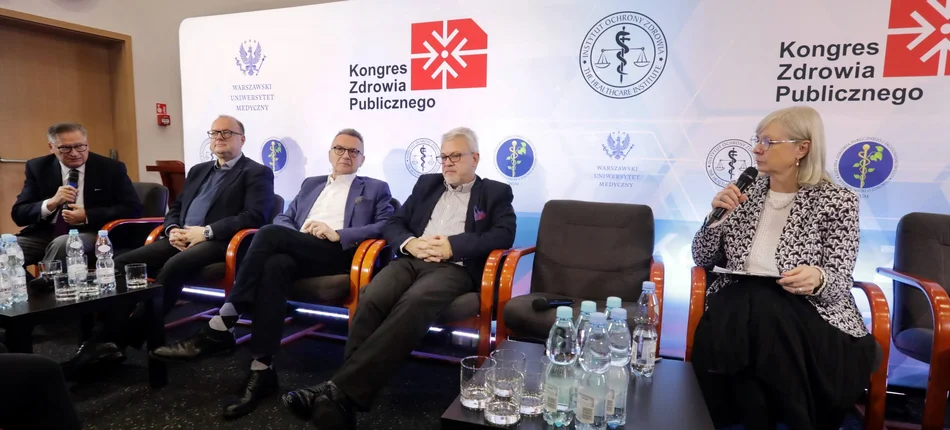
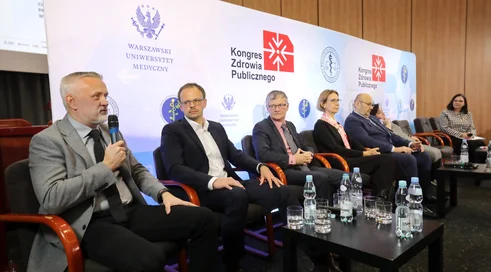
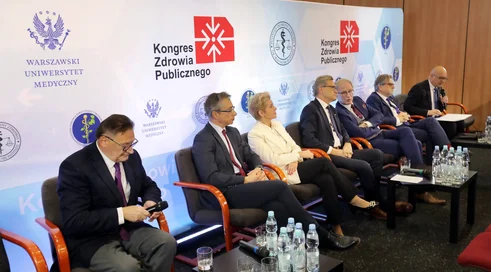
Dr. Jerzy Gryglewicz, starting the panel on the National Transformation Plan for Health, reminded the audience that at the moment the most important challenges facing Poland in the area of public health in the broadest sense are centered around demography. We are dealing with a rapidly aging population, lack of generational replacement (low fertility rates, the late age at which women give birth to their first, and often only, child) and pronounced over-mortality of men. The expert recalled that while Polish women live to be about 82 years old, the figure for men is 74 - we are among the group of countries with the largest gender disparities.
The National Transformation Plan for Health defines health priorities - it was created on the basis of health maps, the creation of which was "forced" by the European Union more than eight years ago, seeing that some countries, including Poland, had problems with the targeted placement of EU funds in the area of health care. At the time, the idea was to manage the money more efficiently, for example in the area of investment. Today, the goal of the EU, after the pandemic, is to reformulate the health policies of member states in such a way that they measure themselves as precisely as possible against the key health problems of societies. There is no doubt that the key problems are prevention, but also the treatment of these diseases, the derivatives of which are further diseases that represent a gigantic burden on the health care system. - Smoking, uncontrolled and untreated hypertension, excessively high BMI, i.e. overweight and obesity - he enumerated the "black trinity" of domestic risk factors that are subject to modification, or rather, could be subject to modification if it were not for the low state of public health awareness.
- In the case of hypertension, it is difficult to talk about problems with the diagnosis of the disease, because measurement is possible literally at any time. It's solely a matter of the patient's decision whether or not to treat it, which allows for a longer life in good health," said Professor Artur Mamcarz, head of the Department of Internal Medicine and Cardiology at WUM. In his opinion, we should quit talking about "diseases of civilization." - I oppose this, because health problems are not generated by the achievements of civilization, only that we use them improperly.
According to the expert, the primary preventive medicine that prevents (would prevent, if used) almost all problems is physical activity. - Of course, the right dietary model is also of colossal importance, he stressed.
Prof. Mamcarz had no doubts: the subject of overweight and obesity must be considered a priority and efforts must be made to solve it as early as possible, because the situation is actually dramatically bad, since even every second Polish child and adolescent is overweight or even obese, and the pandemic has only intensified this process (both in children and adults), adding several extra kilograms to us on average.
- Obesity itself is a disease that needs to be treated," explained Professor Leszek Czupryniak, head of the Department of Diabetology and Internal Medicine at WUM. In his opinion, the last two or three years have brought - or rather, started - a real revolution, as treatment of obesity has become possible. Patients are no longer doomed to "good advice" - eat less and move more. The advent of effective pharmacotherapy is a game changer, especially since the already available drugs and the next generations of them work and will continue to work, as the expert said, "extremely physiologically," affecting the satiety center. - It's not that a person eats a lot and becomes obese. A person is obese, suffers from obesity, and that's why he eats a lot, because he doesn't feel satiety," he said, stressing that obese people should take the available drugs, because the health benefits of weight reduction are colossal. - It can be said that at this time the existence of metabolic clinics makes sense. Such patients need the support of specialists, because drug treatment is long-term, he pointed out. Obesity is a recurrent disease, which also has features of addiction - therefore it should be treated comprehensively. At the moment, the expert added, talks are underway to extend reimbursement of these preparations - publicly funded for the treatment of diabetes - to obese patients as well.
Another scourge is risky drinking. One in three hospitalized patients requires treatment precisely because they chronically or heavily drink alcohol. - Today, 1.2 million so-called "monkeys" will be sold in stores. Some say it is the most popular pet in Poland. By noon, half of these people will have drunk one or two "monkeys." Alcohol in Poland can be bought literally everywhere. There must be some solutions here," said Prof. Artur Mamcarz. "Something" would mean, for example, a decision to limit the number of points where alcohol is sold, following the Scandinavian model. - Poland is not Scandinavia, here the state has no authority. What we really need is a cure for addiction," argued Prof. Czupryniak, while admitting that the state has adopted a bizarre "pimp" strategy in the case of nicotine and alcohol: it derives improbable benefits from budget revenues from the production and sale of these products, and then has to finance the cost of treating the consequences of their consumption.
Is there a way out of this squaring of the circle? Should it be found - as far as smoking is concerned - in harm reduction policies? Prof. Mamcarz did not rule out such an approach, but pointed out that this solution cannot absolutely mean acquiescence to starting the "adventure" with nicotinism for young people - at the moment many teenagers do not reach for traditional cigarettes, but alternative, more fashionable devices.
All participants in the discussion agreed that education is the key - started as early as possible and carried out systematically throughout life. However, as Dr. Bernard Wasko, director of the National Institute of Public Health of the National Institute of Public Health - PIB, pointed out, it should include not only health attitudes, but the entirety of civic attitudes. - It is necessary to make people aware of what the state is responsible for, what each of us is responsible for. If citizens hear that the state is responsible for everything, this attitude extends to health issues as well. This is a task for more than one term for sure," he assessed. Without effective education, it will be difficult for us to improve not only the rate of life expectancy, but most importantly - healthy life expectancy. We don't have the best one either. Polish women live 60 years in health (with an average life expectancy of more than 80 years, this means more than 20 years of struggling with health problems), men live 64 years (but live a shorter life of 74 years).
Topics
KZP 2023