An interview with Izabella Dessoulavy-Gładysz, president of the Foundation for Brain Health Mental Power.
No health without brain health

Published May 24, 2024 09:36
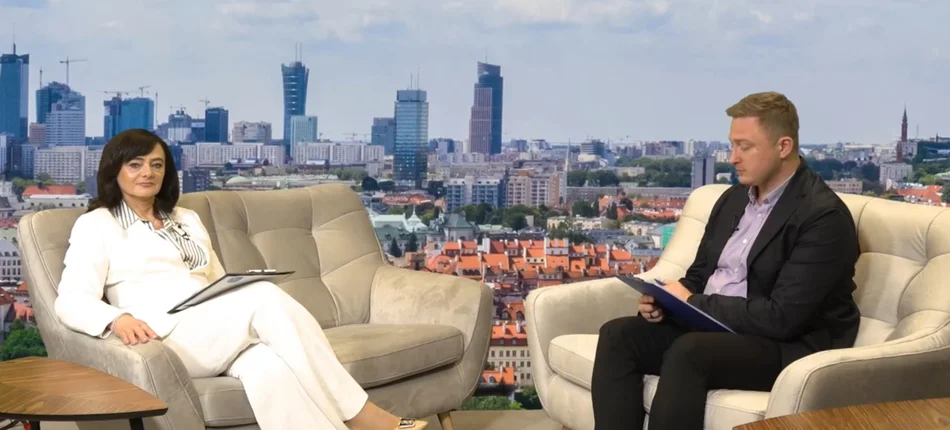
In the name of your Foundation there is a member "for brain health." How do you actually understand this term?
Very broadly. When I started the foundation, I and the other funders referred to the World Health Organization's definition of brain health. Brain Health, or a healthy brain, is defined therein as a state of brain function in the cognitive, sensory, social-emotional, behavioral and motor domains that allows a person to realize his or her full potential throughout his or her life, regardless of the presence or absence of disorders. So we're talking about people who, from very early childhood to the end of life, can live to their full potential and develop that potential, avoiding disease, of course, but we're also talking about people who are affected by these neurological diseases.
The foundation wants to talk about brain health, about keeping the whole society healthy and developing its full potential. Hence the term "Mental Power." Nevertheless, it is impossible not to talk about diseases when talking about health. You can't separate brain health, psychological and mental relationships from the brain structure itself. Hence this holistic concept. Brain diseases include both neurological and psychological conditions. They are very heterogeneous. They are chronic, common and disabling diseases. The burden of them, both globally, in Europe and in Poland, continues to grow. This requires holistic, but also immediate action on different levels, starting from the WHO level or European guidelines and strategies, going down to a country's brain health strategy.
We are talking about a very large group. Why is brain health so very important and in need of emphasis in the context of society, health and the economy?
A study published in Lancet Neurology, covering 37 disease entities, and presented recently at the Congress of the European Academy of Neurology, shows that the burden of brain disease is enormous, accounting for 43 percent of the total disease burden of the entire world population. This shows that such a large percentage of the population suffers from some kind of brain disease, but also that more than half of the population is healthy while at risk of contracting the disease. WHO data shows that one in three people will develop one of the brain diseases. In the context of a healthy population, we talk about so-called Brain Capital, or brain capital. The problem is how to properly prepare a brain health strategy to address the prevention of this population. We need to think first and foremost about how we should educate the public, starting at least from early childhood through the school years and into adulthood, on how to take care of our brain health. Already two-year-olds are learning how to take care of their first teeth, and no one is teaching us how to take care of our brain hygiene and health. We don't know how to avoid tension, anxiety, stress, leading to depression or neurosis. We are not taught what to do to eat properly and stimulate the brain, what exercises we should do to use its potential, but also to avoid neurodegenerative diseases. Brain Capital is also a huge topic to address for employers, because in the era of post-industrial economy, all world economies, including Poland's, are based on our brain capital. Brain diseases have it that a person struggling with them appears seemingly healthy, but is unable to focus, and this is crucial to his or her productivity.
Defining the problem is one side of the coin. The other is action...
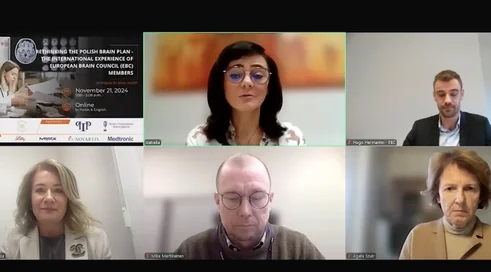
Above all, we are active in leading and stimulating public dialogue. We work in close cooperation with the Polish Neurological Society, but also with policy makers, to outline and show how big the challenge of brain diseases is, but also why Brain Capital is so important, as well as why it is so important that there is a brain health strategy. We also draw good practices from international cooperation, because the Polish voice and Polish activity among European organizations is very meager. We are the only organization from Poland that has been accepted to the European Brain Council. There we are preparing information, documents and messages of "no health without brain health," that is, "no health without brain health," in preparation for assuming the presidency of the Council of the European Union.
We are also planning educational activities aimed at getting the public to better understand what brain diseases are. We are planning surveys that will show us what the public perception is in this area and how much stigma there is for people who are already affected by these diseases. We also want to address the topic of brain health education and prevention in a program for schools. I have already had the pleasure of discussing this with the Ministry of Education, and I hope that this will be noted and reflected in the health lesson program.
We are also thinking ambitiously about the area of Brain Capital and working with employers on brain prevention programs that they could carry out to reduce the risk of morbidity, but also to support employees' mental and physical well-being.