Faced with a full-scale war in Ukraine, civilian medics had to become military overnight, and hospitals were immediately operating in perpetual crisis mode. Battlefield medicine has evolved with new threats - from artillery fire injuries to drone attacks. The experience of the Ukrainians shows that the best investment in the face of the threat of war is people and their skills.
Patients in uniform and civilians - in war, a doctor must take care of every case

Published Dec. 11, 2025 07:22
Fot. R. Gronecki, IOZ
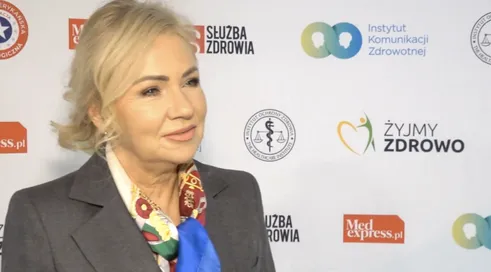
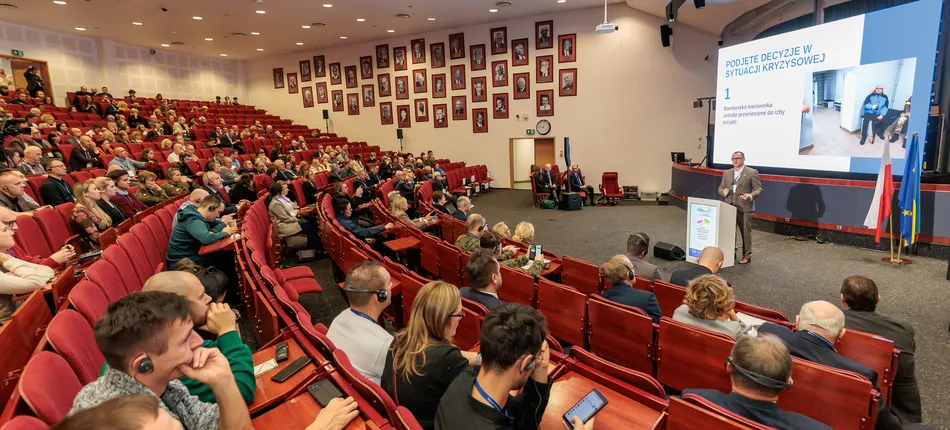
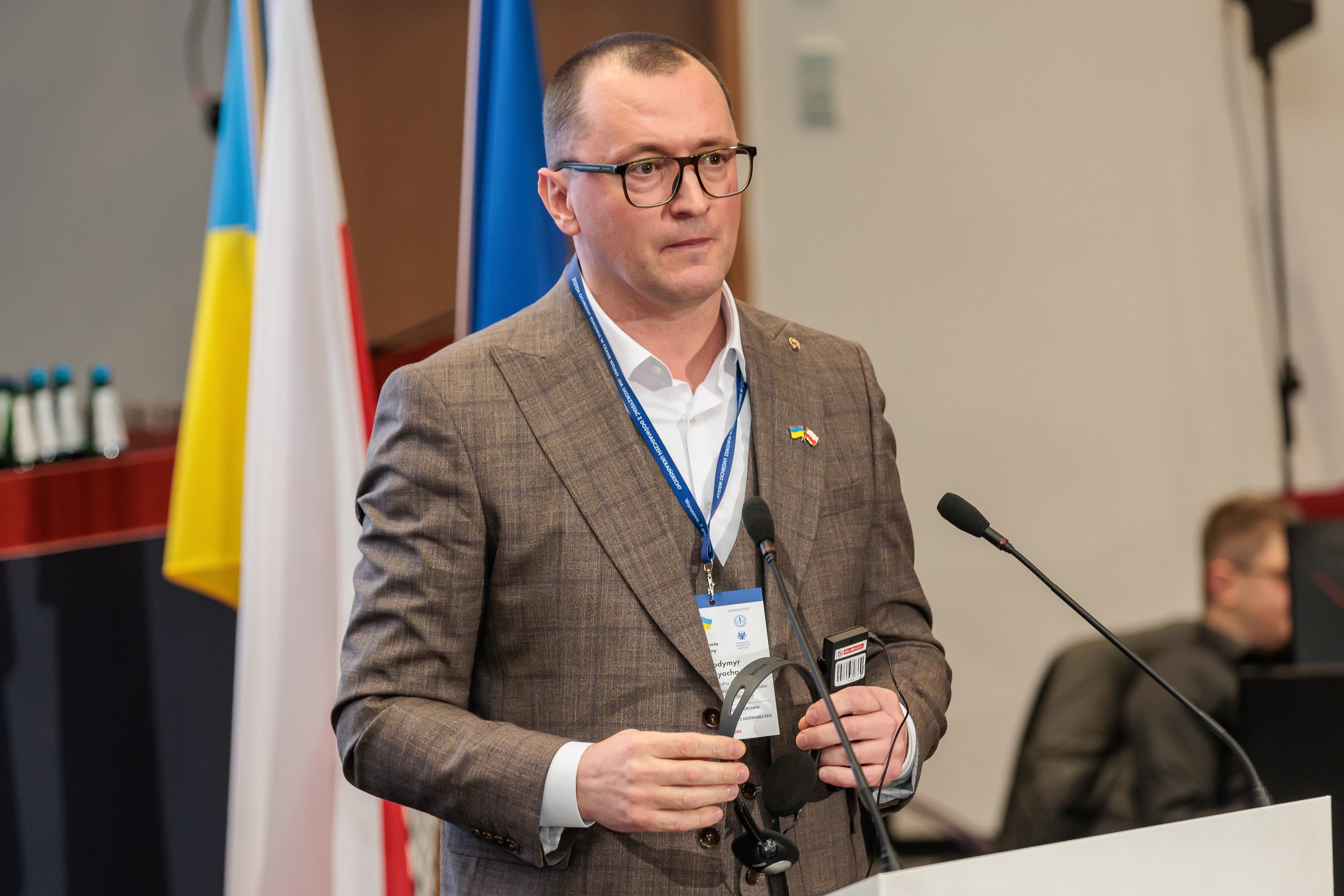
Conference participants "Health Care System in Times of War", held on December 5 at the Medical University of Warsaw, spoke about how the concepts of civilian and military medicine change in the face of war and how the two worlds intersect. Dmytro Samofalov, director of the Health Care Department of the Ministry of Defense of Ukraine, and Volodymyr Krasyocha, general director of the Lviv Regional Hospital for War Veterans and Victims of Repression, shared their experiences.
"Civilian doctors were becoming military in one day."
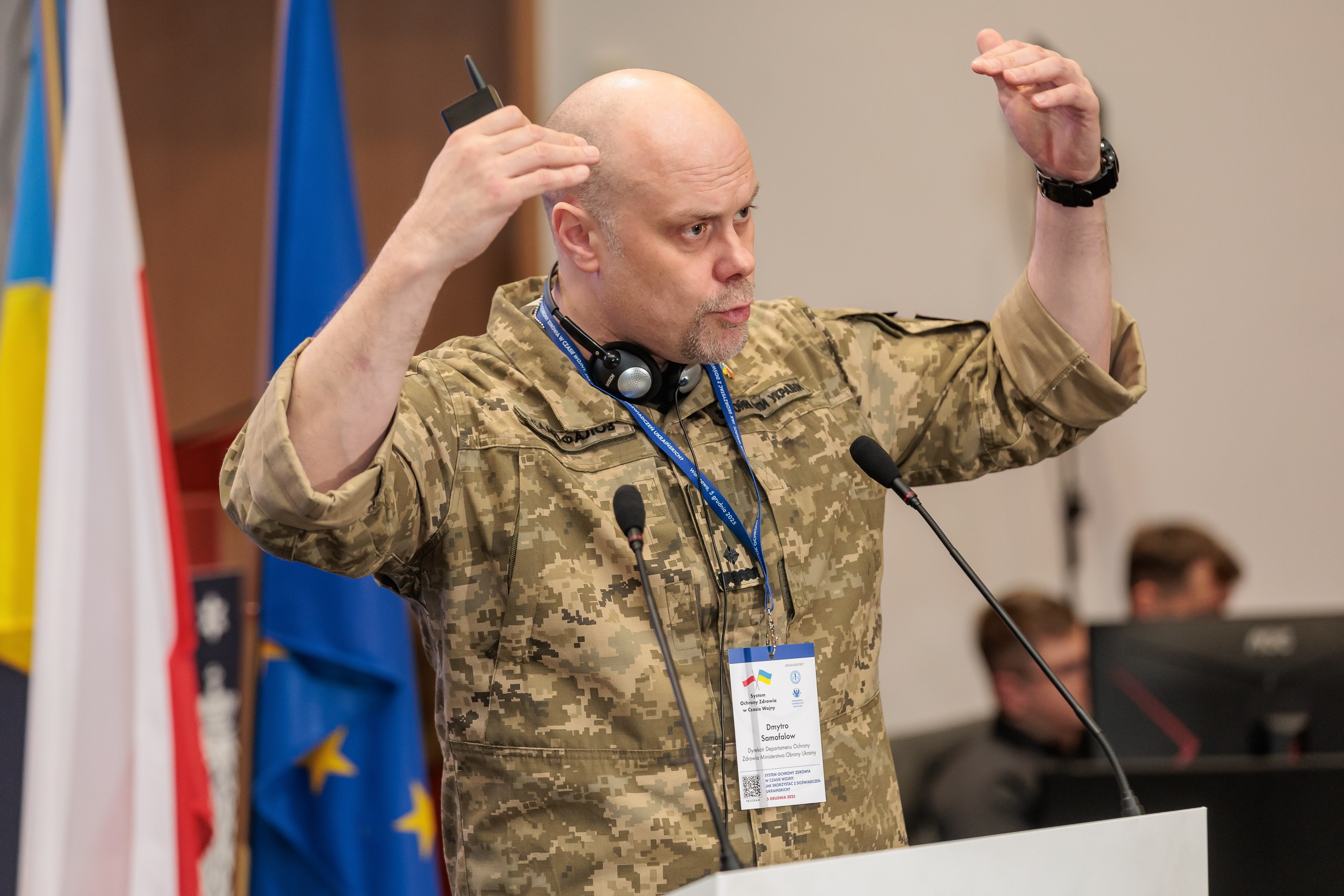
- I joined the army in the first days of the war, as a volunteer. In "civilian life" I was involved in trauma surgery. I spent three years in the combat zone. During this time I gained more experience than I had in 17 years of previous medical practice," Dmytro Samofalov recalled in his speech.
Ukraine's armed forces quadrupled with the start of Russian aggression, he added. - The increase in the number of people in the army meant that we quickly needed to have many more medics. Civilian medics were becoming military in one day. They had neither military training nor experience, having previously worked in emergency rooms, for example," he said.
The war thus meant, in practice, that civilian doctors began to encounter cases typical of the military, and military doctors, for example, in occupied territories, had to provide assistance to people struggling with chronic diseases, among other things.
- In Kherson, I amputated the leg of a 14-year-old girl who suffered from enemy shelling. This is an experience I didn't have when I was a pediatric surgeon. On the other hand, civilian incidents that military doctors encounter include traffic accidents, people with chronic diseases enlisted in the army, or spinal injuries sustained as a result of prolonged wearing of bulletproof vests," the director of the Defense Ministry's Department of Health Protection in Ukraine listed.
As he noted, military doctors often became the only medical service in the war zones. Their patients were therefore not only people in uniform, but also children or senior citizens. Civilian doctors, on the other hand, had to learn how an injury from an explosion or gunshot differed from that from a traffic accident or a fall from a height.
- The only decision we could make in the face of war was to shape a common medical space," assessed Samofalov.
Mass war injuries are not the same as a bus accident
Medical services in wartime always have to work in readiness for a massive influx of patients, even if the field hospital is currently empty.
- Mass military injuries are not the same as in civilian life. Previously, there were situations such as a bus accident, for example. We were immediately informed of the number of injured. Now it's so that one moment it's calm, and in a moment patients can come in every 15-20 minutes for 2-3 days and completely engage the medical staff," Samofalov said.
He added that 75 percent of those who pass through field hospitals, especially those who are lightly wounded or suffering from other illnesses, are eventually referred to civilian hospitals. Because of this, the Ukrainian health care system has had to face the challenge of standardizing processes and systems. Uniform protocols for the treatment of combat injuries, for example, have been established.
- We have also introduced an IT medical system, which unfortunately is not yet connected to the civilian one, but we are striving to do so. In 2022, we started our work using wounded person's cards that we remembered from the 1970s. We simply got boxes of paper forms and filled them out by hand. Now we work with electronic cards, filled out on a tablet. Thanks to this, doctors at the hospital, waiting for the arrival of the wounded, are already able to learn something about him and prepare," said Dmytro Samofalov.
Ambulances on the target of drones - a new challenge for medics
As the doctor stressed, the most important thing in preparing for a possible crisis is to secure medical facilities.
- In hospitals, it is important to move all power no higher than the first floor. Do not forget about energy independence and supplying facilities with power generators. It is necessary to take care of food and water supplies and to be aware that the hospital may become a space where the local population will seek not only medical help, but also shelter," he mentioned.
It is equally important to invest in staff training - including in managing massive hemorrhages, but also in performing basic imaging tests such as ultrasound and X-ray.
Dmytro Samofalov also said that as the enemy's strategy changes, the challenges of battlefield medicine are changing. - In 2022, 90 percent of injuries involved limbs, and the time to evacuate the wounded was 40 to 90 minutes. Artillery and tanks were present on the battlefield. Now is the time of drones. Areas previously considered safe are under attack, as well as ambulances. Getting people off the battlefield is becoming a separate military operation. These delays often lead to deaths. Extended medical assistance on the battlefield must therefore be reinvented," he stressed.
The basis for survival is people, ready for change and sacrifice
Volodymyr Krasyocha learned the challenges faced by doctors both near the front and on the second line of security. Until 2024, he was chief physician of the Voznesensk Multispecialty Hospital - a medical facility that continued to operate during the fighting and occupation of the city.
- We struggled with a massive influx of patients. Dmytro Samofalov referred the wounded from the mobile hospital from outside Kherson to me. There were times when we were loaded with twice as many patients as we were theoretically prepared for. The challenge was not a question of personnel, medicines or materials, but of physical capacity, expressed in the number of beds. However, within a few days, with the help of other countries, including Poland, we were able to supply 300 beds," he recalled.
As Krasyocha added, the basis for survival is people, and it is in them that one should invest. - They must understand what they are doing and with whom. Some of those I counted on escaped, and some of those I didn't bet on completely turned out to be the best during the fights," he said.
Prostheses, reconstructions and multidrug-resistant strains
For the past year Volodymyr Krasyocha has been working, so to speak, "in the back" - in Lviv. The hospital he heads has treated more than 22,000 war-affected people. In facilities like this one, the challenges are not less - they are just different. One of the most important is that patients often arrive after a long 15-30 hour journey, usually by rail. For many of them, it's too late to get help.
- Eighty percent of the people who come to us already have some kind of infection, most of them multi-drug resistant. A lot of injuries are caused by mines or drone-dropped charges," said the director of the Lviv hospital.
Due to the nature of the injuries, the hospital is equipped with a prosthetic lab, a reconstructive surgery department or a 3D printing lab. These can operate thanks to donor support.
Working under conditions of constant danger
Participants at the WUM meeting stressed that the war completely reorganized Ukraine's health care system, forcing close interaction between civilian and military medicine. Medical personnel had to adapt rapidly to injuries they had not faced before, as well as to the massive influx of patients and work under conditions of constant danger.
The organizers of the conference "Health Care System in Times of War" were the Department of Emergency Medicine at WUM and the Institute of Health Care.