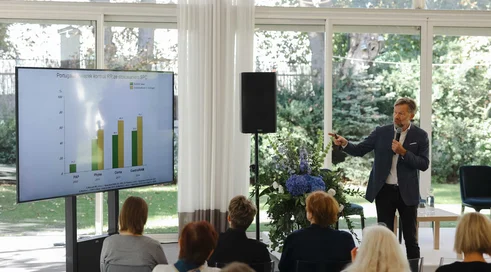
Blood safety is one area that is particularly important not only for patients, but also for the functioning of the entire health care system. The need to further strengthen the blood donation system was discussed during the "Blood Safety - Patient Safety" conference, held at the PAP Press Center.
Blood safety is the safety of Polish patients

Published Oct. 9, 2023 09:03
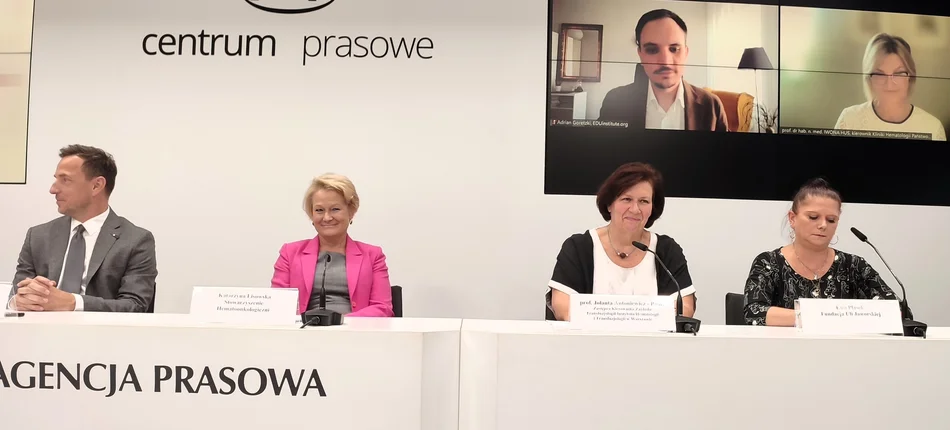
Every year, nearly 9,000 adults and children in Poland are diagnosed with blood cancer. For patients, the primary form of rescue besides drug therapies are transfusions of blood components or blood products. The "Hematooncologic Association" has inaugurated the "Blood Safety - Patient Safety" campaign to make Poles aware of the importance of these aspects in saving the lives of patients.
"Our goal is to continually educate and make the public aware that blood is a gift of life that benefits more than just accident victims. Blood is an essential medicine for patients struggling with blood cancers," - stated Katarzyna Lisowska, leader of the Hematooncology Association.
Demographic changes, the progressive aging of the population resulting in a growing number of patients and a declining number of donors - all of this makes it clear to doctors the need to implement work to further improve blood safety.
"Only about 1.5 percent of the population are donors. Poland has one of the fastest aging populations in Europe. Blood management is a difficult challenge that will have to be met." - pointed out Prof. Iwona Hus, head of the Department of Hematology at the National Medical Institute of the Ministry of Internal Affairs and Administration in Warsaw, while stressing the importance of educating Poles on issues related to the safety of blood and preparations made from it.
Professor Emilian Snarski, head of the Clinical Hematology Department at the Karol Marcinkowski University Hospital in Zielona Gora, pointed out the choice of treatment modalities. "The longer we treat patients with hematological ailments, the greater the need for blood products and the increased risk of infections. That's why the quality of the components is so important, and whether any of the methods of additional protection against bacterial or viral infections, such as pathogen inactivation, have been used, as they can affect whether the patient will be at risk of later complications," Prof. Snarski admitted.
The priority of the Polish health service is to ensure the highest possible quality of blood and its components, and thus their best clinical efficacy and patient safety. Thanks to the introduction of various new standards of procedure, new techniques and technologies, blood and its components intended for transfusion are now as safe therapeutic substances as possible.
"Work is being carried out all the time, both domestically and internationally, with the aim of strengthening the level of safety with the best possible results from the use of blood and its components in patients. The methods used in the Polish blood service do not differ from the standards used in other highly developed countries." - stated Prof. Jolanta Antoniewicz-Papis of the Institute of Hematology and Transfusiology, deputy head of IHIT's Department of Transfusiology.
Experts attending the conference also highlighted the issue of rationalizing the use of blood resources so as to not only optimize, but even minimize its consumption. "The demand for blood is greatest in hematooncology patients. It depends largely on complications. A patient who does not suffer complications in the form of infections requires half or even a third of the volume of blood products than a patient struggling with an infection," Prof. Snarski admitted.
Cases of sepsis of various etiologies among families of representatives of patient associations attending the conference were cited. The basic conclusion is one: it is necessary to ensure that patients on a daily basis do not have complications in the form of infections. It is also necessary to eliminate the risk of pathogen transmission as much as possible, and to make the system of supplying blood and its components efficient. For example, clinicians managing their patients from the most at-risk groups can submit requests for exposed or inactivated blood components, which will be honored past the relevant regional blood and blood donation centers.
"Let's make sure to educate patients, teach patients and their loved ones. But let's also educate doctors and medical staff on how to maintain the highest safety standards. After all, it's all about making sure they can enjoy life for as long as possible," concluded Katarzyna Lisowska, Hematooncology Association.
Source: press release