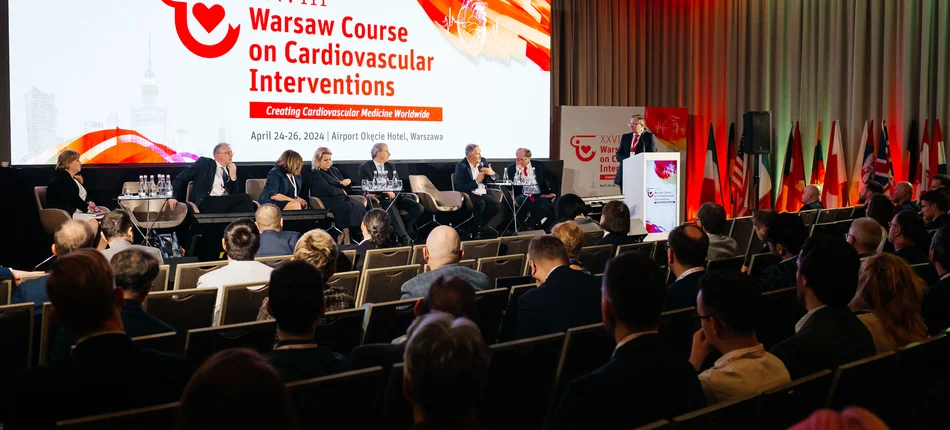
The 28th Warsaw Course on Cardiovascular Interventions (WCCI) workshop, organized by the Foundation for the Support of Interventional Cardiology under the auspices of the Cardiovascular Interventions Association of the Polish Society of Cardiology and in cooperation with EAPCI and EuroPCR, was held on April 24-26, 2024. The program of this oldest and one of the most prestigious cardiology workshops in Europe was developed with the participation of representatives of the PTK Cardiac Intensive Care Association, PTK Club 30 and the Euro 4C group of the EAPCI. This year, the organizers returned to the system sessions, which are a dialogue with decision-makers and social partners of health care in Poland, and prepared a plan for the development of operators, based on the highest global standards.
Medexpress Patronage
WCCI Warsaw 2024, or interactive, collaborative and global in Warsaw

Published July 4, 2024 10:52
Creating Cardiovascular Medicine Worldwide
This year WCCI settled on a stationary "onsite" formula, which translated into a large turnout of participants from all over the world, the congress hosted more than 600 participants from all over the world.
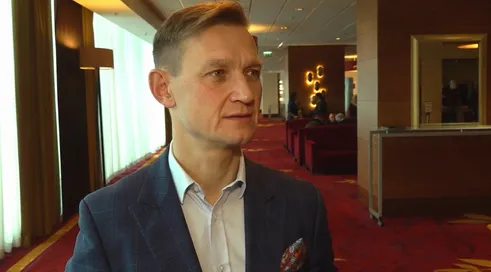
- Last year's return to the on-site formula, with full access for the audience and education staff, showed some of the implications of COVID-19's timing. 2024 was a huge challenge, as attendance was lower than before the pandemic. People had become accustomed to the convenience of online participation, which made new initiatives less likely to succeed. Companies suggested introducing a hybrid version, where cadres would be on-site and the rest of the participants could join remotely. - explains Prof. Robert J. Gil, director of WCCI, head of the Department of Cardiology at the National Medical Institute in Warsaw, and president of the Polish Society of Cardiology. - However, the majority of interventional cardiologists in Poland decided to come to the site, which fills us with pride and optimism, showing that the on-site formula still matters. Now it's all up to us - to build the program and the attractions we offer, so that participants keep coming. We are confident that through our efforts, personal participation will continue and be valued. - He adds.
New concept of training cardiologists
At this year's workshop, the organizers focused on several key aspects regarding the education of interventional cardiovascular specialists. In their own words, they drew important lessons that are fundamental to the further development and effectiveness of cadre education through WCCI workshops in the next generation of operators and the improvement of current surgeons.
- First, we understood that we cannot educate only "plumbers." The subjects of procedures, regardless of their difficulty, are important because they reduce learning time and avoid mistakes by imitating best practices. However, the general medical decisions made by interventional cardiologists are equally important. It is up to us how patients after acute coronary syndromes and patients with recurrent coronary syndromes are treated pharmacologically. We have to treat modernly and effectively, because the best treatment without optimal pharmacotherapy will never bring optimal results. - assesses Prof. Adam Witkowski, director of WCCI, head of the Department of Cardiology and Interventional Angiology, National Institute of Cardiology in Warsaw, past president of the Polish Cardiac Society. - The second element we developed this year was workshops outside the mainstream of the conference. Companies offered exercises on their equipment, which allowed participants to hone their skills. Although the devices were not always those used during percutaneous angioplasty procedures, they offered exercises on structural heart disease. The desire for this type of workshop is great all over the world. We believe that next year these workshops will be even more extensive, as seen in Paris at the PCR, in San Francisco at the TCT, and at national conventions. The training rooms cover hundreds of square meters, offering huge opportunities to learn and practice. Huge queues from morning to evening attest to their popularity and effectiveness. - confirms.
Zoom into cardiology
Experts presented key challenges and proposed solutions to improve the situation in Polish cardiology. An essential element of better organization is the implementation of comprehensive programs, effectively integrated into the overall system of cardiac care in Poland. An example of a successful program is KOS-Infarction, which effectively provides secondary prevention to patients after a heart attack. The results of the program are so promising that it is worth continuing to improve it. Significant changes have been made to the treatment of lipid disorders in 2023, motivating centers to achieve goals in line with the guidelines of the Polish Society of Cardiology (PTK) and the European Society of Cardiology (ESC). Cardiologists are considering integrating the KOS-Infarction program with the B.101 drug program - Treatment of Lipid Disorders - to optimize patient access to cardiac programs, avoiding duplication and expanding the use of advanced therapies and increasing program access. This approach can significantly improve patients' quality of life and survival.
- This year, we discussed existing cardiology programs to date and focused primarily on the problem of treating patients with cardiogenic shock. Conferences like this are an excellent opportunity to reach decision-makers with the problems that make life difficult for Polish cardiology. Health care in Poland has never been perfect, but the COVID-19 pandemic highlighted the concept of "health debt," which has since gained importance in terms of the availability of medical procedures and the number of illnesses and deaths. During the pandemic, the number of diagnostic and therapeutic procedures dropped dramatically, resulting in a backlog. We now have a problem with queues for diagnosis and treatment. The pandemic has increased this backlog, but excess mortality during this period has reduced it somewhat. We estimate that so far at least half of the health debt has been made up. The key is to strike a balance between prevention and remedial medicine so as not to increase the mortality rate of patients requiring immediate care. - admits Professor Gil.
- Responding to the challenge of cardiovascular disease in Poland requires deep reflection and effective intervention measures. Cardiovascular disease remains the leading cause of death, which requires a decisive response. Despite advances in restorative medicine, the epidemiology is alarming. Ischemic heart disease remains the dominant killer, and Poland is far behind the leaders in Europe in terms of the effectiveness of preventive measures. The second key area is stroke and cerebrovascular disease, which also require modern diagnostic and therapeutic solutions. - Prof. Witkowski mentions.
- We need a cross-party consensus on citizens' health, just as we do on national defense. It is important that the results of government programs are not set aside after a change of power, but that we build the future on their achievements. We are currently discussing preventive programs such as "PolSenior." It is crucial that those in power know their results and are willing to shift resources towards preventive medicine as well. - assesses Prof. Gil.
Interactive WCCI
Professor Gil stresses that it is now worthwhile to survey the participants to find out what they think about the WCCI program and what they currently consider most important. He believes that dialogue and interactivity are key to the development of WCCI, which he highlights as an important slogan for the conference. Interventional cardiology is currently undergoing an evolution, where general medical decisions are as important as specialized treatments. The professor proudly mentioned the opening of WCCI sessions for various cardiology associations, such as AISN and the 30.30 Club, which will make it possible to organize sessions at next year's EuroPCR. He also emphasized the long cooperation with European and national associations, more than 15 years, which demonstrates WCCI's openness to new initiatives and program evolution, in line with international trends.
In turn, Prof. Witkowski said that WCCI relies on interaction so that participants don't just see it all on a computer, but are actually here and experience the congressional atmosphere of science, innovation and socializing. All of this translates into better results and a better prognosis for the patients we treat. What is it that the Polish WCCI offers that foreign conferences don't?
- I think our strength is the balance between traditional values, which are invariably important, and new directions that we should pay attention to. We are also trying to prepare sessions and discussions on the future of interventional cardiology over the next 5 to 10 years. And here we want to develop this, because it is very important that we go into dialogue, ask what you expect, why you come, right? This allows active participants to avoid certain mistakes and shorten their learning curve. - Prof. Witkowski explains. - And if we compare our workshops with other conferences around the world, everyone agrees that the Warsaw workshop is world-class. We try to gain uniqueness by adapting best practices from other major conferences. We are fully committed to the idea of our workshops Creating Cardiovascular Medicine Worldwide - this slogan fully reflects our approach to creating WCCI for almost 30 years. - concludes Prof. WItkowski.
Source: Press Mat.
Topics
kardiologia