Książka
Bellevue. Three centuries of medicine and chaos in New York's most famous hospital

Published March 16, 2022 10:45
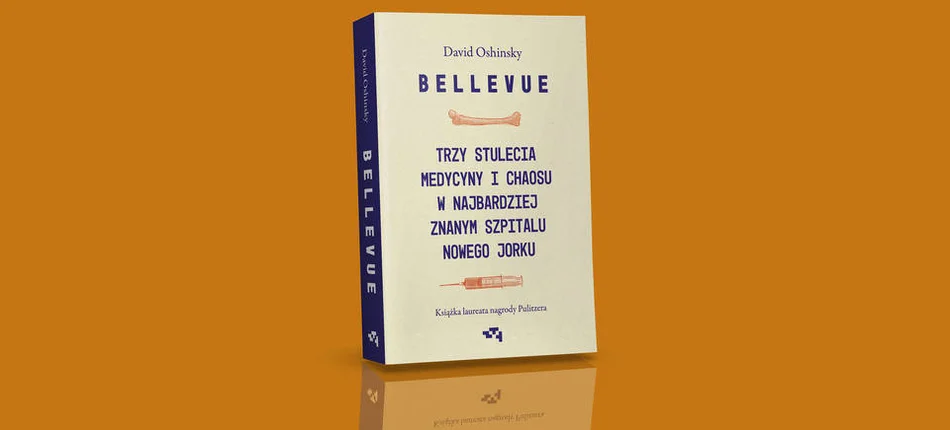
On March 23, the Relacja publishing house will publish a monumental book by Pulitzer Prize winner David Oshinsky, entitled Bellevue. Three centuries of medicine and chaos in New York's most famous hospital.
Bellevue Hospital in New York's East Side once held a colorful and frightening place in the public's imagination as a collection of massacred crime victims, fierce psychopaths, patients maddened with pain and suffering from exotic diseases. Years later, he inspired the Netflix series "New Amsterdam Hospital."
One of the first medical schools was established in Bellevue, and one of the few to ignore the infamous "Jewish admission limit" (such as those used at Harvard, Yale and Columbia). It was here that the students of Sigmund Freud, doctors-refugees from Europe, spread their wings. Bellevue Hospital popularized medical photography and psychiatric treatment and encouraged New York City to engage in integrated public health efforts.
The hospital suffered three wars, numerous plagues (including a biblical Spanish pandemic) and natural disasters. And the author is a master of recounting memorable anecdotes, especially chilling fragments from the past. Animal testing (including testing dogs with varying amounts of chloroform and injecting them with brain fluid), electroconvulsive therapy in children for psychiatric disorders, and the use of cocaine as a mass anesthetic are just some of them. Oshinsky shows that many of the controversial medical practices originated in Europe. The last decades of the 20th century saw rampant crime, drug addiction and homelessness - problems that have put the survival of a public hospital into question. Only the AIDS crisis cemented Bellevue's enduring position as New York's greatest guarantor of safety, the iconic hospital of last resort.
David Oshinsky (born 1944) is an American historian, professor in the Department of History at New York University, head of the Division of Medical Humanities at the NYU School of Medicine. In 2006, he received the Pulitzer Prize in History for his book, Polio: An American Story. Oshinsky is a regular reviewer and author of publications for The New York Times and The Wall Street Journal.