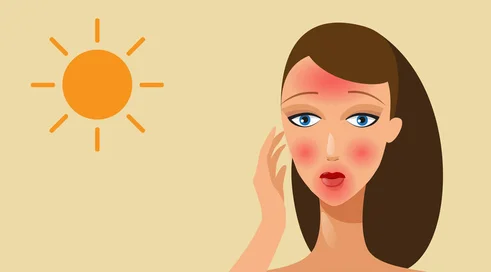
High doses of ultraviolet radiation can cause photoallergic reactions in drug users. Some pass without a trace, but there is a risk that some will leave hard-to-remove discoloration or scars on the skin. Photosensitization symptoms cause discomfort and sometimes require long-term specialized treatment.
Photosensitizing drugs. When we are in danger of sun allergy

Published May 31, 2023 08:00

Fot. Getty Images/iStockphoto
The only completely safe drug that is not harmed by the sun is vitamin D. Besides, there are many preparations that, when exposed to UV radiation, can cause drug-induced allergic reactions on the skin. This applies to almost all groups of drugs, ranging from antibiotics, diuretics, cardiac, hormonal, anti-atherosclerotic and anti-fungal drugs, chemotherapeutic, anti-diabetic and anti-inflammatory drugs, among others, to supplements. It does not matter whether the drug is taken orally or as a preparation applied to the skin. It is worth remembering that any drug, even those considered very safe, can cause adverse reactions, short and long term. Therefore, it is always necessary to check in the leaflet whether sun exposure poses a risk of their occurrence.
Allergic reactions can trigger both natural and synthetic components of the ingested product. And while under the influence of sunlight positive processes such as vitamin D synthesis occur in the body, under the influence of some drug components they can turn into a pathological reaction, the symptoms of which are various types of photodermatoses. One of the most common is photoallergy, the symptoms of which resemble eczema. Most often, under the influence of UVA radiation, the sensitizer is activated. Drug molecules attach to proteins present in the skin, consequently forming an allergen. The immune system is stimulated and, as a result, an allergic reaction appears on the skin. It can take up to several days for the allergen to form, which is why photoallergy is initially asymptomatic. Skin reactions can even manifest on parts of the body that were not directly exposed to the sun several days after exposure. This is different in the case of phototoxicity, which does not depend on the immune system, but on the dose of the drug that is deposited in the skin. When exposed to the sun, it transforms into a chemical compound that causes an avalanche of free radicals responsible for damaging skin cells. The drug's phototoxicity causes a rapid and violent reaction resembling a sunburn permanently damaging skin cells, often leading to discoloration and scarring from the burn. The reaction is visible on the skin as early as a few hours after unprotected exposure to UV radiation and occurs only on parts of the body exposed to UV rays. Once the drug is discontinued, it passes, but if sunburn has occurred because of it, the symptoms require several days of treatment. If the skin has developed not only redness, but also blisters, specialized ointments should be applied immediately.
The most common symptoms of photosensitization are erythema, itchy reddened skin, papules and papular exudates, peeling of the epidermis, in more severe cases blisters and lichen-like lesions, swelling. Also hyperpigmentation, which can become visible immediately after sun exposure, and severe skin burns. The most recognizable group of drugs that do not like the sun are antibiotics. Special attention should be paid to drugs from the group of fluoroquinolones, tetracyclines and sulfonamides. They can cause intense phototoxic and photoallergic reactions. Less obvious, but highly reactive to the sun, are drugs used in the treatment of cardiovascular diseases such as calcium channel blockers: diltiazem, angiotensin-converting enzyme inhibitors: captopril, enalapril, and some diuretics used in the treatment of hypertension or kidney disease, and drugs used in the treatment of hyperlipidemia, among others. Serious skin reactions can also be caused by antifungal drugs that are used to treat systemic fungal infections in patients with weakened immune systems, but even those used to treat fungal infections of the nails and skin of the feet used in the form of creams can cause sensitization. It turns out that commonly used antidiabetic drugs like metformin and some painkillers including ibuprofen are not safe to clash with the sun. As for hormonal medications, both birth control pills and hormone replacement therapy can cause a reaction consisting mainly of skin discoloration. Also, the risk should be carefully checked for psychotropic medications, which can cause adverse post-sun reactions. One of the strongest photoallergens are herbs. Commonly used are St. John's wort, chamomile, calendula, lovage, arnica montana. These ingredients are found in commonly used supplements or are herbal teas themselves.
Phototoxic and photoallergic reactions require symptomatic treatment. When the lesions are mild, it is enough to apply a preparation with panthenol and cooling gels, which relatively quickly relieve symptoms such as erythema, burning and itching of the skin. If the epidermis has been burned, you can include in the treatment preparations with silver, available over-the-counter at the pharmacy, which prevent infection and accelerate healing. For severe lesions, ointments and oral medications containing corticosteroids are used. Sun spots are the most troublesome because their removal requires time, specialized preparations and the results of treatment are not always fully satisfactory. As with other allergies, the most effective course of action is to eliminate risk factors. Unfortunately, in the case of the need to constantly take certain medications, this is not possible. Thus, the only way to reduce possible drug reactions is to carefully check whether the drug can cause phototoxic reactions and to effectively protect yourself from the sun. Avoiding exposure during midday hours, in addition to using creams with a high sunscreen, at least 50 SPF, even on a cloudy day, and protecting the skin with appropriate clothing. It is also important to remember that phototoxic reactions during drug therapies can also be triggered by aesthetic medicine treatments with some lasers. You should consult with your doctor whether such a procedure is completely safe if you are taking specific medications. Visits to tanning beds are just as dangerous as natural UV radiation while taking medication, and should be avoided altogether.