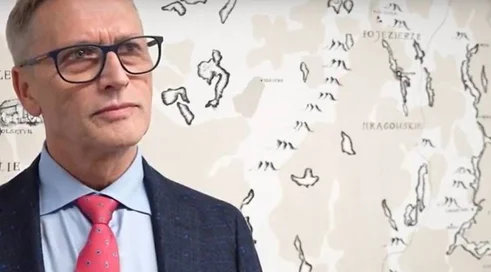
A complicated neurosurgical procedure on the infant will be carried out on Tuesday by a team of specialists led by Prof. David Larysz, MD, head of the Department of Head and Neck Surgery for Children and Adolescents at the Children's Hospital in Olsztyn. 7.5-month-old Liliana Drzazga from Bartág, near Olsztyn, suffers from an ultra-rare genetic defect - achondroplasia.
Olsztyn
Apico-occipital decompression in a child with achondroplasia

Fot. iStock/Getty Images
Failure to perform this operation with the progression of the disease can cause severe neurological deficits, including internal hydrocephalus, respiratory disorders, cardiac dysregulation and motor disorders, among other problems with limb movement. - I was very keen to have the operation performed by Prof. Dawid Larysz," emphasizes Mrs. Magdalena Muracka, Lilaina's mother. - We are in the best hands. It has to be good!
Achondroplasia is a defect that occurs with a frequency of 1:25000-50000 live births. Annually in Poland an average of 2-3 children are born with it. The essence of this disease is abnormal growth of bones, including the skull, spine and limbs, and short stature. Very often in achondroplasia, the largest opening of the skull base, the opening of the great occipital bone, is narrowed. This opening is where the brain ends and the spinal cord begins. Located in this area, the medulla oblongata is the structure responsible for our body's most important activities, such as breathing, controlling the heart, moving, and regulating the sleep-wake cycle, among others. Narrowing of the lumen of the great aperture additionally causes disturbances in the flow of cerebrospinal fluid between the cranial cavity and the spinal column. These disorders most often lead to the onset of hydrocephalus, which is a life and health-threatening condition for the child. The defect is progressive, so the great aperture will grow more slowly over time than the rest of the skull and relatively become smaller and smaller. This situation can cause serious clinical problems for the child, including problems with breathing (such as sleep apnea syndrome) and movement. To prevent this, surgery is necessary.
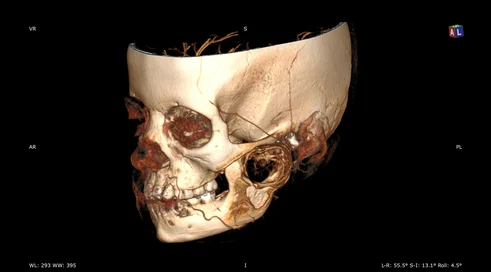
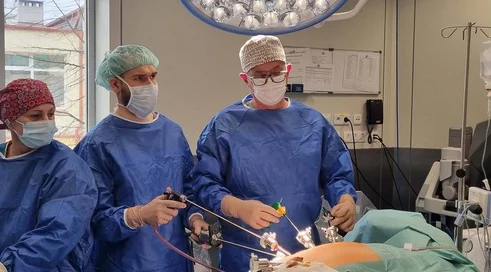
- It will consist of a so-called occipito-temporal decompression, i.e. widening of the opening of the child's great occipital bone. Thanks to the procedure, the extended spinal cord will have more room for further growth and development, informs Professor Dawid Larysz, head of the Department of Head and Neck Surgery for Children and Adolescents at the Children's Hospital in Olsztyn. - This will be a rather complicated neurosurgical procedure, as the child is very small and has an additional abnormal structure of the skull and surrounding vascularization. The opening is narrow, so there is a higher than standard risk of compression of nerve structures, which is extremely dangerous. So that we can perform this surgery safely, we use virtual reality planning, that is, we perform the surgery beforehand on the computer. The surgery will be performed with intraoperative neuromonitoring and using a microscope for neurosurgery. Failure to perform this surgery with the progression of the disease could cause severe neurological disorders, including respiratory disorders and problems moving arms and legs. To date, we have operated on several such patients from all over Poland at the Children's Hospital in Olsztyn. The smallest of them was three months old.
The Provincial Specialized Children's Hospital in Olsztyn is an Expert Center for Rare Diseases established by the Minister of Health. It is the only medical institution in the Warmian-Masurian province to have been granted the status of Rare Diseases Expert Center by the Minister of Health starting this year. The Children's Hospital in Olsztyn is an expert center in two specialized areas: ITHACA (rare neurogenetic diseases) and CRANIO (rare diseases of the head and neck). In the field of CRANIO, the Regional Specialized Children's Hospital in Olsztyn has become an Expert Center for Rare Diseases as the only medical institution in Poland.
infra