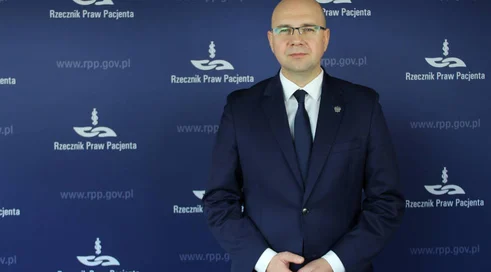
Psychotherapy should be first and foremost a form of treatment, and our common goal should be to make it more accessible to all patients, not just those who can afford private care," says psychologist and psychotherapist Grzegorz Marek, secretary of the Polish Association for Cognitive and Behavioral Therapy. PTTPB recalls that it sent a draft law on the profession of psychotherapist to the Sejm several months ago. It introduces key regulations that can be implemented quickly to increase patient safety and ensure adequate professional protection for psychotherapists, of all approach groups.
Psychotherapy should first and foremost be considered as a form of treatment

Published Nov. 19, 2024 10:30

Fot. Getty Images/iStockphoto
Poland has a dramatic shortage of psychotherapists operating within the public health system, with most therapies available only on the private market.
- Currently, patients seeking help must most often use private services, which significantly limits access to psychotherapy for those with lower incomes. We must strive to change this ratio and allow more patients to benefit from reimbursed therapies. Today, the work of a psychotherapist is mainly regulated in the public health system (if only due to the requirements of the National Health Fund). In the private sector, regulations are limited, for example, in terms of the Enterprise Law, and thus need to be supplemented with provisions related to the specifics of psychotherapists' work. This is a very delicate area that needs to be clarified," emphasizes Grzegorz Marek.
PTTPB calls for psychotherapy to be treated first and foremost as a form of treatment, rather than a service for personal development, which is also important in the context of government funding for it.
- Psychotherapy is of great importance for people struggling with mental difficulties, so we need to be sure that the interventions used are effective. Research shows which methods work in which cases or diagnoses, and which may do more harm than good. By treating each case individually, thanks to research, as in other branches of medicine, we are also able to determine how long, more or less, we should work with a given disorder in order to achieve the desired improvement. Psychotherapy is of great importance to people struggling with mental difficulties and should not be treated as an additional form of support for the privileged. This seems especially important in the context of the limited resources that are allocated to health care," says a representative of the Polish Association for Cognitive and Behavioral Therapy.
The PTTPB's project envisages treating psychotherapy as a medical profession, which would mean that psychotherapists were subject to the provisions of the Law on Patients' Rights (including the Professional Responsibility Commission operating under the Ministry of Health), as well as the obligation of professional secrecy, continuing professional development and a system of professional liability for psychotherapists.
- People in crisis do not always have the knowledge to assess a therapist's qualifications, so in our opinion it is necessary to create a single, nationwide register of psychotherapists, which will give patients confidence that they are choosing a specialist with the right qualifications," points out Grzegorz Marek.
The PTTPB's proposed unified registry, controlled by the Ministry of Health, would provide patients with transparency and confidence that they are choosing a specialist with the right qualifications. The current chaos increases the risk that people in need may go to inadequately trained individuals, which can lead to serious health consequences.
- In my therapy practice, I have encountered patients who have received psychotherapy without first being referred for routine diagnostic testing, even though their reported symptoms warranted it. An example is thyroid hormone testing. Abnormal levels of thyroid hormones can significantly affect mental status - one of the most common symptoms of hypothyroidism is depressive states, including sadness, loss of interest, reduced energy and motivation, and sleep problems. Ignoring such somatic symptoms, given the basics of psychopathology, is a serious diagnostic error. So is discouraging patients from seeking psychiatric treatment, which may involve not looking at a person in all aspects of functioning, namely biological, social and psychological. When numerous studies unequivocally show that in many cases the best therapeutic results come from a combination of pharmacological treatment and psychotherapy," explains the PTTPB psychotherapist.
The debate over regulations has been going on for years, PTTPB proposes ready-made solutions based on existing regulations for the health professions, which can be implemented without creating an additional Chamber of Psychotherapists.
- The Medical Board's model would not work for psychotherapists, because it would require - we have legal opinions in this area - first general training (both in methods that treat psychotherapy as treatment and grounded in scientific research and in methods that treat psychotherapy as personal development) and only then specialization in a particular therapeutic trend. In effect, lengthening training from four to 8-10 years (which would mainly benefit the training centers), which would mean even longer waiting times for patients. At the same time, the regulation of the medical profession shows that it is possible to regulate psychotherapists quickly. The idea is not to force everyone into one stream, but to make each therapy effective and safe for the patient. So that it can be evaluated and monitored in a similar way as we do with other treatments," concludes the secretary of the Polish Association for Cognitive and Behavioral Therapy.
Source: press release