Although they are pregnant and weight gain is normal, they use fasting and restrictive diets that can harm them and their offspring. Research conducted by scientists and students of the Medical University of Silesia in Katowice say straightforwardly - 68.8% of women who are expecting a child or have already given birth are dissatisfied with their figure.
Anorexia during pregnancy. More and more women suffer from it!

Published Aug. 24, 2022 09:47
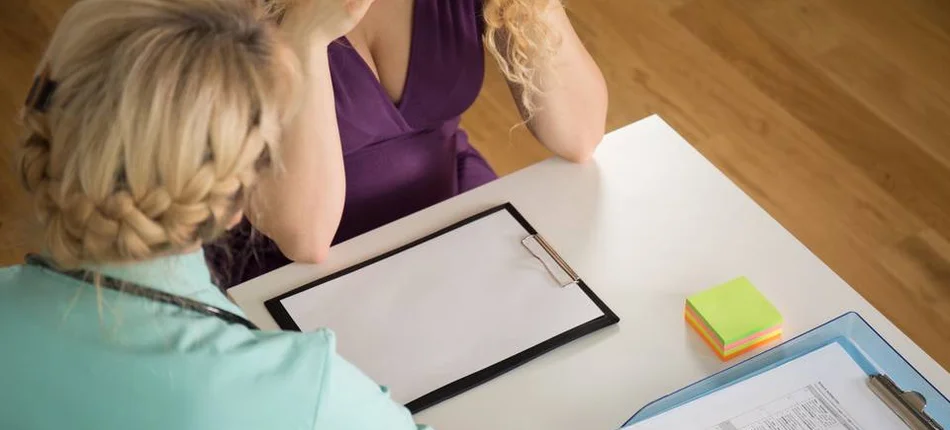
Pregorexia is a relatively new term used to describe anorexia during pregnancy and just after giving birth. It includes feeling guilty about gaining weight. Affected women try to look slimmer during pregnancy and the puerperium at all costs. This period is not a positive experience for every woman. Many of them, instead of perceiving changes in their body through the prism of the developing fetus, focus primarily on too much, in their opinion, weight gain. - Extra kilos make women unattractive - says Agnieszka Białek-Dratwa, MD, PhD from the Department of Dietetics, Faculty of Health Sciences in Bytom, Medical University of Silesia.
The results of the research of Silesian scientists and students have just been published in the international scientific journal International Journal of Environmental Research and Public Health (IJERPH), which publishes the results of scientific research by scientists from around the world in the field of public health and its aspects. This journal is included in the list of prestigious research journals on the Philadelphia List. The entire text is available on the website: https://www.mdpi.com/1660-4601/19/16/10137/html.
288 women aged 21 to 45 participated in the survey by staff and students. These were both women in at least the second trimester of pregnancy and those who were up to a year after giving birth. The test results speak for themselves. As many as 68.8% of women were dissatisfied with their current body weight and shape. This group consists mainly of women who gave birth by caesarean section (52.1%).
- We also observed a relationship between the propensity to limit food and BMI. Respondents with overweight or normal body weight were more prone to dietary restraint. It was especially visible in women dissatisfied with their body weight - explains Dr. Agnieszka Białek-Dratwa and adds: - We were surprised how many women whose BMI was normal had a disturbed perception of their body, which could lead to disorders nutrition, both during pregnancy and in the postpartum period.
Meanwhile, it is natural that during pregnancy, childbirth and the puerperium, many physiological processes take place in the body of every woman. As a result of the intense action of hormones, pregnant women change, inter alia, the distribution of adipose tissue. Weight gain is also changing, which results, among others, from from the development of the fetus and its weight, the increase in the amount of blood in the woman's body, the amount of amniotic fluid and the placenta. Women who find it hard to come to terms with it become increasingly complex and unhealthy obsession with body weight, which can lead to depression and eating disorders. These disorders include, for example, anorexia and bulimia, which can do a lot of harm to both the mother and the baby - explains Dr. Agnieszka Białek-Dratwa and adds: - Proper nutrition during pregnancy plays a key role. A proper diet during this period should include the right amount of protein, carbohydrates, healthy fats and vitamins. Anorexia during pregnancy may not only lead to physical or mental impairment of the baby, but also to miscarriage or death of the fetus.
The problems of pregnant women include relationship with social media, which is full of attractive photos of celebrity mothers. Actresses, singers, models - unlike most women - have staffs of people at their disposal to help them get back into shape and shape from before pregnancy. Trainers and masseurs can work wonders in just a dozen or so weeks. - However, this is a solution that every mother cannot afford. The reality of "ordinary" moms is different - says the SUM expert.
- We should also remember that early grasping symptoms of any eating disorders make it possible to effectively deal with the problem. In pregnant women, these will be symptoms such as the previously mentioned erroneous perception of their own body (cognitive disorders), but in younger people, eating disorders will be manifested, among others, by by trying to get attention. Helping a person with an eating disorder is always the work of many specialists. A doctor-psychiatrist introducing pharmacotherapy, a psychologist conducting psychotherapy, or a dietitian composing the right menu will not help alone. Only the simultaneous work of the aforementioned specialists brings the expected results - concludes Mateusz Grajek, Ph.D. on health from the Department of Public Health of the Faculty of Health Sciences in Bytom, SUM.
Source: SUM
Topics
ciąża / anoreksja / anoreksja w ciąży / Śląski Uniwersytet Medyczny / Pregoreksja / Agnieszka Białek-Dratwa / dieta / dieta w ciąży / Mateusz Grajek