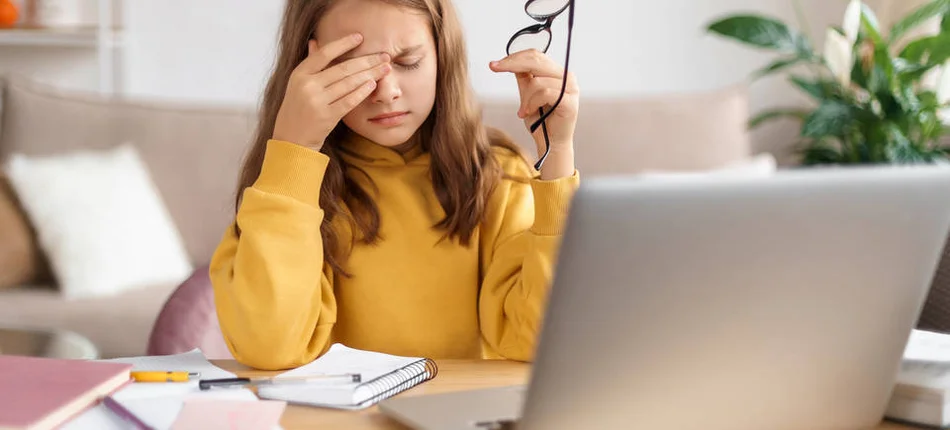
Myopia is an increasingly commonly diagnosed visual defect in children and adolescents. It mainly results from excessive axial elongation of the eyeball, leading to blurred vision of distant objects. If left untreated, it can rapidly worsen and increase the risk of serious eye diseases such as cataracts and glaucoma. Unfortunately, myopia cannot be reversed or cured, so appropriate response after diagnosis is key.
Short-sightedness in a child - how to take care of vision and slow down the progression of the defect?

Published Oct. 2, 2024 07:59
Fot. Getty Images/iStockphoto
Once myopia is diagnosed, eyeglasses with monofocal, convex-concave lenses, which are referred to as minus lenses, are most often used. Such lenses only provide clear vision, but do not help slow down the progression of myopia, that is, its further development. Therefore, it is important to remember that correction is not everything. Equally important is the process of "slowing myopia" itself, also known as "myopia control." It involves early recognition and the creation of a therapeutic plan aimed not only at improving the visual acuity of distant objects, but also at slowing the progression of the defect.
The uncontrolled development of myopia leads to an increased risk of dangerous diseases such as cataracts, glaucoma and retinal detachment. The risk of these conditions increases with age and the size of myopia. That's why early diagnosis and the introduction of therapeutic measures are so important, allowing to ensure the long-term health of children's eyes," explains Sylwia Kijewska, optometrist, Hoya Lens Poland expert.
Effective methods to control myopia:
- Optical - orthokeratology hard lenses worn overnight or glasses with lenses that defocus myopia.
- Pharmacological - drops with a low concentration of atropine, which are used regularly.
The choice of method should be tailored to the needs of the child and consulted with a specialist. When choosing the right method, it is worthwhile to be guided by efficacy confirmed by qualitative clinical studies published in reliable, peer-reviewed scientific journals. It is crucial that the studies refer to the specific product or technology it uses.
Everyday prevention:
Once an appropriate method of myopia control has been implemented, prevention is a key aspect of caring for a child's eye health. Daily habits have a significant impact on slowing the progression of the defect and the overall condition of vision.
- Take regular breaks from visual work (20-20-20 rule: take a 20-second break every 20 minutes and look at a distance of 20 feet, or about 6 meters).
- Spending a minimum of 2 hours a day outdoors in natural light.
Remember to take frequent breaks from looking at close distances. The more breaks, the less strain on our visual system and, consequently, the lower the risk of myopia in a child. In the context of myopia, staying outdoors in natural light a minimum of 2 hours a day is also important for prevention. This can delay the onset of myopia, even in the case of children with genetic loads," says Sylwia Kijewska, an expert at Hoya Lens Poland.
Don't miss the short-sightedness!
Early diagnosis and regular eye examinations (at least once a year) are key to eye health. If you notice vision problems, headaches or squinting in your child's eyes, see a specialist immediately. Regular visits to an ophthalmologist and optometrist will help maintain eye health for years to come.
Even without obvious symptoms, routine eye examinations can help in the early diagnosis of myopia. Waiting for clear symptoms or a signal from the child can be very harmful, especially since children are often unaware of their visual defect and do not report vision problems thus making the defect progress unnoticed. Examination of a child's eyesight should take place in the first year of a child's life, before entering kindergarten and school, and later at least once a year. However, in the case of a diagnosed vision defect more often - every 6 months or as recommended by a specialist. The best solution is to combine visits to an ophthalmologist and optometrist. The first specialist will verify the health of the eyes and apply pupil-dilating drops for a more thorough examination of the eyes and determine the size of the visual defect after a short-term paralysis of accommodation, while the second specialist will check visual acuity, perform visual performance tests and select the appropriate correction. By investing time in regular examinations, we are taking care of the future and comfort of our child's life," concludes Sylwia Kijewska, expert at Hoya Lens Poland.
Source: based on press matrix