Although any dental procedure today can be performed under highly effective local anesthesia, many patients forgo dental treatment because of a paralyzing fear of visiting the dentist. This can and should be effectively counteracted, convinces Dr. Anna Wesolowska, an expert in dentophobia treatment from the Wiktorska Clinic, for oral health is the basis for the health of the entire body.
General anesthesia in dentistry. A way out of dentophobia

Published Oct. 10, 2023 08:00
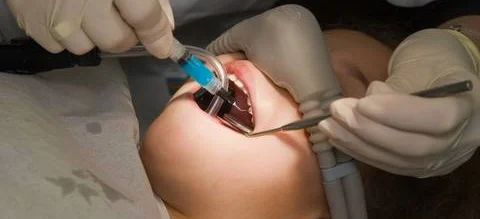
Thinkstock/GettyImages
Barbara Mietkowska: More and more dental clinics are offering anesthesia treatment. It is not a standard procedure, but it is increasingly used in difficult cases.
Anna Wesolowska: To begin with, I would like to clarify that the term anesthesia treatment is a colloquial name for general anesthesia, which involves the complete and reversible abolition of consciousness, pain and even muscle tension. This type of anesthesia completely disables consciousness and requires artificial ventilation. In dental offices, it is used only in the treatment of children under 16 years of age and those whose medical condition indicates it. Adults are usually treated under sedation, a type of anesthesia that dampens the patient's reactions to external stimuli, calming him but allowing the doctor to maintain contact with him if necessary. This allows the patient to respond to the doctor's commands. In this procedure, local anesthesia is additionally applied to the treatment site. The level of sedation can be adjusted during the procedure, shallowing or deepening it depending on the patient's mood and the stage of the procedure.
Can procedures be performed under general anesthesia and under sedation outside the hospital, in a regular dental office?
Treatment under general anesthesia and sedation can be carried out in an outpatient setting offered by a dental clinic. However, it must meet certain conditions. First, it must have an oxygen connection, the anesthesia equipment necessary for intubation, equipment for monitoring vital signs, and employ an anesthesia team - a doctor and a nurse.
And how is "anesthesia" administered, and can we feel safe undergoing procedures under this type of anesthesia?
In general, drugs are administered intravenously. I want to emphasize that before a decision is made to treat under general anesthesia or sedation, the patient must visit an anesthesiologist. He or she will be ordered appropriate tests to assess his or her general health, and a thorough medical history will be taken. It is important that the patient frankly admits to any ailments and medications being taken. It is the anesthesiologist who decides whether there are any contraindications to the procedure. The patient is also given a list of pre-operative recommendations regarding diet, smoking cessation at least four hours before the procedure, and guidelines for going home. The thing about medicine is that every procedure carries some risk. Nevertheless, the anesthetics used today, through the administration of minimal doses and the combination of various agents, but also the possibility of artificial ventilation, guarantee that the patient is carried as safely as possible through the period of surgery. In order to avoid complications, the patient is monitored at all times, carefully supervised, properly placed in the chair.
When can general anesthesia or sedation be necessary for effective dental treatment?
There are often serious medical indications for such procedures. They apply to people - children and adults - with mental disabilities, patients with diseases of the musculoskeletal system. Also patients with neurological diseases that cause tremors and uncontrolled reflexes. Very often patients suffering from various mental disorders, including severe anxiety disorders, are treated in this way. The National Health Service reimburses treatment under general anesthesia for patients with indications. Often patients who complain of lack of time and difficulty in disciplined regular compliance with appointments choose this type of treatment. In this way, they get their teeth treated in a much shorter time, without stress.
Let's go back to patients with dentophobia, because they probably constitute the largest group of people for whom this treatment is used?
Yes it is true. It must be said that dentophobia is a serious limitation to dental and oral health. Patients who feel fear of the dentist do not get regular treatment. Thus, such a vicious circle is formed. The patient is afraid of the dentist therefore does not come to him with a small problem, delays treatment. Often he shows up at the office at the level of disaster, terrible pain or the need to remove a tooth. This makes the anxiety escalate, often greatly. We try to help these patients by offering treatment under sedation. It's important to explain to them exactly what the possibilities of such treatment are and its health benefits. In this way, stress levels can already be reduced before the treatment. It's also worth explaining to patients that anxiety can be eliminated thanks to modern anesthesiology and that maintaining oral health is crucial for the entire body.
Can a patient with severe dentophobia undergo all procedures under sedation?
Yes, of course, with very strong anxiety, dental hygiene and all other procedures from conservative treatment to the most complex surgical procedures can even be performed this way. Usually the patient is kept under sedation for about three hours, and this allows a number of works to be performed at one time. In this way, the number of visits can be reduced and treatment time is shortened.
What about young children? I know you have even very young patients in the clinic?
Yes, young children are often afraid of the dentist even though they have never experienced the discomfort of treatment themselves. In order not to develop anxiety in the child, which could stay with him for life, we choose this method of treatment. There is also a group of young patients who already have very serious caries at the age of two or three and need to have several teeth removed at once. Exposing the child to several visits would be too much stress for him, as well as the hassle of having the doctor perform the procedure in a safe manner. In young children, procedures are performed only under general anesthesia. But toddlers are special patients and require - in addition to anesthesiological preparation - special care. First of all, the procedure starts a few days before with emotional preparation of the child and explaining to him why he can't treat the tooth at home. In young patients we use two types of anesthesia, either intravenous or inhalation. At the time of anesthesia, the child sits in the chair with a parent, who "disappears" only after the child falls asleep. After the procedure, it is remotely monitored for 24 hours by an anesthesiologist, who remains available to the parents ready to answer questions and concerns.
Please tell me if there are many patients who want to be treated under sedation, even though they do not suffer from any diseases or anxiety?
Yes, more and more people with serious dental problems that require root canal, surgical or implant treatment are opting for sedation. This is usually due to a desire to shorten the treatment and perform multiple procedures at one time. Often work and responsibilities do not allow them to visit the office regularly. It happens that they do not live in Poland, then they care about shortening the treatment time, they do not want to stress too much about this situation, being away from home, they expect comfort.