This is the theme of the World Day of IBD (IBD), which takes place every May 19, and aims to draw attention to the problems of patients with ulcerative colitis and Crohn's disease.
Tydzień Pacjencki
IBD has no age

Published May 13, 2022 10:20
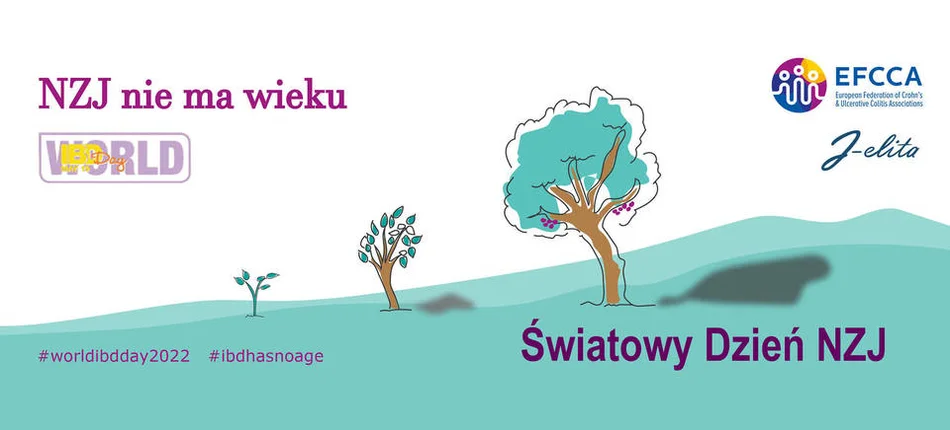
The initiators of the celebration, the European Federation of Crohn's Disease and Colitis Ulceros Associations (EFCCA), and the "J-elita" Society in Poland, want to focus this year on the elderly (over 60) and see how Leśniowski's disease- Crohn's disease (L-C) and ulcerative colitis (UC) affect their quality of life and the need for care.
- The incidence of IBD in the elderly is increasing, and little is said about it - explains Magdalena Sajak-Szczerba, member of the board of EFCCA and the "J-elita" Society. - It is estimated that over the next decade, older patients with ulcerative colitis and Crohn's disease will make up more than a third of all people with IBD. However, there is little research to understand how IBD affects the quality of life of elderly patients.
Stanisław Ilczuk is 61 years old, he is a pensioner, lives in a small town in Żuławy and has been struggling with WZJG for 15 years. Ms Anna from Łódź is a pensioner and she runs a business, she has been suffering from UC for four years. Her 73-year-old namesake from Szczecin is a teacher, she suffers not only from UC, but also from lymphoma. Mr. Stanisław, apart from his sick intestines, has a damaged spine, diabetes, cardiological and joint problems.
Experts point out that seniors struggling with IBD require more care, because intestinal diseases very often are accompanied by other serious conditions, including malignant tumors and a weakened immune system, and the associated increased risk of infection. In addition, the presence of other diseases in older IBD patients is associated with a higher risk of complications during surgery. It is also more difficult for them to choose the appropriate treatment, because seniors with IBD constitute a small percentage of participants in IBD clinical trials and people under long-term pharmacovigilance. On the other hand, for people aged 60+, who often live with low pensions and disability pensions, the prices of drugs, vitamins, dietary supplements and products to maintain a proper diet are a big challenge.
Nearly 100,000 Poles suffer from IBD, i.e. ulcerative colitis and Crohn's disease. These are chronic autoimmune diseases with periods of exacerbation and remission, manifested by severe abdominal pain, diarrhea (up to several dozen bowel movements a day) and blood
in stools and fatigue. The peak incidence is between the ages of 15 and 35. Due to exacerbations, patients are often hospitalized, many of them undergo surgery to remove a fragment or the entire intestine, and some also undergo stoma extraction. The disease often leads to disability and social exclusion.
On the occasion of the World NZJ Day On May 20, Lublin will host a vernissage of the exhibition of photos by the gastroenterologist prof. Rafał Filip and photographer Krzysztof Pisarek, presenting patients with inflammatory bowel diseases. However, in Celestynów near Warsaw, on May 21, there will be a "J-elite" picnic for patients and their relatives, and facilities in many Polish cities will be highlighted in purple - the international color of the NZJ.
The "J-elita" Society (j-elita.org.pl) was established in 2005 and is the largest organization in Poland supporting patients with IBD. It has nearly 3 thousand. members and has branches in 14 provinces. On the association's website: www.j-elita.org.pl/you can find a lot of useful information for patients and their relatives, incl. free guides and educational materials about the disease, treatment methods and diet.
Source: Polish Society for Supporting People with IBD "J-elita"