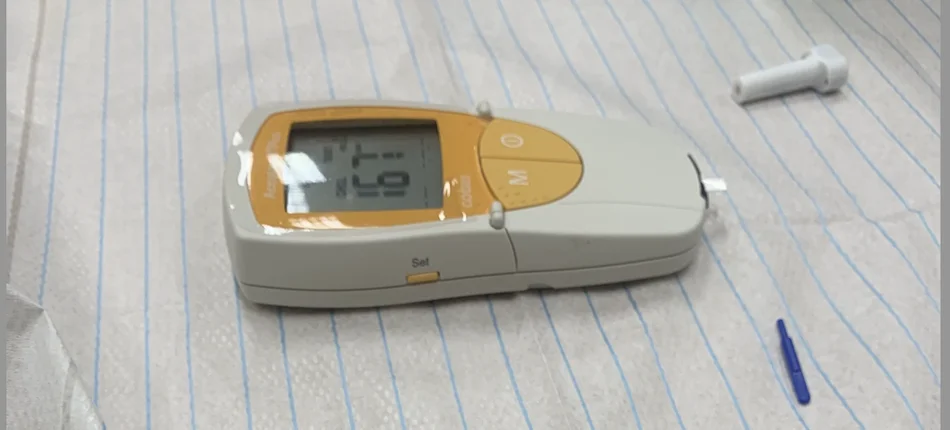
"Lipidogram for a freshman" - is intended to cover all students in the first grades of elementary schools in the Zabrze area, i.e. about 1,500 children. The authors of the program are cardiologists from the Silesian Medical University's Silesian Center for Heart Diseases in Zabrze. The goal of the program is to identify a group of "first-graders" with lipid disorders, including those with familial hypercholesterolemia, a congenital, genetically determined disease leading to premature atherosclerosis. To this end, a cholesterol test will be performed on each child, as well as weight, height and abdominal circumference tests to determine BMI (body mass index). Yesterday, students from Elementary School No. 7 in Zabrze were the first to be tested.
Poland's first program for early detection of lipid disorders in children has been launched in Zabrze

Published Nov. 10, 2023 11:09
- So far, no region of Poland, no city or municipality has carried out similar research at home. This is an innovative project, unique in Poland. The co-organizers of the project are the Zabrze City Hall, which we thank for its financial support, and the Silesian Center for Heart Diseases Foundation in Zabrze," explains Prof. Mariusz Gąsior, head of the 3rd SUM Cardiology Clinic at SCCS in Zabrze.
- In many patients, we have evidence of premature coronary heart disease, stroke and sudden death at a young age. Familial hypercholesterolemia is responsible for some of this. There are about 30 million patients in the world with this type of hypercholesterolemia, in Poland alone the number is about 200,000 people, most of whom are unaware of the disease. The disease results in premature atherosclerosis, resulting in heart attacks or strokes in patients before the age of 30. What's more, according to our previous studies, most diagnoses of premature atherosclerosis, including familial hypercholesterolemia, are made only after a heart attack or stroke, says cardiologist Krzysztof Dyrbuś, MD, from the Third Department of Cardiology at SCCS, who leads the program.
According to the Director of the Silesian Center for Heart Diseases in Zabrze, Prof. Piotr Przybyłowski, MD, in recent years, the intensive development of interventional cardiology has resulted in a significant improvement in the treatment of patients with myocardial infarction, both in terms of the availability of units and in improving the long-term prognosis. Unfortunately, despite this, too many young people who develop atherosclerosis prematurely still end up in hospitals.
Familial hypercholesterolemia is a congenital condition inherited in a dominant manner. For this reason, unlike numerous modifiable risk factors for atherosclerosis, such as cigarette smoking, hypertension, diabetes mellitus and acquired lipid disorders, the disease belongs to non-modifiable atherosclerosis factors (such as age and male gender). It is suspected in the presence of total cholesterol levels of more than 310 mg/dl and/or LDL cholesterol of more than 190 mg/dl with coexisting normal triglyceride levels. Patients may have tendon jaundice or corneal ring, among other conditions. Evidence of the disease is provided by a genetic test, detecting one of the gene mutations. - In Poland, 80,000 heart attacks occur annually. According to our previous studies, some patients develop heart attacks due to premature atherosclerosis. The problem affects both young women and young men, with familial hypercholesterolemia (certain and probable) accounting for about 3% of heart attacks. In these patients, a myocardial infarction can occur between the ages of 30 and 50, adds Prof. M. Gąsior.
If specialists from the Silesian Center for Heart Diseases diagnose familial hypercholesterolemia in a "first-timer" then, due to its genetic basis, the whole family will be taken care of. - The added value of the project will be the possibility of a cascade diagnosis, which will include siblings and parents of a child with lipid disorders. This can protect entire families from a tragic event such as a heart attack or stroke," assesses Prof. M. Gąsior.
The prevalence of familial hypercholesterolemia in Poland is estimated to be slightly higher than in Western European countries. - In the development of premature atherosclerosis, the patient's body is exposed to a "bombardment" of LDL ("bad") cholesterol from an early age, causing the coronary vessels of a 45-year-old to have the appearance of those of a 70-year-old without familial hypercholesterolemia. Being able to screen the population of the city of Zabrze gives us a unique opportunity to find people at risk of premature atherosclerosis. If the program could be continued in future years, we could create the only map of families with familial hypercholesterolemia in Poland, and our experience could become the basis for the implementation of a similar project on primary prevention of premature atherosclerosis throughout Poland," says Dr. K. Dyrbuś.
Already the first day of testing yielded concrete results - among almost 60 children tested, 4 were found to have elevated cholesterol levels, and these children were referred for further diagnosis.
Source: SUM