The Supreme Audit Institution has taken patient rights under the microscope and found violations in all areas examined. The report highlighted, among other things, limited access to information and lack of decent conditions in almost 30% of facilities. As many as 65% of hospitals did not provide patients with full information regarding health services, a serious violation of the right to information. Patients were not always informed about high-risk procedures, and consent forms for procedures did not contain relevant information about risks and benefits.
NIK on violation of patient rights in Polish hospitals

Published Sept. 19, 2024 09:29

fot. Materiał urzędowy Najwyższej Izby Kontroli
Patient rights are guaranteed by the Constitution of the Republic of Poland and the Law on Patient Rights and Patient Ombudsman. This law specifies, among other things, the rights to: health services, information, confidentiality of patient information, consent to health services, respect for patient's intimacy and dignity, medical documentation, objecting to a doctor's opinion or ruling, respect for private and family life or pastoral care.
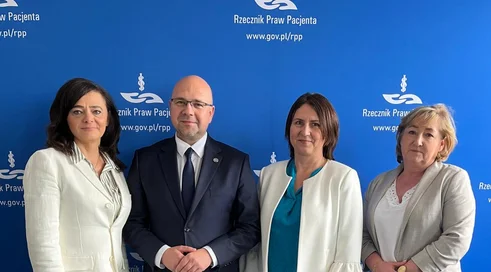
In 2009, the institution of the Patient Ombudsman was singled out, which performs its tasks with the help of the Office of the Patient Ombudsman. Its main task is to ensure that medical entities respect patients' rights. The Ombudsman's activities are supervised by the Prime Minister.
In addition, many hospitals lacked respect for the patient's right to intimacy and dignity - rooms lacked screens, and in some cases patients were hospitalized in corridors. In the Gynecology and Obstetrics Ward of Bielański Hospital in Warsaw, a stillbirth room was located directly next to a live birth room, which created additional stress for patients.
The NIK also found negligence in monitoring the treatment of pain and bedsores. Nearly half of the hospitals lacked reliable documentation of the treatment of bedsores, which poses a serious health risk to patients. In 35% of the facilities, the effectiveness of pain treatment was not monitored.
The audit also revealed problems with the management of medical records, which were not adequately protected from damage and unauthorized access. In many hospitals, records were kept inconsistently - both on paper and electronically, which created chaos for staff and could lead to errors.
The Patient Ombudsman, although aware of the problems, did not carry out all the statutory tasks, which further exacerbated the difficulties in protecting patients' rights. Every year, the Patient Ombudsman submitted proposals for system changes and draft amendments to regulations to the Minister of Health, but the Minister did not always accept them. The Ombudsman did not take action on the regulation of genetic testing, despite the fact that the NIK had already raised alarms in 2018 about legislative deficiencies in this area, which poses a threat to patients.
Conclusions and recommendations
To the Minister of Health on:
- Creating, in cooperation with the Ombudsman, an online education and information platform for patients;
- Responding - each time - to the Patient Ombudsman's requests.
Conclusions de lege ferenda Regarding the preparation of the following projects:
- Amendments to the regulations on the position of the Ombudsman for Patients' Rights in the system of state bodies, which would ensure the Ombudsman's independence from the influence of the executive branch, allowing him to carry out his mission more effectively than before;
- Amending the Law on Patients' Rights so as to regulate investigations conducted after the death of a patient;
- Legal regulations guaranteeing the protection of patients' rights with regard to genetic testing.
To the Patient Ombudsman for:
- To take organizational measures to ensure the proper conduct of investigations into cases of individual violations of patients' rights and investigations into violations of patients' collective rights;
- Take effective measures to extend psychiatric hospital ombudsmen's support to patients in all psychiatric hospitals, including treatment facilities that provide 24-hour rehab care.
To the managers of medical entities o:
- Provide patients with all necessary information in accordance with applicable regulations;
- Provide patients with personalized consent forms for each treatment containing all the necessary information;
- Ensure the reliable application of procedures for the assessment and effectiveness of pain management and the prevention, treatment and monitoring of bedsores;
- Maintaining medical records and enabling electronic appointment registration;
- Systematic estimation and management of the risk of threats to medical records;
- Introduce organizational arrangements to ensure respect for the patient's right to intimacy and dignity.
Source: NIK