An essential part of life and brain hygiene is sleep. It plays a key role in maintaining physical, mental and emotional health. It affects cognitive functions (during sleep, memory consolidation occurs) and enables regenerative processes.
Without healthy sleep, there is no healthy brain

Published Dec. 27, 2024 09:08
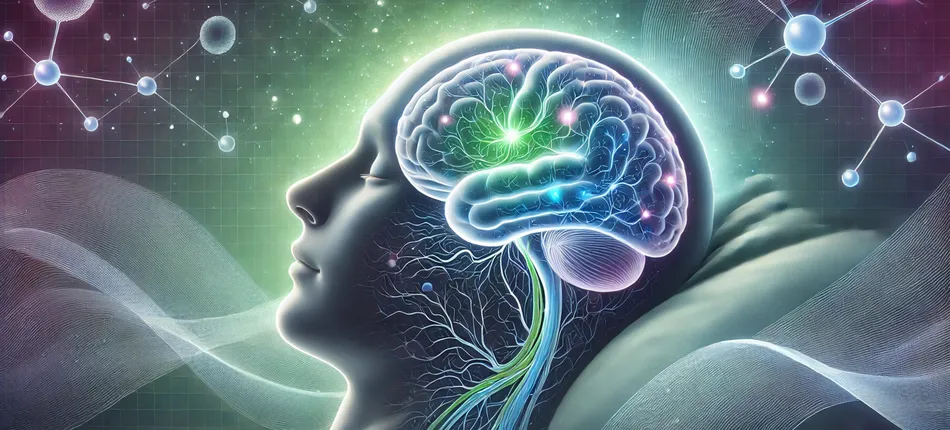
- The brain is an extremely delicate structure, so it requires special care. To stay healthy, the brain needs not only physical protection from injury, but also a good night's sleep, a healthy diet, avoiding stimulants, regular physical activity and limiting overstimulation (overstimulation). Brain health and diseases - their diagnosis and treatment - are dealt with primarily by neurologists, emphasizes Professor Alina Kulakowska, president of the Polish Neurological Society.
A person should get about 1/3 of his or her life's sleep, and sleep deficiency causes: fatigue, irritability, lowered mood or cognitive dysfunction. Long-term sleep deprivation or chronic sleep disorders can lead to various health problems, including heart disease, diabetes, obesity, and mood disorders.
According to the American Academy of Sleep Medicine, sleep is divided into two main phases: NREM (Non-Rapid Eye Movement) and REM (Rapid Eye Movement). In the NREM phase, which accounts for 75-80% of total sleep time, there are additionally three stages, designated N1, N2 and N3, where N1 denotes the shallowest sleep and N3 the deepest. In order to get a good night's sleep, one must go through 4-6 cycles during the night, comprising successive stages of the NREM phase and the REM phase.
What does sleep hygiene mean?
The brain is metabolically very active - although it accounts for 2% of body weight, it consumes 20% of the energy used by the body. During sleep, the brain's energy consumption decreases by only 15%, which means that it is still actively working. With so much metabolic activity, it is inevitable to produce a large amount of unnecessary metabolic products. The glymphatic system is responsible for their removal from the brain.
- The glymphatic system and its role in brain detoxification were described in 2012. The activity of the glymphatic system has been shown to increase during sleep by as much as 60%, and it operates most intensively during deep sleep. It is also known that the activity of the glymphatic system decreases with age, which corresponds to the increasing risk of neurodegenerative diseases with age, caused by the deposition of various protein substances in the brain. Combining these observations, it seems likely that healthy sleep not only allows one to function better the next day after a well-slept night, but also protects the brain from neurodegeneration, explains Prof. Alina Kulakowska.
Given the scientific discoveries of recent years, it is all the more worthwhile to ensure good quality sleep. This is fostered by observing several important principles that make up sleep hygiene. To get a good night's sleep:
- Try to go to bed and get up at similar times.
- Take care of a comfortable outfit, proper bedding and a comfortable mattress.
- Ensure that the room you sleep in is well ventilated, quiet, dark and at a temperature that is right for you.
- Make the bed associated with sleep - don't work in it, don't watch TV, don't spend time in it during the day.
- Avoid blue light (emitted by phones, tablets and computers) 2 hours before bedtime.
- Be physically active (regular physical activity improves sleep, but exercise should not be done immediately before going to bed).
- Avoid caffeine, nicotine and alcohol.
- If you can't fall asleep, don't force yourself to. Get up, read, listen to music and lie down again when you feel tired.
Public knowledge about the brain definitely needs to be improved, according to a study titled "The perceptions and knowledge of Poles about brain health and diseases. "Perception and knowledge of Poles on brain health and diseases" conducted on a representative sample of 1,055 adult Poles in November 2024 by ARC Rynek i Opinia, commissioned by the Foundation for Brain Health Mental Power, the Institute of Healthcare Management at Lazarski University, under the auspices of the Polish Neurological Society and the Polish Psychiatric Society. The survey showed huge unmet social needs not only in the organization of diagnosis and treatment of mental and neurological diseases, but also in education and prevention, understood as brain hygiene.
- It turned out that only 26% of Poles rate their knowledge of brain health as good - much less than for cancer, cardiovascular disease or obesity. Only 13% of Poles know and understand the concept of "brain hygiene," alarmed Dr. Malgorzata Galazka-Sobotka, director of the Institute for Healthcare Management at Lazarski University.
Among diseases involving the brain, respondents most often cited stroke (80%), brain tumors (76%), cerebral palsy (71%), Alzheimer's disease (70%) and schizophrenia (69%).
infra