This year, the Forum of Palliative Medicine, organized by the Polish Society of Palliative Medicine, was held for the 8th time. During the debate, experts discussed the abolition of capping of palliative and hospice care services, the situation of hospices run by non-governmental organizations, the problems of palliative care in rural areas, the activities of perinatal hospices, as well as the needs of children's hospices and the problems reported by patients regarding palliative care. Also raised was the problem, which urgently needs to be resolved, of the discharge of reimbursable drugs for seniors and children under 18 by palliative care doctors and nurses.
Palliative care - changes needed

Published Nov. 29, 2023 12:37

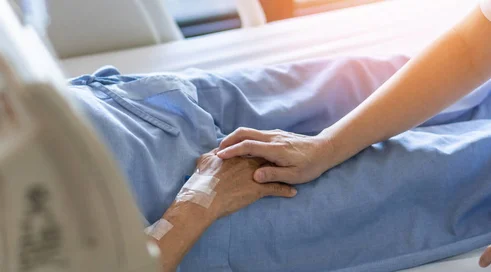
Fot. iStock/Getty Images
The Forum was opened by Aleksandra Ciałkowska-Rysz, MD, PhD - President of the Polish Association of Palliative Medicine, Professor of the Department of Palliative Medicine at the Department of Oncology, Medical University of Lodz, President of the Lodz Hospice Association, who stressed that -Inrecent years, an increase in the number of entities providing palliative care services has been observed. Initially, the increase was in home care units, but over the past three years the number of inpatient care units has also increased. As of December 20 2022, there were 224 inpatient palliative care units (191 in 2019).. This increase was possible thanks to the possibility of using EU funds to build palliative care infrastructure, which NGOs could also use. However, one should be aware that about 50% of these entities are small units, i.e. with 15-20 beds. Therefore, although the availability of inpatient services has definitely improved, unfortunately, there are large differences between provinces; there are still several provinces that have not reached the minimum of 100 beds per 1 million inhabitants recommended by the European Palliative Care Association, but there are provinces where this value has been significantly exceeded.
Tomasz Dzierżanowski, M.D., Ph. about health Tomasz Dzierżanowski - vice president of the Polish Society of Palliative Medicine, head of the Department of Palliative Medicine at the Warsaw University of Medical Sciences, medical director of Caritas of the Warsaw-Praga Diocese answered the question of whether there is a chance to abolish the limitation of palliative and hospice care services, which would change the situation of facilities in this area of care and contribute to the creation of new facilities? - The demand to abolish the capping of palliative care services was made within the framework of the work of the Strategy Team for the Development of Palliative and Hospice Care under the Minister of Health. The incumbent Minister Waldemar Kraska assured its implementation on condition that clear eligibility criteria for palliative care were defined, which has been refined. Unlimited services is also the slogan of the new majority camp in the Sejm. The media have also been actively involved in publicizing the problem of limits on palliative care admissions, so during an interview with TVN Facts, I proposed that non-limiting services in palliative care should be implemented as early as January 1, 2024. There is a real chance for such implementation. On behalf of the Polish Society of Palliative Medicine, I will endeavor to meet with the newly appointed Minister of Health shortly after he takes office.
The situation is particularly difficult for palliative and hospice care facilities run by NGOs, which initiated the development of hospice care in Poland 40 years ago. During those years, new hospices were established, hospice care was professionalized. A specialization in palliative medicine for doctors and a specialization in palliative care nursing for nurses were created. Hospices went from small groups operating mainly on a volunteer basis to hospices employing medical staff and covering an increasing number of patients. Hospices built facilities or adopted entrusted buildings for patients' needs. Today, non-governmental hospices are applying for contracts with the National Health Service, meeting contracting requirements. There has been a change in the management and internal organization of palliative and hospice care units. However, in 40 years, the difficulties of implementing OPH have increased: growing bureaucracy, significant increases in operating costs, declining interest in volunteerism, atomization and progressive disintegration of the hospice community, less and less emphasis on the spiritual-religious dimension of the ministry, and a difficult legal situation.
This difficult situation of hospices run by non-governmental organizations was presented by Dr. Jolanta Stokłosa - president of the Society of Friends of the Sick Hospice of St. Lazarus in Krakow - Queues occurring in care in non-governmental inpatient hospices are mostly - a week, for home hospices the waiting time is mostly 14 days (except that there are hospices in which the waiting time is greater 25 - 90 days), and for palliative medicine clinics an average of 14 days. Most non-governmental hospices have to raise additional funds because - the contract with the National Health Service reimburses from 50% to 70% of costs.
According to Dr. Jolanta Stokłosa the most important problems in palliative and hospice care today are -. lack of of doctors and nurses to work in hospices, which means that new hospices are not being built in sufficient numbers, as they were in 2000 - 2008. New home hospices that fulfill holistic palliative and hospice care should be created to increase access to care. The Polish Hospice Forum also called for the introduction of funding for palliative and hospice day care as part of guaranteed benefits. The Polish Hospice Forum believes that now is the time for action to answer the above question so that the number of home hospices can be increased, ensuring that patients live without pain until natural death.
Still underestimated and unnoticed are the problems of palliative care in the rural environment, as discussed by Dr. Pawel Grabowski of the Prophet Elijah Hospice in Michalow, president of the Foundation, head of the hospice - In Poland, about 40% of its citizens live in rural areas, which account for more than 93% of the country. We are seeing aging and depopulation of rural areas. Poverty also affects rural residents more severely. The situation of these people is most difficult in rural areas with a low or very low level of socio-economic development, poor, sparsely populated, remote from major centers. It is difficult to speak of "comprehensive and holistic care," as hospice care is defined, when such important aspects as "alleviating mental, spiritual and social suffering" are not sufficiently guaranteed within the public health service. Together with the partners of the project "To give what is really needed," our Foundation has tested a model that we want to share with others. The arguments for implementing such a model for the operation of a rural hospice are several. We are convinced that: it meets the real health needs of rural residents at the end of life, it gives the opportunity to respond flexibly to the needs of the wards, it offers professional quality care adapted to the needs of the beneficiary, it rationalizes (reduces) the cost of care, it shows the real effectiveness of the care provided, allowing us to avoid contracts that satisfy only institutions and officials and work only "on paper." This model in the future can serve other units operating in rural areas with similar health needs.
The specifics of pediatric palliative care, the situation of children's hospices. was presented by Maciej Niedźwiecki, MD, PhD, from the Department of Pediatrics, Hematology and Oncology, GUMed, a plenipotentiary of the Minister of Health for palliative care, a physician from the Pomeranian Hospice for Children Foundation - Palliative care for seriously ill children represents only a small fraction of the entire palliative care system in Poland. Nevertheless, due to its specificity, it requires an individual approach and the creation of an exceptionally friendly environment in moral, ethical, medical and organizational aspects. Such an outlook offers the possibility of holistic care, taking into account the anthropology of the human being and the systemic context of caring for the whole family; during the care of a young patient, as well as in the framework of so-called support groups for the orphaned. In my opinion, the children's hospices operating in Poland, both inpatient and home hospices, for the most part present excellent quality and a high ethical level. However, in order to improve their functioning, a team of experts appointed by the Minister of Health is currently working at the Ministry of Health to develop new and better conditions for the functioning of palliative care in Poland in the broadest sense. This is an expression of the concern of our community and the Minister of Health for the quality of care provided by existing as well as newly established children's hospices. I consider the most important problems of pediatric palliative care to be inadequate funding for hospice care, limitation of services, unequal access to palliative care in rural communities (lack of children's hospices in some areas of Poland) and lack of young medical staff willing to work in hospices. Undoubtedly, improved funding would solve some of the pressing problems, so we look forward to the new valuation of palliative care services, which is being handled by the Agency for Health Technology Assessment and Tarification.
The difficult topic of perinatal care was discussed by Dr. Filip Leszek Buczynski, OFM - president of the Lublin-based Little Prince Children's Hospice in Lublin - A woman during prenatal checkups may learn after an ultrasound that the child she is carrying under her heart has a serious life-threatening disease. She faces a decision related to the future. Perinatal hospice care is becoming an alternative to abortion. The model of such care, implemented for 16 years by the Lublin Children's Hospice, has become the choice for more than a hundred couples. None of them have regretted this decision. Medical care based on the standards of operation of the Clinic of the third degree of reference, as well as psychological support, social support, the offer of further care in an inpatient or home hospice for children, and, finally, care after the death of the child for the family, as part of support for the orphaned, makes it possible to respond effectively to the needs of such parents.
Aleksandra Rudnicka,spokeswoman for Patients Covered by PalliativeCare , spoke about the needs and problems reported by patients and their families regarding palliative care- Patients have been calling for the inclusion of palliative care, including unlimited services in this area, for a long time, as soon as the oncology package was introduced. After 8 years of the package, we know that the mere abolition of the limit will not change the situation, the queues will not disappear because of this, if at the same time salaries for medical staff are not raised, because these services must be performed by someone. The problem for patients is the lack of understanding by specialists of the role of palliative medicine and the need to provide palliative care to the patient right after the diagnosis of a chronic disease. Unfortunately, doctors do not refer patients to palliative care, they do not inform them where they can get such help and what it consists of, what a huge impact it has on increasing the quality of life in the disease, on prolonging it, despite the poor prognosis. Recently, patients have been increasingly talking about the deterioration of the quality of palliative care. However, if they do not have a contract with the National Health Fund, they are practically out of control, neither provincial consultants nor the governor have any influence on their activities. The prices offered in these facilities for services are often enormous, and the treatments offered, such as vitamin C infusions, have nothing to do with evidence-based medicine. In such a sensitive area as palliative and hospice care, there can be no activities, outside of public scrutiny. We believe there is a problem that patient organizations should publicize in order to find a legal solution.
Vice President Tomasz Dzierżanowski informed the PTMP about the actions taken by the PTMP related to the lack of reimbursable medicines for seniors and children under 18 years of age within the scope of palliative and hospice care services - It was with disappointment that we received the entry of the law regulating the discharge of fully reimbursable medicines for seniors 60+ and children under 18 years of age. It lacked empowerment for palliative care doctors and nurses. Those under palliative care must turn to their PCPs, which is fraught with great effort or even impossible due to the incapacity of patients and their caregivers. In non-urban settings, the home palliative care team is the only lifeline for these people. That's why I intervened with Minister Maciej Miłkowski right after the amendment to the reimbursement law came into effect, and after Dr. Katarzyna Sójka became Minister of Health, also with you. I proposed a temporary but quick-to-implement solution to equalize palliative care physicians and nurses in their authority to write prescriptions with primary care physicians under the Minister of Health's announcement, pending amendments to the law. This solution has been referred to the legal department and is stuck. At the moment, we do not see progress on the issue, so I will continue my efforts, on behalf of PTMP - supported by Palliative Care Patient Advocate Aleksandra Rudnicka and patient organizations - to bring about a favorable solution. At the same time, Minister Maciej Miłkowski has informed me of the ongoing process of preparing statutory changes so that any doctor will be able to prescribe medicines for seniors and children with full reimbursement.
Forum participants hope that some of the issues raised will be resolved in the near future.
Source: press mat.