Since April, a drug has been available in Poland that gives hope to patients with early breast cancer that the disease will not return. However, not all of them do. Those with smaller tumors and no involved lymph nodes unfortunately still live in fear of relapse. Anna Kupiecka of the OnkoCafe-Together Better Foundation explained in an interview with Medexpress that the July reimbursement list for oncology patients was a milestone, but did not respond to the challenge.
Patients with early breast cancer have access to a drug that reduces the risk of recurrence. But not all

Published July 17, 2025 09:07

MEDEXPRESS: Ms. Anna, 23% of malignant tumors in women are breast cancer. Year after year, 20,000 women find out they have it. 14% is in turn a statistic regarding mortality from this cancer. But there are positives, too, for the reason that the vast majority of breast cancer cases are detected at an early stage. However, even if we detect cancer at an early stage, unfortunately, even the removal of the tumor cannot guarantee recovery. Within five or even twenty years, this disease can return. What does the fear of recurrence of this disease mean for patients in practice?
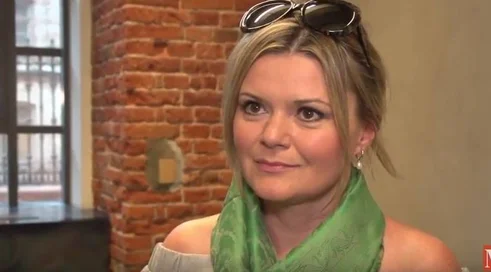
Anna Kupiecka: Yes, indeed, most cancers are detected in Poland at an early stage. Every year more than 20,000 women hear such a diagnosis. A large part of them are cured permanently, however, this fear that one day there will be a recurrence accompanies the patient for life. I know this myself, I suffered from breast cancer many years ago, and all the time there is a fear in me about whether it can still happen to me. Thousands of our patients come back to us for psychological help years later and say, "listen, I have these fears again, because a friend got sick again."
It is a paralyzing fear, and also women with early detected breast cancer can have a recurrence even after many, many years. This is extremely difficult, but medicine is moving forward all the time. The development of both surgery and the treatment regimens themselves for breast cancer, as well as the development of drug technology, allow us to know more and more about this cancer, we even know how to protect ourselves from recurrence or what procedures, regimens to use for different subtypes of breast cancer.
MEDEXPRESS: In that case, do patients with early-detected breast cancer have a moment when they can really breathe that this disease will not return?
Anna Kupiecka: A therapy that protects patients from the risk of recurrence has been introduced in Poland since April, but it is not available to everyone. We are talking about abemaciclib. In Poland, however, we also have experience in clinical practice with the second ciclib - in advanced breast cancer. We know that it can be used in a wider group of patients with early breast cancer and soothe that anxiety about recurrence - even in those who had no lymph nodes involved, or had one node involved, but who are at high risk of recurrence. Large studies show that with ribocyclib therapy, a larger group of patients can be saved from having the disease return.
MEDEXPRESS: And then comes that moment when just the patient with early-detected breast cancer stops being afraid?
Anna Kupiecka: Whenever we are treated better, we have less concern. This can be seen in a cross-section of recent years. The treatment of breast cancer has changed a lot in Poland. In the last 3-4 years, more and more breast cancers are detected early and patients are better treated thanks to the introduction of the most modern therapies on the reimbursement lists.
The fact that it is possible to ensure that the disease does not return gives a sense of peace and confidence that "I am better protected." I have a better chance that the disease will never return, so I can work with peace of mind, return to my normal life, fulfill my roles, be a mother, a grandmother.
This anxiety can sometimes do more harm than the treatment itself. Chemotherapy treatment is aggravating, but this anxiety can paralyze us in many life decisions and determines how we go on with our lives, whether we want to live or find it more difficult. A sense of security is extremely important.
MEDEXPRESS: You mentioned the April reimbursement list, and I have a question about the July, most recent reimbursement list. What was missing for breast cancer patients?
Anna Kupiecka: It's worth saying first of all what it is, because as many as 18 modern cancer therapies have appeared on it. This is excellent news for many patients. Among other things, drugs for the treatment of breast cancer have appeared. These are historic milestones. By using these latest therapies, we can become a country that treats Polish women with breast cancer according to the latest global guidelines.
Nevertheless, there was no therapy on this list, a therapy for patients with early negative hormone-dependent breast cancer that will protect patients at high risk of recurrence.
MEDEXPRESS: Well, that's right - in Germany and Romania this drug has already appeared on reimbursement lists.
Anna Kupiecka: In Germany, there is a different reimbursement system - the drugs actually come in automatically, but Poland is catching up very quickly, and I believe that the Ministry of Health will notice this wider group of patients with early breast cancer and soon this drug will be reimbursed for them. With these two drugs at their disposal, the doctor can more precisely select a drug that will bring a better clinical effect or fewer side effects to a given patient. These drugs differ in their toxicity and efficacy profile.
In other subtypes of breast cancer, too, we already have a wider range of choices in the hands of the doctor. The important thing is to select the drug precisely and not be forced to exclude some patients. The drug program needs to be so broadly designed that it is possible to use a particular therapy in a patient for whom it is directed, but also to have an alternative that can be used in a patient who, for some reason, cannot use a particular drug. The tolerance profile also varies - different patients tolerate different active substances differently, so this wide range is extremely important.
We have a lot of experience with ribocyclib in Poland, it is already used in advanced breast cancer. Recent studies show that adding ribociclib to existing treatment for early breast cancer has a greater effect and protects against recurrence.
MEDEXPRESS: How can a patient with early breast cancer be cared for?
Anna Kupiecka: There are already changes at hand that can make Poland such a model country - treating according to the latest guidelines and with the latest medical knowledge at the world level. What science, medicine has at its disposal will be treated for Polish women. This will give us a sense of peace and security. Treatment, its quality, the latest technologies have a broader dimension. Breast cancer patients with their stories show that there is life after cancer too.
And this is what is needed in our country - to build awareness that cancer is not a sentence. In Poland, such a myth still persists, so all the tools to change the path of treatment and treat as well as possible women who are affected by breast cancer must be used to change public awareness and eliminate the fear of cancer as a fatal disease. Because it is not one now.
Topics
wczesny rak piersi / efektywność / pacjentki / refundacja / węzły chłonne / obawa / leczenie / leczenie raka / terapia / nowotwór złośliwy / Ministerstwo Zdrowia / profil toksyczności / lekarz / wczesne stadium / nawrót choroby / terapia hormonalna / rak piersi