- Warsaw does not stand out negatively in terms of light pollution among other large cities in Poland, says Maria Wasiak, secretary of the City of Warsaw. This is in response to the Ombudsman's doubts about the effectiveness of the city authorities' ideas on reducing artificial light in public spaces.
RPO asks about light pollution. There is an answer from the Warsaw authorities

Published Jan. 15, 2024 12:10
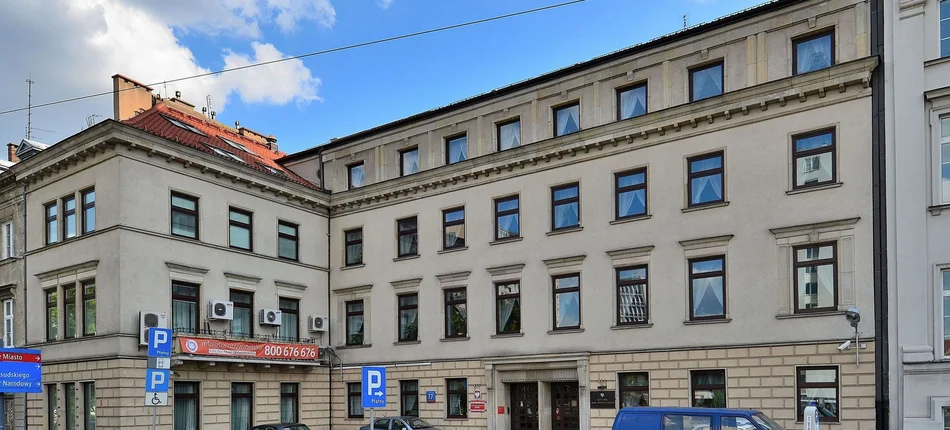
Autorstwa Adrian Grycuk - Praca własna, CC BY-SA 3.0 pl, https://commons.wikimedia.org/w/index.php?curid=34910970
Light pollution is being talked about more and more in Poland. This is because there is a lack of regulations governing how advertisements or buildings are to be illuminated so that there is no excessive emission of artificial light.
Some cities are attempting to introduce local solutions on their own. In Warsaw, a landscape resolution was introduced in 2020 to address, among other things, illuminated advertisements, and an "Sowa" program was implemented to replace sodium lighting with led lighting. Permits for activities that may affect the environment, in turn, include conditions for reducing outdoor lighting.
Ombudsman Marcin Wiącek, however, had doubts that the solutions were definitely thought out and carried out so that they would actually reduce light pollution and be safe for people. The Ombudsman sent a letter to Mayor Rafal Trzaskowski, asking, among other things, whether the Landscape Resolution will be amended so that light advertisements in the subway do not "attack" travelers. He was also interested in whether led light bulbs installed on Warsaw roads have been tested for safety to human health, and whether capital officials enforce the "light" conditions written into permits for activities that may affect the environment.
Maria Wasiak, secretary of the City of Warsaw, responded to the letter.
"Warsaw does not stand out negatively in terms of light pollution among other large cities in Poland. Actions being carried out in Warsaw that bring quick results are the replacement of the street lighting network. Ergonomically shaped luminaires allow to direct a limited beam of light precisely to the illuminated surface, so the phenomenon of light scattering is limited. At the same time, the higher energy efficiency of LEDs compared to sodium lamps produces the effect of higher light brightness with lower levels of energy consumption, and thus lower operating costs," the response reads.
Maria Wasiak also points out that some of the measures taken will take some time to bear fruit, and that under Warsaw conditions, the repealed provisions of the Public Roads Act, which provide for the issuance of an ordinance specifying the maximum luminance of the surface of visual information placed on light-emitting advertising, during the day and at night, in the built-up area and outside the built-up area, with a view to maintaining traffic safety, would have a major impact on reducing light pollution.
"If analogous regulations, applicable not only to advertising, were issued in connection with the impact of light on human living conditions or the conditions of the fauna, they could be found in the Environmental Protection Law and perform a function analogous to noise standards or electromagnetic fields. They would then be subject to monitoring and control or enforcement action," he points out.
So it turns out that the only way to implement comprehensive and rational protection against excessive light pollution is to introduce appropriate regulations, based on adequate scientific knowledge and economic calculations, at the national level.
compiled based on the Ombudsman's Office