Speech difficulties affect many people around the world. On the 6th of March, the European Day of the Speech Therapist is celebrated. This year it is to draw attention to the cooperation of speech therapists with other specialists. This profession is most often associated with beautiful pronunciation. However, its spectrum is very broad and concerns health at many stages of life.
Speech is not just pronunciation. European Logopedist Day

Published March 6, 2024 07:59
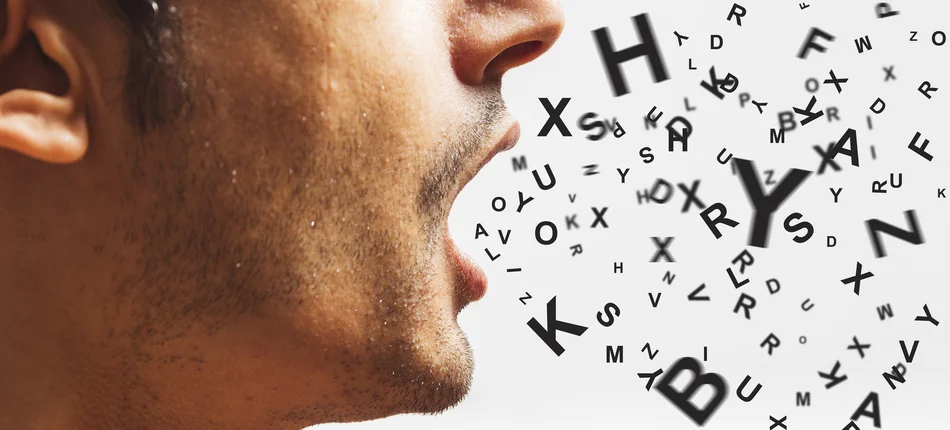
Fot. iStock/Getty Images
Speech therapy is an interdisciplinary scientific field that deals with linguistic communication, that is, linguistic communication and disorders in this area. It brings together numerous branches of science: neurology, audiology, phoniatrics, ENT, orthodontics psychiatry, psychology, physiotherapy, pedagogy, special education and linguistics. This very long list does not exhaust all the areas that a speech therapist reaches out to in his work anyway. Cooperation with specialists in other fields is very important because it significantly improves the results of work with the patient.
A speech therapist's charge can be made at any stage of life. The first contact with him often occurs just after birth. In neonatal wards, speech therapists support the normal development of premature babies, working closely with the entire medical team. This allows them to perfect correct motor patterns based on reflexes, which are the basis for proper development. Often the newborn's life-saving procedures involve key areas related to reflexes, such as the mouth, hands and feet. Working with a speech therapist at this stage has a positive impact on the child's functioning after leaving the hospital. Newborns born at term can also come under the care of a speech therapist. Feeding problems signal that it is worth going to such a specialist. Especially since the faster the intervention, the less in later development the build-up of consequences, sometimes minor abnormalities. In this case, a speech therapist often joins forces with an ENT specialist and together they decide on possible treatments. For example, undercutting the frenulum of the tongue makes it possible to free the tongue held by tissues that are too short. As a result, the child can properly develop the movements involved in swallowing, and this provides, among other things, training for later correct pronunciation. Thanks to the Great Orchestra of Christmas Charity, the hearing screening program has covered all newborns in Poland since 2003. Since then, the face of Polish surdologopedics, the field of speech therapy that deals with working with deaf people, has changed. This program has made it possible to provide audiological care to children at a very early stage of life. Thanks to normal physical hearing, they are able to acquire speech in a correct way. Nevertheless, a speech therapist monitors the speech development of a child with a hearing disorder to stimulate it and support it if necessary.
In adult medical facilities, speech therapists also work closely with neurologists. Very often their help is necessary after a stroke or craniocerebral trauma, when, for example, aphasia, or the breakdown of the language system, appears. This means that the patient has to learn from scratch to use the language he used before, and he cannot do it on his own. In this case, the speech therapist's work is not just about training the articulatory apparatus. Such patients require help in restoring the lost ability to use language, that is, programming speech, using words with the right meaning, building sentences. Speech is also about understanding the messages received. This aspect often needs support as well. Other patients struggle with dysphagia, or swallowing disorder. In addition to medical and physiotherapeutic intervention, the participation of a speech therapist is essential in therapy. They practice and shape the patterns of correct swallowing, in a way that is adapted to the patient's abilities. This positively influences their later independence in drinking and eating. The cooperation of speech therapists with phoniatrists, ENT surgeons and also surgeons concerns phoniatric patients. Some speech therapists specialize in voice rehabilitation, which is sometimes accompanied by surgical intervention concerning the vocal folds. Sometimes patients end up in voice rehabilitation as a consequence of complications after surgery in the laryngeal area (such as removal of the thyroid gland) or after treatment requiring connection to a ventilator. Patients who have undergone a total laryngectomy, i.e. removal of the larynx, are taught to develop a replacement voice that allows them to communicate through audible speech. This is also important because of the mental state of patients deprived of the ability to speak. Speech therapy must be based on an empathetic approach to the patient, taking into account his emotions and mental state. Difficulties with communication are often a social problem, especially perceived in the case of people who stutter. Help for people with speech fluency is provided by a balbutologopedist. Here, it is particularly important to work with the patient's emotions and experiences in an accepting way, and to cooperate with loved ones. It is also worth training the public how to talk to people with speech fluency, so as not to put unnecessary, harmful pressure on them.
Speech therapists also include specialists dealing with delayed or impaired speech development (including articulation disorders), the development of verbal and non-verbal communication in autism, and the introduction of alternative communication (AAC) methods, for people who are deprived of the ability to speak, or whose speech does not fulfill all communicative functions. In the aforementioned speech therapy domains, interdisciplinary cooperation between specialists is of particularly great therapeutic value. Ideally, multispecialty teams would be able to give the patient the full, effective care he or she needs at a given stage and change the quality of his or her life.
Best wishes to all speech therapists on their holiday!
Natalia Mietkowska