The Ombudsman draws the attention of Health Minister Katherine Sójka to the individual needs of people with disabilities in accessing medical care services with a particular focus on gynecological and obstetric care.
Women with disabilities without equal access to gynecological and obstetrical care. What is the MZ doing about this issue?

Published Oct. 17, 2023 09:09
Thinkstock/GettyImages
Women with disabilities face additional barriers to obtaining appropriate medical services. Women with disabilities are in a special situation in the context of gynecological and obstetric care services. At each stage of the visit, they perceive a lack of such procedures, guidelines and recommendations related to appropriate service that would guarantee the necessary reasonable accommodation, elimination of barriers and appropriate treatment.
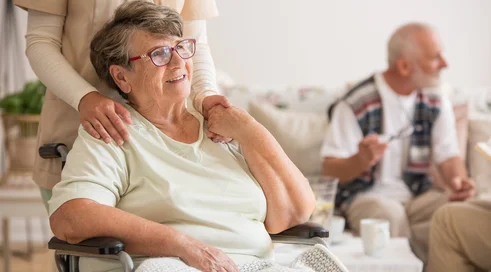
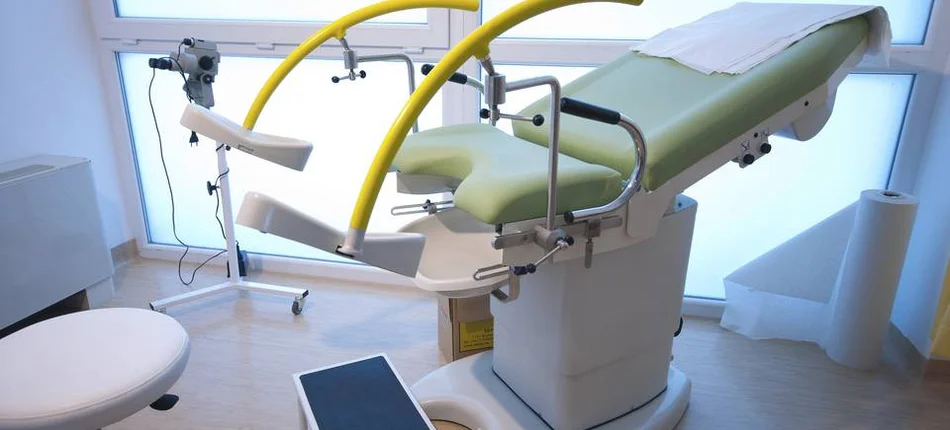
Architectural inaccessibility of the offices remains a major obstacle - especially for patients in wheelchairs - including the lack of gynecological chairs that allow them to be lowered, or a lift for transferring to the chair.
According to analysis, only 122 surgeries in Poland have the convenience of a lowering gynecological chair, and only 9 have a lift. These surgeries are located both in facilities with a contract with the National Health Fund and in fully commercial entities. This means that, in some cases, the patient's ability to receive preventive examinations or proper pregnancy management depends on her financial capacity.
Expectations of people with disabilities not to feel discriminated against, mistreated or even insulted in surgeries involve the need to prepare staff to cooperate, sensitize them to disability issues and the difficulties of individuals. Appropriate measures should include training in knowledge of various disabilities, how to communicate, the form of providing information about the condition and chosen treatment, or making medical records available according to reported needs (e.g., so that people with visual disabilities can get them on readers).
The Ombudsman asked the Ministry of Health to analyze these problems, respond to them, and report on planned measures to ensure the availability of medical services in the field of gynecological and obstetric care for women and girls with disabilities.
Response from Waldemar Kraska, Secretary of State at the Ministry of Health
In response to the letter dated 19.09.2023 marked XI.815.64.2022.MWR/DB regarding Individual needs of persons with disabilities in accessing medical care services with special emphasis on gynecological and obstetric care, I would like to inform you that the Ministry of Health is aware of the importance of ensuring accessibility to medical services for persons with special needs, including persons with disabilities, and therefore measures are being taken on an ongoing basis to improve access to medical care for women with disabilities.
As noted by the Ombudsman, the Ministry of Health has been implementing a project called "Accessibility Plus for Health" since 2019, under which it awards grants to hospitals and Primary Health Care facilities to improve accessibility for people with disabilities. Support applies to the architectural, digital and information and communication areas. The funds provided are used in particular for adaptation measures, such as in the area of primary care midwife services, such as the renovation of rooms and the purchase of necessary equipment, including gynecological chairs. A total of 270 POZ facilities and at least 72 hospitals will be supported in the project.
One of the MZ's priorities is to develop telemedicine, which can also help make medical services more accessible to people with disabilities. Starting in 2020. The Ministry of Health is implementing a telemedicine project entitled. "Reducing social inequalities in health through the use of telemedicine and e-health solutions," under the Norwegian Financial Mechanism 2014-2021. The project is expected to help reduce the cost of medical procedures, reduce the burden on patients and increase the accessibility of medical services. It focuses on developing telemedicine models in 7 areas: cardiology, geriatrics, psychiatry, diabetology, chronic diseases, obstetrics and palliative care. The developed solutions will be tested in pilot projects carried out by supra-regional hospitals/institutes in close cooperation with POZ. One of the areas where remote solutions will be pilot tested is obstetrics.
The telemedicine model in obstetrics is dedicated to comprehensive telemonitoring in perinatal care. The program is aimed at women of reproductive age who are pregnant and live far from large cities. The provision of services under the model will be based on an online platform through which a doctor or midwife can monitor the health of pregnant women. According to the model, the gynecologist-obstetrician/midwife will provide preventive services, health promotion activities, diagnostic tests and medical consultations for the pregnant woman. Through the online platform, medical personnel will be able to enter information/data on the pregnant woman's health status. There will also be teleconsultations including advice, clarification of test results, issuance of e-referrals for tests, possible e-prescriptions and further recommendations. The model also provides for online educational meetings with a midwife and the possibility of free loan of a mobile KTG machine for home use during the perinatal period. The implementation of the pilot will be supported by prevention and information activities, both from specialized centers and primary health care facilities. Implementation of the project will last until April 2024.
At the same time, I would like to emphasize that within the framework of the new financial perspective of the European Union, in the program European Funds for Social Development (FERS), it is planned to implement a project on improving accessibility for people with special needs to outpatient specialized care facilities, including gynecological offices. At the moment, the Ministry of Health is at the stage of preparing a project application. We plan to start its implementation at the end of this year. In the first stage of the project, we plan to develop and implement accessibility standards in entities in the type of outpatient specialized care (AOS), including gynecology, which, because of their specialized services, need specific standards. The standards described will have, like those developed in the "Accessibility Plus for Health" project, the nature of a guide that health care facilities can use to take action in various areas of accessibility. At the moment, we do not plan for these standards to take the form of a binding legal act.
Training in handling patients with special needs will also be provided for employees of AOS providers. In addition, the project envisages grant support for at least 250 entities with an agreement with the National Health Fund in the AOS type, the purpose of which will be to finance activities in the field of increasing the level of accessibility in the architectural, digital and information and communication areas by the entities that receive grants.
Also in the European Funds for Infrastructure, Climate, Environment 2021-2027 (hereinafter: FEnIKS) program, measures will be taken aimed at supporting, among other things, AOS. An important objective of the activities will be to increase access to healthcare by strengthening diagnostic functions at the AOS level and supporting the open treatment model, including through the development of the provision of treatment services in the so-called "one day" mode. Investments in the development of AOS will aim, on the one hand, to bridge regional disparities in access to specialists, and on the other hand, will respond to unmet health needs.
Particularly targeted will be the disadvantaged: people with disabilities, the elderly, women, youth and children. Support in FEnIKS will include AOS outpatient clinics located at supra-regional hospitals that also provide highly specialized services at the AOS level.
At the same time, we would like to inform you that a survey entitled: "Analysis of accessibility to gynecological or obstetric services for women with various types of disabilities, especially physical disabilities" is currently underway. The survey is being conducted for the purposes of the Strategy for Persons with Disabilities. The survey aims to analyze the accessibility of gynecological and obstetrical services available to women with various types of disabilities, and the results will be used to take measures to help patients with disabilities use gynecological and obstetrical services in a more accessible and comfortable manner.
Source: Ombudsman